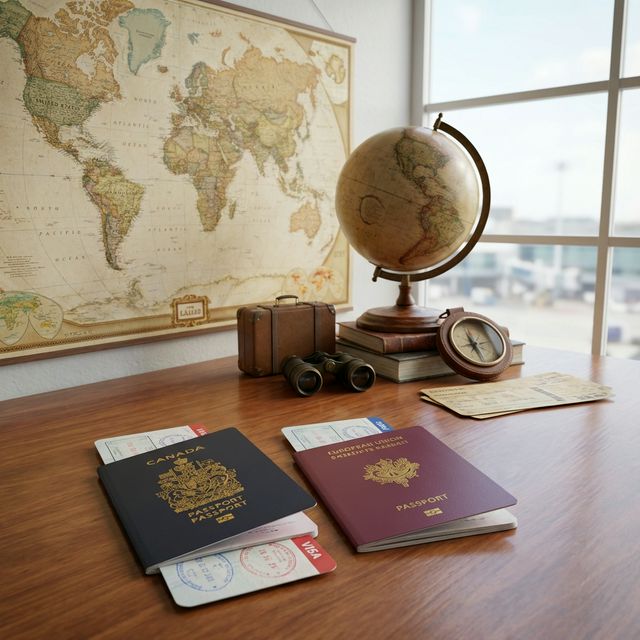
Dual citizenship, also known as multiple citizenship, is a legal status where an individual is recognized as a citizen of two or more countries simultaneously. For Canada, this means that a person can hold Canadian citizenship while also being a citizen of another nation. This concept is fully recognized and embraced under Canadian law, making it a common reality for many residents and citizens. Unlike some countries that restrict or prohibit dual nationality, Canada allows its citizens to maintain their ties and legal status with their country of origin or another nation without jeopardizing their Canadian citizenship.
The significance of dual citizenship in Canada extends far beyond mere legal recognition; it reflects the very fabric of our multicultural society. Canada's immigration policies are designed to welcome individuals from all corners of the globe, and acknowledging dual citizenship facilitates smoother integration while respecting immigrants' heritage and continuing connections abroad. It's a testament to Canada's open and inclusive approach, allowing individuals to enjoy the full rights and responsibilities of Canadian citizenship while retaining their bond with another country.
For individuals, dual citizenship offers a myriad of benefits and practical advantages. It provides the freedom to live, work, and travel freely between both countries, often without the need for visas. This can be particularly beneficial for business professionals, students, or families with relatives in multiple nations. Dual citizens can typically own property, vote, and even hold public office in both countries, though specific restrictions might apply depending on the laws of the other nation. Furthermore, it offers a crucial layer of security, allowing individuals to seek consular protection from either country while abroad. From an economic perspective, it can open doors to investment opportunities and professional mobility that might otherwise be unavailable. It also simplifies the process of inheritance and estate planning across borders, providing greater peace of mind for families with international ties. Ultimately, dual citizenship in Canada is about fostering connection, enabling global mobility, and celebrating the diverse identities that enrich our nation.
While Canada fully supports dual citizenship, the process of acquiring it (or maintaining it) depends largely on how one becomes a Canadian citizen and the laws of the other country involved. It's crucial to understand that Canada does not impose restrictions on its citizens holding other nationalities, but the other country might.
Here are the general pathways and requirements related to dual citizenship in Canada:
-
Birth in Canada (Jus Soli):
- Anyone born on Canadian soil automatically acquires Canadian citizenship, regardless of the citizenship or immigration status of their parents.
- If their parents are citizens of another country, the child will likely hold dual citizenship from birth, provided the parents' home country also grants citizenship based on parentage (jus sanguinis) or birth.
-
Citizenship by Descent:
- If you were born outside Canada but one of your parents was a Canadian citizen at the time of your birth, you might be a Canadian citizen by descent.
- This is generally limited to the first generation born outside Canada. If you were born outside Canada to a Canadian parent who also acquired Canadian citizenship by descent, you would likely not be a Canadian citizen by descent yourself. Special rules apply here.
- You would simultaneously hold the citizenship of your birth country (if granted) and Canadian citizenship.
-
Naturalization (Becoming a Canadian Citizen):
- This is the most common path for immigrants to Canada. To apply for Canadian citizenship by naturalization, you must meet several requirements:
- Permanent Resident Status: You must be a permanent resident of Canada.
- Physical Presence: You must have been physically present in Canada for at least 1,095 days (3 years) in the 5 years immediately before the date you sign your application. Time spent as a temporary resident (e.g., on a work permit or study permit) may count as a half-day for each day, up to a maximum of 365 days.
- Income Tax Filing: You must have filed income taxes in Canada for at least 3 taxation years within the 5-year period immediately before applying.
- Language Ability: If you are between 18 and 54 years old, you must demonstrate adequate knowledge of English or French.
- Knowledge of Canada: If you are between 18 and 54 years old, you must pass a citizenship test demonstrating your knowledge of Canada's rights and responsibilities, history, geography, economy, government, and laws.
- No Prohibitions: You must not be subject to any prohibitions under the Citizenship Act (e.g., having a criminal record, being under a deportation order).
- Upon successfully obtaining Canadian citizenship through naturalization, you are generally not required to renounce your previous citizenship, provided your country of origin permits dual nationality.
- This is the most common path for immigrants to Canada. To apply for Canadian citizenship by naturalization, you must meet several requirements:
-
Restrictions and Considerations:
- Other Country's Laws: The primary "restriction" on dual citizenship often comes from the laws of the other country. Some nations do not permit their citizens to hold another citizenship and may automatically revoke their original citizenship if they acquire a new one. It is the applicant's responsibility to understand the laws of their country of origin.
- Military Service: Some countries may require dual citizens to perform military service in both nations, or choose one. This is highly country-specific.
- Public Office: While Canada allows dual citizens to hold public office, certain high-level security positions might require a single allegiance. Similarly, the other country might have restrictions on dual citizens holding specific roles.
- Tax Implications: Dual citizenship can have complex tax implications, especially for U.S. citizens (due to their worldwide taxation system). It is advisable to seek expert tax advice.
Understanding these eligibility criteria and considerations is vital for anyone considering or currently holding dual citizenship with Canada. An RCIC can provide tailored advice based on your specific circumstances and country of origin.
The "processing" for dual citizenship in Canada isn't a separate application; rather, it's a natural outcome of becoming a Canadian citizen while retaining your original nationality. The steps outlined below focus on the process of acquiring Canadian citizenship for permanent residents, which then enables dual citizenship status.
-
Confirm Eligibility for Canadian Citizenship:
- Review the detailed eligibility requirements as outlined in the "Eligibility & Requirements" section (permanent resident status, physical presence, language, knowledge of Canada, tax filing, no prohibitions).
- Ensure you meet all criteria before proceeding. This is a critical initial self-assessment.
-
Gather Required Documents:
- Collect all necessary supporting documents. This typically includes:
- Permanent Resident card (front and back).
- Proof of physical presence (e.g., copies of passport pages with entry/exit stamps, travel history reports).
- Language proficiency proof (e.g., results from an approved language test or educational transcripts).
- Tax assessments (Notice of Assessment) from the Canada Revenue Agency (CRA) for the required tax years.
- Identity documents (e.g., passport, birth certificate).
- Any other documents requested by IRCC based on your specific situation (e.g., police certificates from countries lived in).
- Ensure all documents are current, complete, and translated by a certified translator if not in English or French.
- Collect all necessary supporting documents. This typically includes:
-
Complete the Application Form (CIT 0002):
- Download the "Application for Canadian Citizenship – Adults (CIT 0002)" package from the IRCC website.
- Fill out all sections accurately and truthfully. Pay close attention to the instructions provided in the guide.
- Declare all relevant information, including any criminal history, even minor infractions.
-
Pay the Application Fees:
- The current application fee for adults includes a processing fee and a Right of Citizenship fee. These must be paid online through the IRCC website.
- Print the receipt and include it with your application package.
-
Submit the Application:
- Mail your completed application package, including all forms, supporting documents, and fee receipts, to the designated IRCC processing centre.
- Ensure the package is complete and organized according to the checklist provided by IRCC to avoid delays or rejection.
-
IRCC Processing & Communication:
- IRCC will acknowledge receipt of your application.
- They may request additional documents, clarification, or an interview at any point during the process.
- You can track the status of your application online using the IRCC portal.
-
Citizenship Test (if applicable):
- If you are between 18 and 54 years old, you will be invited to take a citizenship test to assess your knowledge of Canada. This is typically an online test.
- Study the official "Discover Canada: The Rights and Responsibilities of Citizenship" guide.
-
Citizenship Interview (if applicable):
- Some applicants may be invited for an interview with a citizenship official to verify information, test language skills, or clarify aspects of their application.
-
Citizenship Ceremony:
- If your application is approved, you will receive an invitation to attend a citizenship ceremony.
- At the ceremony, you will take the Oath of Citizenship, receive your Certificate of Canadian Citizenship, and officially become a Canadian citizen.
- It is at this point that your dual citizenship status officially begins, as you will retain your previous citizenship (provided the other country's laws allow it).
-
Apply for a Canadian Passport:
- Once you have your Certificate of Canadian Citizenship, you can apply for a Canadian passport.
Throughout this process, it is highly recommended to consult with a Regulated Canadian Immigration Consultant (RCIC) to ensure your application is complete, accurate, and submitted correctly, maximizing your chances of a successful outcome. An RCIC can also advise on the implications of dual citizenship concerning your country of origin.
Understanding the timelines and financial commitments associated with obtaining Canadian citizenship (which then leads to dual citizenship) is crucial for planning. These figures are estimates and can fluctuate based on IRCC's operational capacity, application volume, and the complexity of individual cases.
Processing Times (Estimates)
-
Canadian Citizenship Application (Adults):
- IRCC's stated processing times for citizenship applications generally range from 12 to 24 months.
- However, these times can vary significantly. Factors influencing processing include:
- Application Completeness: Incomplete applications will be returned or significantly delayed.
- Complexity of Background: Cases requiring extensive background checks, travel history verification, or addressing legal issues can take longer.
- IRCC Workload: High volumes of applications can extend processing times.
- Response Time to IRCC Requests: Promptly responding to requests for additional documents or information can prevent delays.
- It's important to check the official IRCC website for the most up-to-date processing times for your specific application type.
-
Citizenship Certificate (Post-Ceremony):
- You receive your citizenship certificate at the ceremony.
-
Canadian Passport Application (Post-Citizenship):
- Standard passport applications typically take 10-20 business days for regular processing, plus mailing time. Expedited services are available for an extra fee.
Financial Requirements & Costs (Estimates)
The costs associated with acquiring Canadian citizenship are primarily government fees. If you engage an RCIC or other legal professional, their fees will be additional.
-
Government Fees for Canadian Citizenship Application (Adults):
- Processing Fee: CAD $530 per adult applicant (18 years and older).
- Right of Citizenship Fee: CAD $100 per adult applicant (18 years and older).
- Total Government Fees per adult: CAD $630.
- For minors (under 18) applying with a parent, there is only a processing fee of CAD $100.
- Note: These fees are subject to change by IRCC. Always verify the latest fees on the official IRCC website.
-
Language Test Fees (if applicable):
- If you need to take an approved language test (e.g., IELTS, CELPIP, TEF, TCF), the cost typically ranges from CAD $250 to $350.
-
RCIC / Legal Professional Fees:
- Engaging a Regulated Canadian Immigration Consultant (RCIC) or an immigration lawyer for assistance with your citizenship application can incur fees ranging from CAD $1,000 to $3,000+, depending on the complexity of your case and the scope of services provided (e.g., document review, application preparation, representation). These fees are separate from government fees.
-
Other Potential Costs:
- Document Translation Fees: If any of your supporting documents are not in English or French, you will need to pay for certified translations. Costs vary per document.
- Police Certificates: Some countries may charge a fee for issuing police certificates.
- Travel Costs: To attend interviews or the citizenship ceremony.
- Passport Application Fees: Once you become a citizen, applying for a Canadian passport incurs separate fees (e.g., CAD $120 for a 5-year adult passport, CAD $160 for a 10-year adult passport).
It is important to budget for all these potential costs to ensure a smooth application process. While the RCIC fees are an additional expense, the expertise and guidance provided can significantly reduce the risk of errors and delays, making it a valuable investment for many applicants.
Q1: Does Canada require me to renounce my previous citizenship when I become a Canadian citizen?
A1: No, Canada does not require you to renounce your previous citizenship when you become a Canadian citizen. Canada fully recognizes and permits dual (or multiple) citizenship. This means you can hold Canadian citizenship simultaneously with citizenship from another country. The critical factor is whether your country of origin permits you to hold dual nationality. Some countries automatically revoke your original citizenship if you acquire citizenship in another nation. It is your responsibility to understand the laws of your other country of citizenship.
Q2: What are the main benefits of holding dual citizenship with Canada?
A2: Dual citizenship with Canada offers numerous benefits:
- Freedom of Movement: You can live, work, and study in both Canada and your other country of citizenship, often without visa restrictions.
- Consular Protection: You can seek consular assistance from either country's diplomatic missions while traveling abroad.
- Property Ownership & Inheritance: Simplified processes for owning property and managing inheritance across both nations.
- Voting Rights: The ability to vote and participate in the political processes of both countries (where permitted by the other country's laws).
- Access to Services: Full access to social services, healthcare, and educational systems in Canada.
- Professional Opportunities: Broader career opportunities and easier professional mobility between the two countries.
- Family Ties: Maintains strong legal and personal ties with your country of origin while fully embracing life in Canada.
Q3: Are there any disadvantages or complexities to dual citizenship?
A3: While largely beneficial, dual citizenship can come with certain complexities:
- Tax Obligations: You may have tax obligations in both countries, depending on their tax laws (e.g., the U.S. taxes its citizens worldwide, regardless of residence). It's crucial to seek expert tax advice.
- Military Service: Some countries may require dual citizens to perform mandatory military service, even if they reside primarily in Canada.
- Political Office Restrictions: Certain high-level government or security positions in either country might require sole citizenship.
- Passport Usage: When entering or leaving Canada, Canadian citizens (including dual citizens) are legally required to use their Canadian passport. Similarly, the other country might require its passport for entry/exit.
- Legal Ambiguity: In certain international legal situations, determining which country has jurisdiction over a dual citizen can sometimes be complex.
Q4: If I am a dual citizen, which passport should I use when traveling?
A4: When traveling, a Canadian citizen who is also a citizen of another country must use their Canadian passport to enter and exit Canada by air. This is a legal requirement under Canadian law. For land or sea travel, other documents like an enhanced driver's license or NEXUS card might be accepted for entry, but a Canadian passport is always recommended. When entering or exiting your other country of citizenship, you should generally use that country's passport. For travel to a third country, you can typically choose which passport to use, but ensure it meets the visa requirements of your destination. It's wise to carry both passports when traveling internationally to avoid complications.