

Family Sponsorship
4 SubcategoriesSubcategories
4Spouse & Partner
Sponsor your spouse, common-law, or conjugal partner for Canadian PR. Inland and outland options available.
Learn More →Parents & Grandparents (PGP)
Sponsor your parents and grandparents through the PGP lottery. Requires 3 years of minimum income. 20-year undertaking.
Learn More →Dependent Children
Sponsor dependent children under 22 for PR. Includes biological, adopted, and stepchildren.
Learn More →Super Visa
Multi-entry visa allowing parents and grandparents to stay up to 5 years per visit. Requires medical insurance.
Learn More →Sponsor your family members for permanent residence

Family Sponsorship in Canada: The Complete Guide
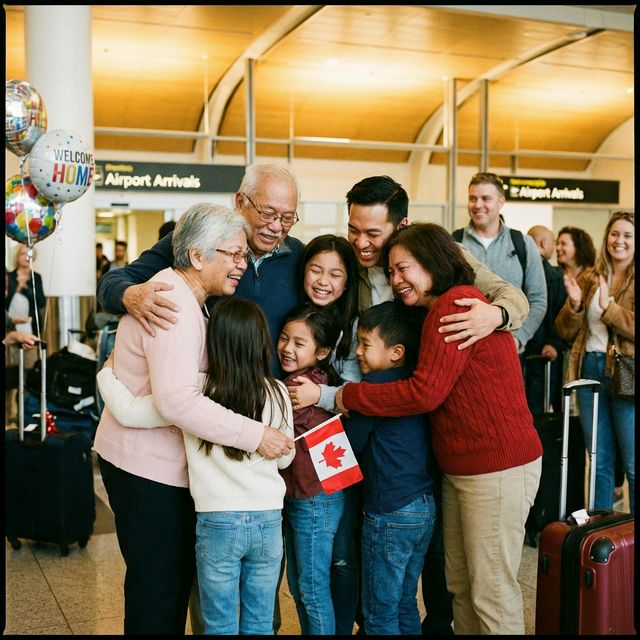
Family reunification is a cornerstone of Canadian immigration policy and one of Canada's most deeply held values. The Family Sponsorship program allows Canadian citizens and permanent residents to sponsor their close family members for permanent residence, bringing loved ones together in Canada. Each year, Canada admits approximately 100,000 new permanent residents through family sponsorship — about a quarter of all permanent immigration.
This comprehensive guide covers all sponsorship categories, eligibility requirements, the step-by-step application process, processing times, and common pitfalls to avoid.
The Legal Framework
Family sponsorship is governed by the Immigration and Refugee Protection Act (IRPA) and its associated regulations. The program exists because Canada recognizes that:
- Family unity is a fundamental value
- Immigrants integrate better when they have family support
- Family reunification contributes to Canada's social and economic well-being
Sponsorship Categories Overview
| Category | Processing Time | Income Requirement | Undertaking Period | Max Simultaneous Sponsors |
|---|---|---|---|---|
| Spouse/Common-Law Partner | 12 months | No (for most) | 3 years | 1 spouse at a time |
| Dependent Children | 12 months | No | 10 years or until age 25 | Multiple children allowed |
| Parents & Grandparents | 20–24 months | Yes (LICO + 30%) | 20 years | Up to 2 (+ their dependents) |
| Super Visa (temporary) | 2–3 months | Yes (LICO) | N/A | 1 at a time |
| Adopted Children | 12–18 months | No | 10 years or until age 25 | Per adoption |
| Orphaned relatives | Special cases | Case-by-case | Varies | Case-by-case |
The Sponsorship Undertaking
When you sponsor someone, you sign a legally binding undertaking — a promise to provide for the sponsored person's basic needs (food, clothing, shelter, utilities, personal items, dental care, eye care, and other non-publicly funded health care). This means:
- If the sponsored person receives social assistance, the government can sue the sponsor to recover those costs
- The undertaking remains in effect even if the relationship ends (divorce, separation)
- Sponsorship debt cannot be discharged through bankruptcy
- The length of the undertaking varies by category (3 years for spouse, 20 years for parents)
Types of Relationships Recognized
| Relationship Type | Definition | Proof Required |
|---|---|---|
| Legally married | Marriage recognized under Canadian law or the law of the country where it took place | Marriage certificate |
| Common-law partner | Cohabited continuously for at least 12 months in a conjugal relationship | Shared address proof, joint finances, affidavits |
| Conjugal partner | In a committed relationship for 1+ year but unable to live together due to immigration barriers, religious/cultural restrictions, or other compelling reasons | Extensive documentation of relationship and barriers to cohabitation |
Important distinctions:
- Common-law: The 12 months of cohabitation must be continuous. Brief separations for work or travel are acceptable, but extended separations may break the continuity
- Conjugal: This is the most difficult to prove and least commonly accepted. IRCC requires compelling evidence that the couple genuinely cannot live together
- Same-sex relationships: Fully recognized in all categories since 2005
Eligibility Requirements — Sponsor
To sponsor a spouse or partner, you must:
| Requirement | Details |
|---|---|
| Status | Be a Canadian citizen or permanent resident |
| Age | Be at least 18 years old |
| Location | Citizens can sponsor from outside Canada; PRs must be in Canada |
| Not sponsored recently | Were not sponsored as a spouse yourself within the last 5 years (if applicable) |
| Not sponsored another spouse recently | Have not sponsored another spouse within the last 5 years |
| Financial | Not receiving social assistance (other than disability) |
| Legal | Not in prison, not bankrupt, not subject to a removal order |
| Criminal | No convictions for violent offences, sexual offences, or offences against family members (some exceptions with rehabilitation) |
Eligibility Requirements — Sponsored Person
| Requirement | Details |
|---|---|
| Age | At least 16 (married), 18 (common-law) |
| Relationship | In a genuine relationship with the sponsor |
| Admissibility | Must not be inadmissible on grounds of security, criminality, or health |
| Dependents | Can include dependent children in the application |
Inland vs. Outland Applications — Detailed Comparison
| Feature | Inland Application | Outland Application |
|---|---|---|
| Where sponsored person lives | In Canada with sponsor, with valid status (or implied status) | Outside Canada |
| Open Work Permit | Eligible shortly after AOR (Acknowledgement of Receipt) | Not eligible until approved |
| Processing time | ~12 months | ~12 months |
| Travel during process | Risky — leaving Canada may void the inland application | Can travel freely |
| Interview | Rarely required | Sometimes required at visa office |
| Medical exam | Done in Canada with a panel physician | Done in applicant's country |
| Can combine with outland? | No — must choose one | No |
| Best situation | Sponsored person is already in Canada with valid status (e.g., on work/study permit) | Sponsored person is living abroad |
| Risk | If application is refused, person may need to leave Canada | Lower risk — person remains in their home country |
The Application Process — Step by Step
Step 1: Determine which application stream to use
- Inland if the sponsored person is in Canada
- Outland if they're outside Canada
Step 2: Prepare the application package
Both the sponsor and sponsored person must complete their portions:
| Form | Who Completes | Purpose |
|---|---|---|
| IMM 1344 — Sponsorship Agreement | Both | Confirms the sponsorship agreement |
| IMM 0008 — Generic Application | Sponsored person | Personal details, immigration history |
| IMM 5289 — Schedule A | Sponsored person | Background declaration |
| IMM 5406 — Additional Family Information | Both | Family composition |
| IMM 5532 — Relationship Information | Both | Detailed relationship questionnaire |
| IMM 5669 — Schedule A | Sponsored person | Education and employment history |
| Document Checklist (IMM 5533) | Both | Verification of included documents |
Step 3: Gather supporting documents
This is the most critical step. Your evidence package must comprehensively demonstrate a genuine relationship:
| Evidence Category | Examples | Strength |
|---|---|---|
| Photos together | With dates, locations, occasions, with family/friends | Strong |
| Communication records | Call/text/video logs (screenshots with dates) | Strong |
| Travel records | Boarding passes, passport stamps, hotel receipts | Strong |
| Joint finances | Shared bank account, joint credit cards, shared lease | Very strong |
| Joint commitments | Joint lease/mortgage, shared utility bills, car insurance | Very strong |
| Legal documents | Marriage certificate, joint tax filing, beneficiary designations | Very strong |
| Third-party evidence | Letters from friends/family (with their contact info and ID), statutory declarations | Moderate |
| Social media | Relationship status, tagged photos, shared posts | Moderate |
| Cohabitation proof | Shared address on IDs, joint mail, shared streaming accounts | Strong |
Step 4: Pay fees
| Fee | Amount (2024) |
|---|---|
| Sponsorship fee | $75 |
| Principal applicant processing fee | $490 |
| Right of Permanent Residence fee | $515 |
| Biometrics (per person) | $85 |
| Dependent child (per child) | $155 processing + $85 biometrics |
| Open Work Permit (inland) | $255 |
| Total for sponsor + 1 spouse (no children) | $1,080 + $255 OWP = $1,335 |
Step 5: Submit the application
- Online through the IRCC portal (recommended)
- Some applicants may need to mail paper applications to specific offices
Step 6: Acknowledgement of Receipt (AOR)
- Typically received 1–2 months after submission
- AOR confirms your application is complete and being processed
- Inland applicants: Can apply for an Open Work Permit at this stage
Step 7: Processing
- IRCC reviews application for completeness and eligibility
- Background checks (criminal, security, immigration history)
- Medical exam requested if not already completed
- Interview may be scheduled (not common for straightforward cases)
- Additional documents may be requested (Procedural Fairness Letter if concerns arise)
Step 8: Decision
- Approval: COPR (Confirmation of Permanent Residence) issued
- Refusal: Written reasons provided; can appeal to the Immigration Appeal Division (IAD) within 30 days
Proving a Genuine Relationship — Best Practices
The single most important element of a spousal sponsorship application is proof of a genuine relationship. IRCC officers are trained to detect marriages of convenience, and approximately 15–20% of spousal sponsorship applications are refused, often due to insufficient proof.
What IRCC officers look for:
- Consistency — Does your story match between both partners' forms? Do photos, dates, and locations align?
- Development over time — Can you show the relationship developing over time? First meeting, dating, engagement, marriage, daily life
- Mutual knowledge — Do both partners demonstrate knowledge of each other's families, employment, hobbies, daily routines?
- Genuine commitment — Is there evidence of emotional and financial investment in the relationship?
- Credible barriers — If there were periods of separation, are the reasons legitimate and documented?
Red flags IRCC watches for:
- Large age gaps without a compelling explanation
- Very short courtship before marriage
- Limited communication evidence
- Partners who don't speak a common language
- Previous sponsorship applications or refusals
- Travel to countries known for marriages of convenience
- Inability to answer basic questions about each other
The Interest to Sponsor Process
The PGP uses a random selection (lottery) system:
- IRCC opens the Interest to Sponsor (ITS) window — typically January–February each year (dates vary)
- Submit your Interest to Sponsor form — online, during the 2-week window
- Random selection — IRCC randomly selects from the pool of interested sponsors
- Invitation — Selected sponsors are invited to submit a complete application within 60 days
- If not selected — You can resubmit in the next year's ITS window
2024 numbers: Approximately 24,200 sponsors were invited from a pool of hundreds of thousands.
Minimum Necessary Income (MNI) Requirements
To sponsor parents/grandparents, you must demonstrate income at or above LICO + 30% for 3 consecutive tax years:
| Family Size (after sponsorship) | 2022 MNI | 2023 MNI | 2024 MNI (approx.) |
|---|---|---|---|
| 2 persons | $40,444 | $41,668 | $43,082 |
| 3 persons | $49,727 | $51,218 | $52,965 |
| 4 persons | $60,373 | $62,218 | $64,306 |
| 5 persons | $68,497 | $70,582 | $72,957 |
| 6 persons | $77,266 | $79,607 | $82,286 |
| 7+ persons | Add ~$8,600 | Add ~$8,900 | Add ~$9,200 |
Key rules for income calculation:
- Income from employment, self-employment, pension, and EI counts
- Social assistance income does NOT count (except disability)
- Can combine income with co-signer (spouse or common-law partner)
- Must meet the MNI for each of the 3 tax years preceding the application year
- Must have filed Notice of Assessment (NOA) from CRA for all 3 years
The 20-Year Undertaking
This is the most serious financial commitment in Canadian immigration:
- You are financially responsible for your parents/grandparents for 20 years from the date they become PR
- If they receive social assistance, welfare, or last-resort financial help from the provincial government, the sponsoring government can pursue the sponsor for repayment
- The undertaking survives divorce — if you separate from your co-signing spouse, both remain responsible
- The undertaking cannot be discharged through bankruptcy
- In practice, this means you should have stable, long-term employment prospects and ensure your parents have adequate health coverage (most provinces have waiting periods for health insurance)
Super Visa — The Alternative to PGP
If you can't wait for the PGP lottery or don't meet the income requirements for PGP:
| Feature | Super Visa | PGP |
|---|---|---|
| Status granted | Temporary (visitor) | Permanent resident |
| Duration per stay | Up to 5 years | Permanent |
| Healthcare coverage | Must purchase private insurance | Provincial health insurance (after waiting period) |
| Income requirement | LICO (not LICO+30%) | LICO + 30% for 3 years |
| Work authorization | Cannot work | Can work anywhere |
| Processing time | 2–3 months | 24–36 months |
| Insurance requirement | Yes ($100,000 minimum) | No |
| Lottery/selection | No — apply anytime | Yes — random selection |
Super Visa insurance costs: Approximately $1,500–$5,000/year per parent, depending on age and health conditions.
When to choose Super Visa:
- When you can't wait 2–3 years for PGP processing
- When you don't meet the MNI for 3 consecutive years
- When your parents want to visit but not necessarily permanently relocate
- As a bridge while waiting for PGP processing
Who Qualifies as a Dependent Child?
| Criteria | Details |
|---|---|
| Age | Under 22 years old |
| Relationship status | Not married and not in a common-law relationship |
| Exception | Over 22 but has been continuously dependent due to a physical or mental condition since before age 22 |
Adoption Sponsorship
Adopted children can be sponsored under specific conditions:
- The adoption must be in the best interests of the child (not for immigration purposes)
- Must comply with the Hague Convention on Intercountry Adoption (or equivalent bilateral agreement)
- The adoption must be legally recognized in both the country of origin and Canada
- A home study by a provincial adoption authority may be required
- Quebec adoptions follow separate provincial rules
No Income Requirement
Unlike parent sponsorship, there is no minimum income requirement for sponsoring dependent children. The sponsor must simply demonstrate they can provide for the child's basic needs.
Criminal Inadmissibility
Sponsors with the following criminal convictions may be barred:
| Offence Type | Bar Duration | Notes |
|---|---|---|
| Sexual offence | 5 years after sentence completion | May be permanent for certain offences |
| Violent offence (assault, domestic violence) | 5 years after sentence completion | Especially serious for domestic violence |
| Offence against a relative | 5 years after sentence completion | Includes dependents |
| Human trafficking or organized crime | Permanent | No waiver available |
| Other criminal convictions | May not bar sponsorship | Depends on severity and rehabilitation |
The 5-Year Sponsorship Bar — Detailed
This rule prevents "serial sponsorship" and applies in two situations:
Scenario 1: You sponsored a spouse who became PR → You cannot sponsor a new spouse for 5 years after the previous spouse obtained PR.
Scenario 2: You were sponsored as a spouse and became PR → You cannot sponsor a new spouse for 5 years after you obtained PR through sponsorship.
Exceptions: The 5-year bar does not apply to sponsoring dependent children.
Other Bars
| Situation | Sponsorship Allowed? |
|---|---|
| Currently receiving social assistance (disability-related) | ✅ Yes |
| Currently receiving social assistance (non-disability) | ❌ No |
| Previous sponsorship undertaking in default | ❌ No (until paid) |
| Subject to a removal order | ❌ No |
| In prison | ❌ No |
| Undischarged bankrupt | ❌ No |
| Charged with violent/sexual offence (pending) | ❌ No (until resolved) |
Can New PRs Sponsor?
| Category | Waiting Period | Notes |
|---|---|---|
| Spouse/Partner | None — can sponsor immediately | Most common sponsorship by new PRs |
| Dependent Children | None | Standard process |
| Parents/Grandparents | None (but MNI for 3 years) | Need 3 years of Canadian tax history |
Challenges for New PR Sponsors
- Building 3 years of Canadian income history — For parent/grandparent sponsorship, you need 3 consecutive years of CRA-assessed income meeting the MNI. New PRs need to wait and build this history.
- Ensuring stable income — Sponsorship is a long-term financial commitment. IRCC wants to see stable, ongoing income, not just meeting the minimum for one or two years.
- Maintaining PR status — Your PR card must remain valid throughout the process. Ensure you meet the residency obligation (730 days in Canada within a 5-year period).
- Dealing with lottery selection — For PGP, you're subject to the same random selection process as all other sponsors. There's no priority for new PRs.
Immigration Appeal Division (IAD)
If your sponsorship application is refused, you can appeal to the IAD:
| Detail | Information |
|---|---|
| Deadline to appeal | 30 days from receiving the refusal |
| Who can appeal | The sponsor (not the sponsored person) |
| Types of appeal | On legal grounds, factual error, or humanitarian and compassionate (H&C) grounds |
| IAD hearing | Formal hearing with a board member, can include witness testimony |
| Possible outcomes | Appeal allowed (application approved), appeal dismissed, case returned for re-determination |
| Timeline | 12–24 months for a hearing |
Common Refusal Reasons and How to Address Them
| Refusal Reason | How to Strengthen Your Case |
|---|---|
| Relationship not genuine | Provide more comprehensive evidence: photos over time, communication logs, financial integration, testimony from friends/family |
| Insufficient income (PGP) | Ensure NOAs are filed for 3 years; include co-signer's income if applicable |
| Misrepresentation | This is very serious — consult a lawyer immediately |
| Criminal inadmissibility (sponsor) | Obtain a record suspension (pardon) or wait for the bar period to expire |
| Medical inadmissibility (sponsored person) | Individualized medical assessment; some conditions have exemptions |
- Insufficient proof of genuine relationship — The #1 reason for spousal sponsorship refusal. Provide comprehensive evidence across multiple categories
- Not meeting income requirements for PGP — Must meet LICO+30% for 3 consecutive years. A single bad year means you don't qualify
- Incomplete applications — Missing documents, unsigned forms, or incorrect fees cause significant delays or returns
- Not declaring previous marriages or relationships — Non-disclosure is considered misrepresentation and can lead to a 5-year ban
- Applying for both inland and outland — Pick one; you cannot do both simultaneously for the same person
- Ignoring the 20-year undertaking for PGP — This is a serious long-term financial commitment that survives divorce
- Not updating IRCC with address/status changes — Failure to notify IRCC of address changes, new marriages, or other life events can delay processing
- Submitting low-quality documents — Blurry photos, illegible copies, and uncertified translations will weaken your application
- Not obtaining police certificates on time — Some countries take months to issue police certificates. Start early
- Relying on ghost consultants — Only work with RCICs or licensed lawyers
| Sponsorship Type | Government Fees | Insurance/Other | Total Estimate |
|---|---|---|---|
| Spouse (no children) | $1,080 | $200 medical | $1,280 |
| Spouse + 1 child | $1,320 | $400 medical | $1,720 |
| Spouse + OWP (inland) | $1,335 | $200 medical | $1,535 |
| Parents (2) | $2,160 | $400 medical | $2,560 |
| Super Visa (1 parent) | $100 visa + $85 bio | $2,000+ insurance/year | $2,185+ |
| Dependent child | $240 | $200 medical | $440 |
Legal fees for a lawyer ($2,000–$8,000) or RCIC ($1,500–$4,000) are additional.
| Term | Definition |
|---|---|
| AOR | Acknowledgement of Receipt — confirmation that IRCC received your complete application |
| COPR | Confirmation of Permanent Residence — document issued when PR is approved |
| IAD | Immigration Appeal Division — body that hears sponsorship appeal cases |
| ITS | Interest to Sponsor — preliminary form submitted during PGP intake window |
| LICO | Low Income Cut-Off — income threshold published by Statistics Canada |
| MNI | Minimum Necessary Income — LICO + 30%, required for parent/grandparent sponsorship |
| NOA | Notice of Assessment — CRA document confirming your tax filing and income |
| OWP | Open Work Permit — allows sponsored spouse to work for any employer while application is processing |
| PGP | Parents and Grandparents Program — sponsorship pathway for parents and grandparents |
| RCIC | Regulated Canadian Immigration Consultant — licensed professional authorized to represent immigration clients |
How long does spousal sponsorship take?
Approximately 12 months for both inland and outland applications. Complex cases with interviews or additional document requests may take longer.
Can I work in Canada while my spousal sponsorship is being processed?
If you applied from inside Canada (inland), you can apply for an Open Work Permit (OWP) after receiving your AOR. If applied from outside (outland), you cannot work in Canada until approved.
What if my sponsorship application is refused?
You can appeal the decision to the Immigration Appeal Division (IAD) within 30 days. Appeals can be based on legal errors, factual errors, or humanitarian and compassionate grounds.
Can I sponsor my parents if I don't meet the income requirement?
No. The MNI (LICO+30% for 3 years) is strictly enforced for PGP. Consider the Super Visa as an alternative — it requires lower income (LICO only) and processes faster.
Can same-sex couples apply for spousal sponsorship?
Yes. Same-sex marriages and common-law relationships have been fully recognized for spousal sponsorship since 2005.
Do I need a lawyer for family sponsorship?
Not required for straightforward cases, but highly recommended for: relationships with large age gaps, short courtship periods, previous refusals, criminal history, or potential misrepresentation concerns.
What is the difference between a permanent resident sponsor and a citizen sponsor?
Both can sponsor, but Canadian citizens can sponsor from outside Canada, while permanent residents must be physically present in Canada when sponsoring.
Can I sponsor my siblings?
Currently, Canada does not have a general sibling sponsorship program. However, you may be able to sponsor an orphaned sibling who is under 18, unmarried, and not in a common-law relationship.
What happens if I divorce my sponsored spouse?
The sponsorship undertaking remains in effect regardless of divorce or separation. You are still financially responsible for the sponsored person's basic needs for the full undertaking period.
Can my parents work in Canada after being sponsored?
Once your parents receive PR status, they have full work authorization in Canada. During the application process, they generally cannot work (unless they have a separate work permit).
Document Organization
A well-organized application demonstrates care and professionalism. IRCC officers review hundreds of applications; making yours easy to navigate gives a positive impression.
Recommended organization:
- Cover letter — 1–2 pages summarizing your relationship, timeline, and highlights of your evidence package
- Table of contents — Reference every document by tab number or page number
- Chronological timeline — A dated relationship timeline (first met, first date, engagement, marriage, moves, trips together)
- Forms section — All completed IRCC forms signed and dated
- Identity documents — Passports, birth certificates, marriage certificate
- Financial proof — NOA, T4s, employment letters, bank statements
- Relationship evidence — Organized by category (photos, communications, finances, third-party letters)
- Supporting documents — Medical results, police certificates, translations
Photo Selection Strategy
Photos are powerful evidence, but quality matters more than quantity:
- Include 20–30 photos spanning the entire relationship (not 200 photos from one event)
- Each photo should be labeled with date, location, and who is pictured
- Include photos with family members and friends (showing social integration)
- Show different contexts: holidays, daily life, family events, travel
- Include photos from different time periods to show relationship development
- Avoid selfies-only — include photos taken by others
- Print on good quality paper if submitting a physical application
Communication Evidence Strategy
For long-distance relationships, communication evidence is critical:
- Include screenshots showing the frequency and duration of communication (not just isolated messages)
- Show communication from multiple platforms (WhatsApp, Telegram, FaceTime, email)
- Include video call history showing regular video communication
- Don't include hundreds of pages of chat logs — select representative samples that show emotional depth and genuine knowledge of each other
- Include messages in both directions (not just one partner messaging)
- Translate any non-English/French messages with certified translations
Financial Integration Evidence
Joint financial evidence is among the strongest proof of a genuine relationship:
- Joint bank accounts with regular activity
- Joint credit cards
- Joint lease or mortgage
- Shared utility bills
- Life insurance beneficiary designations
- Joint investments or savings
- Shared subscriptions (streaming, phone plans)
- Even sharing a car insurance policy
Third-Party Letters (Statutory Declarations)
Letters from friends and family carry significant weight:
- Should be from people who have witnessed the relationship
- Must include the writer's full name, address, and contact information
- Should describe specific interactions they've observed (e.g., "I attended their wedding on June 15, 2023, in Mumbai" — not just "They are in a genuine relationship")
- Should be notarized or sworn as statutory declarations
- Get letters from both sides of the family if possible
- Include a photocopy of the writer's ID
Many spousal sponsorship applications involve partners who live in different countries. IRCC recognizes this is common but requires stronger evidence:
What You Need to Show
- Regular visits between the two countries (passport stamps, boarding passes, hotel receipts)
- Consistent and frequent communication (call logs, video chat history, messaging apps)
- Future plans together — evidence that you're actively planning to close the distance (job applications, apartment searches in Canada)
- Shared experiences — Screen-shared activities, online movie nights, shared photo albums
- Financial support — Sending money to each other (interac, wire transfers)
Red Flags for Long-Distance Applications
- Very few visits or very short visits
- Gaps in communication with no explanation
- No plans to live together
- Inconsistent information about the relationship timeline
- Unable to describe each other's daily routines, families, or living situations
Humanitarian and Compassionate (H&C) Sponsorship
In exceptional cases, family members who don't fit standard categories may be sponsored on H&C grounds:
- Must demonstrate that refusing the application would cause unusual, undeserved, or disproportionate hardship
- These applications have no guaranteed processing timeline
- Approval rates are lower than standard sponsorship
- Best handled by an experienced immigration lawyer
- Common H&C scenarios: sole surviving family member, dependent elderly relative, family member with medical needs
Sponsorship After Previous Refusal
A previous refusal does not permanently bar you from sponsoring:
- You can reapply immediately with a strengthened application
- Address every concern raised in the refusal letter
- Provide new evidence that wasn't in the original application
- Consider hiring an RCIC or lawyer for the reapplication
- The refusal letter is available through IRCC's online portal
Processing During COVID and Post-Pandemic
While COVID-era backlogs have largely been cleared, some impacts remain:
- IRCC has moved most processing online, reducing paper-based delays
- Some visa offices still have residual backlogs
- Biometrics appointments are widely available
- Medical exams have resumed normal operations globally
- Travel restrictions no longer affect most sponsorship cases
| Resource | Purpose |
|---|---|
| IRCC Family Sponsorship | Official overview |
| Spousal Sponsorship Guide | Detailed step-by-step guide |
| PGP Information | Parents/grandparents details |
| Super Visa | Alternative to PGP |
| Processing Times | Current processing times |
| IRCC Online Portal | Submit applications online |
| Find an RCIC | Find licensed immigration consultant |
| IAD Appeals | Information about sponsorship appeals |
Always verify information directly with IRCC. Immigration policies change frequently. The information in this guide reflects policies as of early 2026.
Understanding the exact processing timeline helps manage expectations and plan accordingly.
Spousal Sponsorship Timeline (Inland)
| Stage | Timeline | What Happens |
|---|---|---|
| Application preparation | 2–4 weeks | Gather documents, complete forms, organize evidence |
| Submission | Day 0 | Submit online or by mail |
| Acknowledgement of Receipt (AOR) | 1–8 weeks | IRCC confirms receipt and completeness |
| Open Work Permit eligibility | After AOR | Can apply for OWP (processing: 4–8 weeks) |
| Background checks begin | AOR + 2 weeks | Criminal, security, and immigration history checks |
| Medical exam request | AOR + 3–6 months | If not already submitted with application |
| Additional document request | Varies | Not all applicants — only if IRCC needs clarification |
| Interview | Varies | Rare for inland; more common for relationships with red flags |
| Decision | AOR + 10–14 months | Approval or refusal communicated via online portal |
| COPR ceremony | Approval + 2–4 weeks | In-person or online; receive PR card later by mail |
Parent/Grandparent Sponsorship Timeline
| Stage | Timeline |
|---|---|
| Interest to Sponsor window | January–February (varies annually) |
| Random selection notification | March–April |
| Complete application deadline | 60 days from invitation |
| AOR | 2–3 months after submission |
| Background checks and medical | Months 3–12 |
| Decision | 20–24 months from AOR |
| PR landing | Within 12 months of COPR issuance |
| Total from ITS to landing | 24–36 months |
What the Medical Exam Covers
Every sponsored family member must undergo a medical exam by a designated panel physician:
| Test | Purpose | Who Needs It |
|---|---|---|
| Physical examination | General health assessment | All applicants |
| Chest X-ray | Screen for tuberculosis | Ages 11+ |
| Blood tests | HIV, syphilis, hepatitis B | Ages 15+ |
| Urinalysis | General health screening | Ages 5+ |
| Mental health assessment | Evaluate mental health conditions | As needed |
| Vision and hearing test | Assess sensory function | As needed |
Medical Inadmissibility
Certain health conditions may lead to refusal:
- Conditions that pose a danger to public health (active TB, untreated STIs)
- Conditions that pose a danger to public safety (certain mental health conditions)
- Conditions that would cause excessive demand on health and social services (threshold: approximately $24,000/year)
Exceptions: The excessive demand provision does NOT apply to sponsored spouses, partners, and dependent children. It may apply to sponsored parents/grandparents.
Finding a Panel Physician
- IRCC maintains a list of designated panel physicians worldwide
- Search at: IRCC Panel Physician Directory
- Cost: $200–$450 per person (varies by country)
- Medical results are valid for 12 months — time your exam accordingly
When sponsored family members arrive in Canada, they face a waiting period for provincial health insurance in most provinces:
| Province | Waiting Period | Coverage During Waiting Period |
|---|---|---|
| Ontario (OHIP) | 3 months | Must purchase private insurance |
| British Columbia (MSP) | 3 months | Must purchase private insurance |
| Alberta (AHCIP) | 3 months | Must purchase private insurance |
| Quebec (RAMQ) | 3 months | Must purchase private insurance |
| Manitoba | None | Coverage starts immediately |
| Saskatchewan | 3 months | Must purchase private insurance |
| New Brunswick | 3 months | Must purchase private insurance |
Private health insurance during the waiting period costs approximately $100–$300/month per person and should be arranged before the sponsored person arrives in Canada.
For the Sponsor
- You can claim the spouse or common-law partner amount (line 30300) on your tax return for the year your spouse becomes a resident
- Children sponsored as dependents can be claimed for the Canada Child Benefit (CCB) once they have a SIN
- You can claim medical expenses for sponsored family members
For the Sponsored Person
- Must file a Canadian tax return from the date they become a PR
- May need to report worldwide income for the year of immigration
- Eligible for all Canadian tax credits and deductions based on residency
- Parents/grandparents may be eligible for OAS and GIS after meeting residency requirements (10 years for OAS, 20 years for full OAS)
Specific Tax Considerations for Sponsored Parents
- Parents arriving at age 65+ may apply for OAS after 10 years of Canadian residency
- GIS (Guaranteed Income Supplement) is income-tested — sponsored parents may qualify if they have low income
- The sponsor's 20-year undertaking means the sponsor is financially responsible, but the government generally does not pursue sponsors for GIS/OAS payments
| Category | Approval Rate (2023–2024) |
|---|---|
| Spousal sponsorship (inland) | ~82% |
| Spousal sponsorship (outland) | ~78% |
| Parent/grandparent sponsorship | ~90%+ (once invited) |
| Dependent children | ~95%+ |
| Super Visa | ~70–75% |
Key insight: Spousal sponsorship refusal rates of 18–22% are primarily due to insufficient evidence of a genuine relationship, not technical issues. Investing time in thorough documentation dramatically improves approval chances.
This information reflects policies as of early 2026. Immigration policies change frequently. Always verify current requirements directly with IRCC.
Latest Articles
🛠️ Related Tools
Subscribe to Our Newsletter
Get the latest immigration news delivered to your inbox.