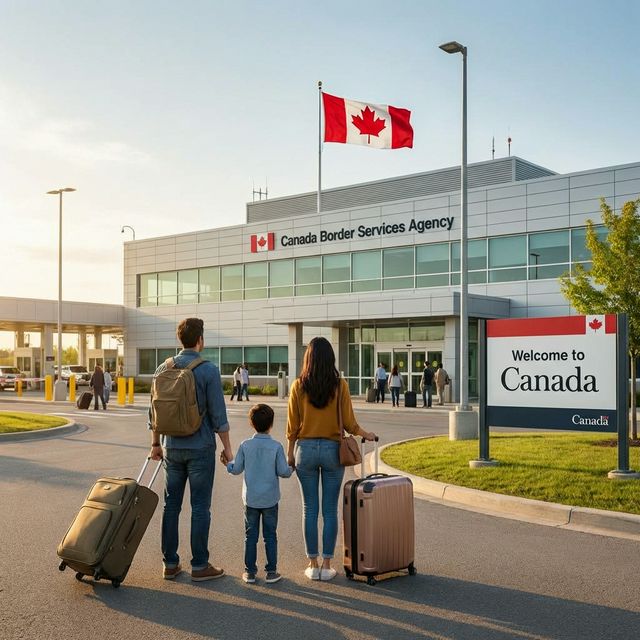
In Canada, an "asylum claim" refers to the process by which individuals seek protection from persecution, torture, or cruel and unusual treatment or punishment in their home country. Often referred to as "refugee protection claimants," these individuals are seeking Canada's protection under the Immigration and Refugee Protection Act (IRPA) and in accordance with international obligations, most notably the 1951 United Nations Convention Relating to the Status of Refugees and its 1967 Protocol, as well as the Convention Against Torture (CAT).
Canada has a long-standing tradition of offering refuge to those in need, rooted in humanitarian values and a commitment to human rights. When someone makes an asylum claim, they are essentially asking Canada to recognize them as a "Convention Refugee" or a "Person in Need of Protection."
- Convention Refugee: This designation applies to individuals who have a well-founded fear of persecution based on their race, religion, nationality, political opinion, or membership in a particular social group. The fear must be such that they cannot return to their home country, or are unwilling to, due to this fear.
- Person in Need of Protection: This category extends protection to individuals who face a risk to their life, a risk of cruel and unusual treatment or punishment, or a risk of torture if they were to return to their home country. This risk must not be general, but specific to their personal circumstances.
The asylum process in Canada is managed primarily by the Immigration, Refugees and Citizenship Canada (IRCC) and the Canada Border Services Agency (CBSA) at the initial stages, and then by the independent quasi-judicial body, the Immigration and Refugee Board of Canada (IRB). The IRB is responsible for making fair and impartial decisions on refugee protection claims made in Canada.
Why does this matter? For individuals fleeing dire circumstances, an asylum claim represents their last hope for safety, dignity, and a future free from fear. For Canada, it is a testament to its commitment to international law and human rights, contributing to a diverse and compassionate society. Successfully obtaining refugee protection can lead to a path to permanent residency in Canada, offering a new beginning for individuals and their families. However, the process is complex, demanding, and requires a thorough understanding of Canadian immigration law and procedures. This is where the expertise of a Regulated Canadian Immigration Consultant (RCIC) becomes invaluable, guiding claimants through every step to maximize their chances of a positive outcome.
Not everyone who expresses a fear of returning to their home country will be eligible to make an asylum claim in Canada. The eligibility criteria are stringent and designed to ensure that protection is granted to those genuinely in need, while upholding the integrity of the system.
Who Qualifies:
- Presence in Canada or at a Port of Entry: You must be physically present in Canada, or at a Canadian Port of Entry (airport, land border, seaport), to make a claim for refugee protection.
- Well-Founded Fear of Persecution: As a Convention Refugee claimant, you must demonstrate a well-founded fear of persecution based on one of the five Convention grounds:
- Race: Including colour, ancestry, ethnic origin.
- Religion: Including spiritual beliefs, atheism, or non-belief.
- Nationality: Including citizenship, ethnic or linguistic group, or common geographical origin.
- Political Opinion: Including actual or imputed political beliefs, opposition to a regime, or membership in a political party.
- Membership in a Particular Social Group: This is a broad category that can include groups defined by innate characteristics (e.g., gender, sexual orientation), shared past experiences, or a common social perception.
- Risk to Life, Torture, or Cruel and Unusual Treatment/Punishment: As a Person in Need of Protection, you must demonstrate a personalized risk of:
- Risk to your life.
- Risk of cruel and unusual treatment or punishment.
- Risk of torture.
- These risks must not be general to your country but specific to your individual circumstances.
Restrictions and Inadmissibility:
Even if you meet the general criteria, there are specific situations that will render you ineligible to make an asylum claim in Canada. These are critical to understand:
- Previous Refugee Claim in Canada: If you have previously made a refugee claim in Canada that was determined to be ineligible or rejected by the IRB, you generally cannot make another claim.
- Previous Refugee Claim in a "Safe Third Country": If you arrived in Canada from the United States, you are generally ineligible to make a refugee claim due to the Safe Third Country Agreement between Canada and the U.S., unless you meet one of the exceptions.
- Refugee Status in Another Country: If you have already been granted refugee status in another country that you could return to, you are ineligible.
- Serious Criminality: If you have been convicted of a serious criminal offence in Canada or outside Canada, or if there are reasonable grounds to believe you committed a serious non-political crime outside Canada before arriving, you may be ineligible.
- Human Rights Violations: If there are reasonable grounds to believe you have committed war crimes, crimes against humanity, or participated in a terrorist organization.
- Security Risks: If you are considered a danger to the security of Canada.
- Organized Crime: If you are a member of an organization that engages in transnational crime.
- Misrepresentation: Providing false information or withholding material facts can lead to inadmissibility.
General Prerequisites:
- Identity Documents: While not having identity documents does not automatically make you ineligible, you are expected to provide any available documents (passports, birth certificates, national ID cards) to establish your identity. If you don't have them, you must provide a credible explanation.
- Detailed Narrative: You must be able to provide a coherent and credible account of the events and reasons leading to your fear or risk.
- Supporting Evidence: While your testimony is primary, any available objective evidence can significantly strengthen your claim. This may include police reports, medical records, court documents, news articles, affidavits from witnesses, or country condition reports.
- Cooperation: You are expected to cooperate fully with immigration authorities, including attending interviews and hearings, providing requested documents, and undergoing medical examinations.
Understanding these eligibility criteria and potential restrictions is paramount. An RCIC can help assess your specific situation, determine your eligibility, and advise on how to best present your case to meet the stringent requirements of the Canadian asylum system.
The asylum claim process in Canada is multi-staged and can be complex. Navigating each step correctly is crucial for a successful outcome.
-
Making a Claim:
- At a Port of Entry (POE): If you arrive at a Canadian airport, land border crossing, or seaport and declare your intention to seek asylum, a Canada Border Services Agency (CBSA) officer will conduct an initial interview.
- Inland (within Canada): If you are already in Canada and wish to make a claim, you must do so at an IRCC office that processes refugee claims. You will typically need to book an appointment online.
-
Eligibility Interview and Referral to the IRB:
- Whether at a POE or inland, an officer (CBSA or IRCC) will conduct an interview to determine if your claim is eligible for referral to the Immigration and Refugee Board (IRB). They will check for any of the inadmissibility factors listed in the Eligibility section.
- If found eligible, your claim is referred to the IRB's Refugee Protection Division (RPD). You will receive documents, including a Refugee Protection Claimant Document (RPCD), which serves as proof that you are an asylum claimant. At this stage, you may also be eligible to apply for a work permit and health coverage.
-
Submitting Your Basis of Claim (BOC) Form:
- This is one of the most critical steps. You will be given a Basis of Claim (BOC) form, which is a detailed questionnaire asking for information about your identity, family, travel history, and, most importantly, the reasons why you fear returning to your home country.
- You must complete and submit this form, along with any available supporting documents, within a strict deadline (usually 15 days if you made your claim inland, or a shorter period if at a POE). The BOC form is your primary written evidence to the IRB.
-
Providing Supporting Evidence:
- After submitting your BOC form, you should continue to gather and submit all relevant supporting documents. This can include personal identification, medical reports, police records, court documents, affidavits from witnesses, letters from human rights organizations, news articles, and country condition reports relevant to your claim. All documents not in English or French must be accompanied by certified translations.
- The deadline for submitting documents is usually 10-20 days before your RPD hearing, but it's always best to submit them as early as possible.
-
Refugee Protection Division (RPD) Hearing:
- You will receive a Notice to Appear for a hearing before the RPD of the IRB. This hearing is your opportunity to present your case orally to an independent IRB Board Member.
- During the hearing, you will testify under oath, explain your story, and answer questions from the Board Member and potentially a representative from the Minister's counsel (a lawyer for IRCC/CBSA). Your representative (RCIC or lawyer) will be present to guide you, present your evidence, and make legal arguments on your behalf.
- Preparation for this hearing is paramount, including reviewing your BOC form, organizing documents, and practicing your testimony.
-
RPD Decision:
- The Board Member will listen to your testimony, review all submitted evidence, and decide whether you are a Convention Refugee or a Person in Need of Protection.
- The decision is often given orally at the end of the hearing or in writing shortly thereafter.
- If Accepted: You are recognized as a "protected person" in Canada. This is a significant milestone.
- If Rejected: Your claim is denied. You may have options to appeal or seek further review.
-
Post-Decision (If Accepted): Applying for Permanent Residence (PR):
- If your claim is accepted, you and your eligible family members (both in Canada and abroad) can apply for permanent residence in Canada. This involves submitting a separate application to IRCC, undergoing medical examinations, and security checks.
-
Post-Decision (If Rejected): Options for Review or Appeal:
- Refugee Appeal Division (RAD): If your claim is rejected, you may have the right to appeal the decision to the Refugee Appeal Division (RAD) of the IRB within a strict deadline (usually 15 days). The RAD reviews the RPD's decision for errors of law or fact.
- Pre-Removal Risk Assessment (PRRA): If you are not eligible for RAD or if your RAD appeal is denied, you may be eligible for a Pre-Removal Risk Assessment (PRRA). This assesses the risks you would face if removed from Canada, even if you are not considered a Convention Refugee or Person in Need of Protection.
- Judicial Review: In some cases, a decision from the RPD or RAD can be challenged through an application for judicial review at the Federal Court of Canada. This is not an appeal on the merits but a review of whether the decision-maker made a legal error.
- If all avenues are exhausted, and you do not have any other legal status in Canada, you may face a removal order.
Each stage has its own deadlines, requirements, and complexities. Engaging an RCIC ensures that you meet all deadlines, submit accurate information, and are well-prepared for interviews and hearings, significantly increasing your chances of a positive outcome.
Understanding the timelines and financial implications of an asylum claim is crucial for effective planning. Both can vary significantly based on individual circumstances, the complexity of the case, current government caseloads, and the specific services sought.
Processing Times
It is important to manage expectations regarding processing times, as the Canadian asylum system, while robust, can experience backlogs.
- Initial Eligibility Interview:
- At a Port of Entry: This can happen immediately upon arrival, often within hours.
- Inland: After booking an appointment, the wait for an eligibility interview can range from a few weeks to several months, depending on the volume of claims and the specific IRCC office.
- Basis of Claim (BOC) Form Submission: You typically have 15 days to submit your BOC form after your claim is referred to the IRB (or less if at a POE).
- Refugee Protection Division (RPD) Hearing Scheduling: This is often the longest waiting period. After your claim is referred and your BOC form is submitted, it can take anywhere from 6 months to over 2 years for your hearing to be scheduled. This varies greatly by the IRB office location and current caseloads.
- RPD Decision: The Board Member usually renders a decision within a few days to a few weeks after the hearing. In some complex cases, it might take longer.
- Refugee Appeal Division (RAD) (if applicable): If you appeal to the RAD, the processing time can be 6 months to over a year for a decision.
- Permanent Residence Application (if claim accepted): Once you are recognized as a protected person, applying for permanent residence can take an additional 6 months to 2 years, depending on the number of applicants, country of origin, and current IRCC processing times for this stream.
Current Backlogs: It's important to note that the Canadian immigration system, including the asylum stream, has experienced significant backlogs in recent years due to increased volumes of applications and global events. These backlogs can extend processing times beyond typical estimates. An RCIC can provide the most up-to-date information on current processing trends.
Costs
There are two main categories of costs associated with an asylum claim: government fees and professional fees.
-
Government Fees (IRCC/IRB):
- Refugee Claim Itself: There are generally NO government processing fees to make an asylum claim or for the Refugee Protection Division (RPD) hearing at the IRB. This ensures that financial barriers do not prevent individuals from seeking protection.
- Permanent Residence Application: If your asylum claim is successful, and you apply for permanent residence, standard government fees will apply. These include:
- Right of Permanent Residence Fee (RPRF): Currently $575 CAD per adult.
- Processing Fees: Currently $570 CAD for the principal applicant, $570 CAD for a spouse/partner, and $160 CAD per dependent child. These fees are subject to change by IRCC.
- Biometrics Fee: Approximately $85 CAD for an individual or $170 CAD for a family.
- Medical Examination: This is a mandatory cost paid directly to an IRCC-approved panel physician, typically ranging from $150-$300 CAD per person.
-
Professional Fees (RCIC/Legal Counsel):
- While not legally required to have a representative, it is highly recommended to engage an RCIC or immigration lawyer. Their expertise significantly increases the chances of a successful outcome.
- Consultation Fees: An initial consultation to assess your eligibility and discuss your case typically ranges from $150 to $350 CAD.
- Full Representation Fees: Fees for full representation for an asylum claim can vary widely based on the complexity of the case, the amount of evidence, the number of family members, and the RCIC's experience and location. These fees can range from $5,000 to $15,000+ CAD for the entire process, from initial assessment through to the RPD hearing. Some RCICs may offer payment plans.
- Services typically covered by professional fees include:
- Comprehensive assessment of your case.
- Assistance with gathering and organizing evidence.
- Preparation and review of the Basis of Claim (BOC) form.
- Drafting detailed narratives and affidavits.
- Identifying and preparing witnesses.
- Preparing you for your RPD hearing, including mock interviews.
- Representation at the RPD hearing.
- Post-decision advice and assistance with PR application (often a separate service/fee).
- Disbursements: These are out-of-pocket expenses that are separate from professional fees and are paid by the client. They can include:
- Translation fees for documents not in English or French (can be significant depending on the volume).
- Photocopying and courier charges.
- Fees for obtaining official documents (e.g., police certificates from other countries).
- Expert reports (e.g., psychological evaluations, country condition expert opinions).
- Legal Aid: In some Canadian provinces, Legal Aid services may be available for eligible asylum claimants who cannot afford legal representation. Eligibility criteria are strict and vary by province.
It is crucial to have a clear, written agreement with your RCIC outlining all fees, services included, and payment terms before proceeding. Transparency in billing is a hallmark of ethical professional practice.
Q1: Can I work while my asylum claim is being processed?
A: Yes, generally. Once your claim for refugee protection has been referred to the Immigration and Refugee Board (IRB) and you have completed your immigration medical examination, you are usually eligible to apply for an open work permit. This permit allows you to work for almost any employer in Canada while your claim is being processed. It's a critical support measure designed to allow claimants to support themselves and integrate into Canadian society during what can be a lengthy process. An RCIC can help you apply for this work permit efficiently.
Q2: Can my family join me in Canada if my claim is accepted?
A: Absolutely. If you are granted refugee protection by the IRB, you are recognized as a "protected person" in Canada. At this point, you can apply for permanent residence for yourself and include eligible family members in your application. This includes your spouse or common-law partner and dependent children, whether they are already in Canada or still living abroad. The family reunification aspect is a cornerstone of Canada's humanitarian immigration programs. Your RCIC can guide you through the process of sponsoring your family members to join you in Canada.
Q3: What happens if my asylum claim is rejected?
A: If your asylum claim is rejected by the Refugee Protection Division (RPD) of the IRB, you still have several potential avenues to explore, though the specific options depend on your circumstances:
- Refugee Appeal Division (RAD): If eligible, you can appeal the RPD's decision to the Refugee Appeal Division (RAD) within a strict deadline (usually 15 days). The RAD reviews the RPD decision for errors of law or fact.
- Pre-Removal Risk Assessment (PRRA): If you are not eligible for the RAD, or if your RAD appeal is denied, you may be eligible for a Pre-Removal Risk Assessment (PRRA). This assesses the risks you would face if removed from Canada (risk to life, cruel and unusual treatment, or torture), even if you don't meet the refugee definition.
- Judicial Review: In certain situations, you may be able to apply to the Federal Court of Canada for a judicial review of the RPD or RAD decision. This is not an appeal on the merits but a review of whether the decision was legally sound.
- Humanitarian & Compassionate (H&C) Application: In rare and exceptional cases, if all other avenues are exhausted, an H&C application may be considered, but this is a discretionary measure and not directly part of the refugee claim process. If all legal avenues are exhausted and you have no other legal status, you will be subject to a removal order from Canada. It is crucial to consult with an RCIC immediately if your claim is rejected to understand your options and deadlines.
Q4: Do I need an RCIC or lawyer to make an asylum claim?
A: While it is not legally mandatory to have a representative, it is highly recommended to engage a Regulated Canadian Immigration Consultant (RCIC) or an immigration lawyer. The Canadian asylum system is incredibly complex, with intricate legal frameworks, strict deadlines, and a high evidentiary standard. An experienced professional can:
- Assess Eligibility: Determine if you meet the specific criteria and identify potential inadmissibility issues.
- Prepare the Basis of Claim (BOC) Form: This is the most crucial document, and an RCIC can help you articulate your story clearly, coherently, and in a legally sound manner.
- Gather Evidence: Guide you on what evidence is necessary and how to obtain it, including country condition reports.
- Prepare for the Hearing: Coach you for your RPD hearing, including mock interviews, to ensure you are confident and articulate your testimony effectively.
- Legal Representation: Represent you at the RPD hearing, making legal arguments, presenting evidence, and cross-examining witnesses if necessary.
- Navigate Deadlines: Ensure all forms and documents are submitted on time, avoiding costly delays or rejections.
- Advise on Next Steps: Explain your options if the claim is accepted or rejected. Without professional guidance, claimants risk making critical errors that could jeopardize their chances of protection. The investment in professional representation often pays dividends in terms of peace of mind and, most importantly, a higher likelihood of success.