Constitutional Crisis? Canada's Mass Citizenship Certificate Surrender Orders Spark Legal Outcry
Canada's federal government issued mass orders on June 13, 2026, demanding the surrender of Canadian citizenship certificates from those born outside the country. Experts like Ala Bujac warn this move, authorized under Citizenship Regulations 26(1), may be unconstitutional, violating Charter 15(1) equality rights due to discrimination based on national origin. This policy creates practical disadvantages for citizens by descent, sparking a potential lengthy legal battle.

Unprecedented Challenge: The Mass Citizenship Certificate Surrender Orders
On June 13, 2026, Immigration, Refugees and Citizenship Canada (IRCC), through the Registrar of citizenship, initiated a move that has sent shockwaves through Canada's immigrant communities and legal circles. In an unprecedented action, letters were issued en masse to individuals born outside Canada, demanding the immediate surrender of their Canadian citizenship certificates. This directive, authorized under Citizenship Regulations 26(1), targets persons whose cases are under investigation, raising serious questions about the federal government's adherence to constitutional rights and the principles of equality.
The implications of this policy are profound, potentially affecting thousands of Canadians who obtained their citizenship by descent. While the government frames this as an investigative measure, legal experts are quick to point out the discriminatory nature of the order, suggesting it may constitute a violation of the Canadian Charter of Rights and Freedoms. The controversy centers on whether the government can, under the guise of an investigation, effectively strip individuals of their primary proof of citizenship, thereby hindering their ability to exercise fundamental rights.
The Immediate Impact: A Call for Surrender
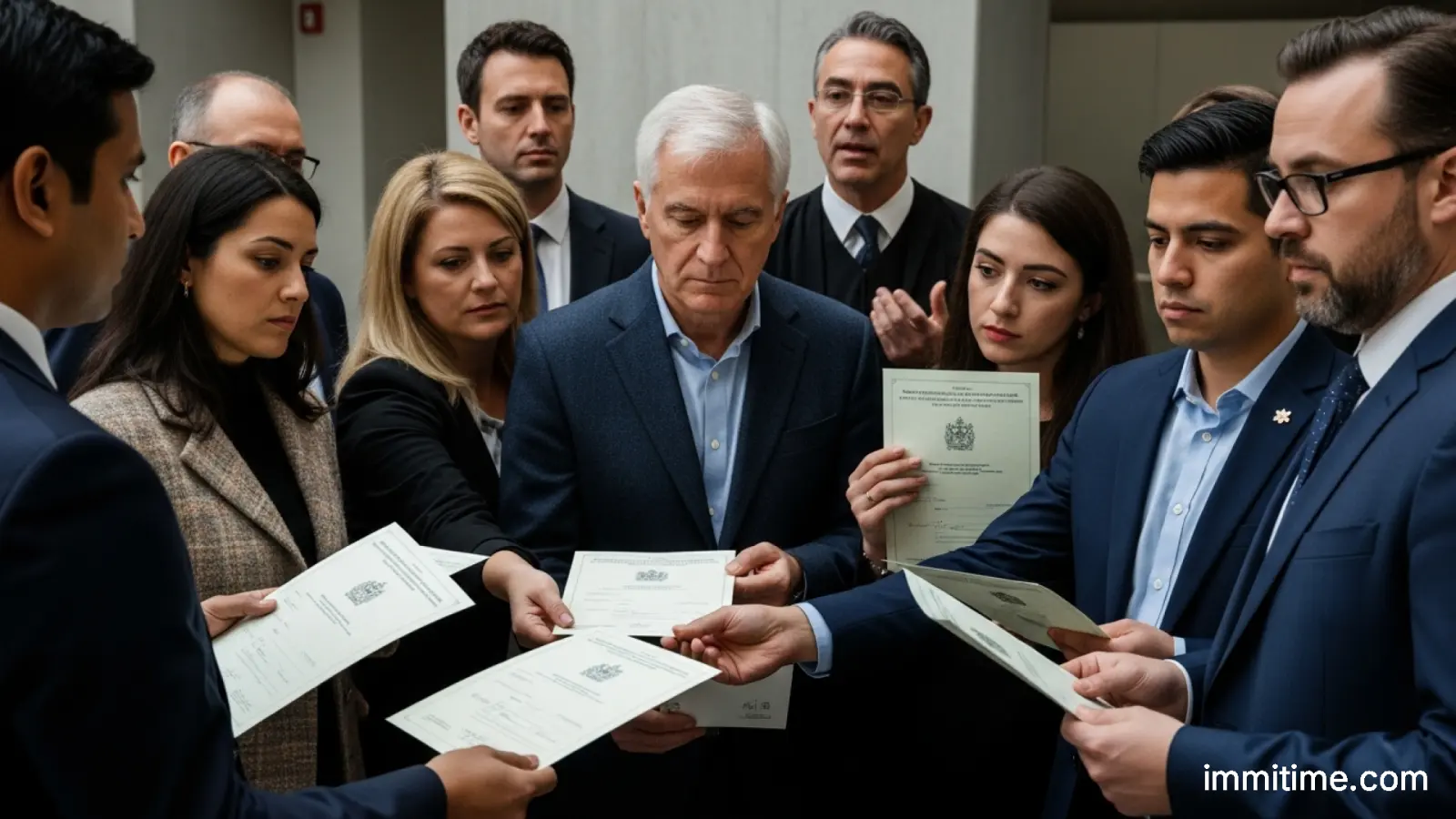
The letters, dispatched on June 13, 2026, mandated the immediate surrender of Canadian citizenship certificates. This includes various forms of proof, such as certificates of naturalization, certificates of citizenship, miniature certificates of citizenship, or any other certificate containing the person's photograph, as well as certificates of renunciation. The Registrar's authority to issue such a demand stems from Citizenship Regulations 26(1), which states that the Registrar shall require surrender if there is “reason to believe that the person may not be entitled to the certificate or has violated any of the provisions of the Act.”
For recipients, the instruction to “forthwith comply” with the requirement places them in an immediate and precarious position. Without their citizenship certificate, individuals face significant practical challenges in demonstrating their Canadian identity, even if their legal status as a citizen remains intact. This situation creates a two-tiered system of citizenship, where the rights of one group are demonstrably harder to exercise than another.
A Constitutional Storm Brewing: Expert Legal Opinion
The legality and constitutionality of the government's action were immediately questioned by legal professionals. Ala Bujac, a prominent Canadian immigration lawyer, articulated these concerns in an interview with CIC News on June 17, 2026. Bujac stated unequivocally that “this section of the Citizenship Regulations appears to threaten all the citizenship rights of every Canadian citizen who was not born on Canadian soil.” This strong assertion underscores the gravity of the situation and the potential for wide-ranging legal ramifications.
According to Bujac, there is a “possible challenge” to the issuance of these letters, primarily on the grounds that they violate the Canadian Charter of Rights and Freedoms. Specifically, the challenge would likely focus on Charter 15(1), which guarantees all persons freedom from discrimination, including specifically discrimination on the basis of “national or ethnic origin.” This provision is central to the argument that the Registrar’s actions disproportionately affect citizens born outside Canada.
Unequal Application: Citizens by Descent vs. Citizens by Birth
The core of the constitutional challenge lies in the differential treatment of Canadian citizens based on their place of birth. The policy targets individuals born outside Canada, who rely on citizenship certificates as their primary proof of status. When these certificates are surrendered, these individuals, while legally retaining their citizenship, are effectively disenfranchised in practice. They lack the tangible document necessary to prove their status for various essential activities.
In stark contrast, citizens born in Canada can readily prove their citizenship using birth certificates. Crucially, birth certificates are not subject to forced surrender under Citizenship Regulations 26(1). This distinction creates a clear disparity: one group of citizens can easily verify their status, while another, solely due to their place of birth, is stripped of their primary means of proof, making it difficult to exercise their rights.
Bujac highlighted this disparity, suggesting that a court may conclude that citizens by descent are disadvantaged on the basis of their national origin as a consequence of Citizenship Regulations 26(1). This argument positions the regulation as discriminatory, creating a hierarchy of citizenship based on the arbitrary factor of birthplace, which directly contravenes the equality principles enshrined in the Charter.
Understanding Citizenship Regulations 26(1) in Detail
To fully grasp the scope of the current controversy, it is essential to examine the precise wording of Citizenship Regulations 26(1). The regulation states: “The Registrar shall, in writing, require a person to surrender to the Registrar any certificate of naturalization, certificate of citizenship, miniature certificate of citizenship or other certificate of citizenship that contains the person’s photograph, or certificate of renunciation, issued or granted to the person under the Act or prior legislation or any regulations made under them if there is reason to believe that the person may not be entitled to the certificate or has violated any of the provisions of the Act, and the person shall forthwith comply with the requirement.”
This regulation grants the Registrar broad powers to demand the surrender of documentation based on a “reason to believe” an individual may not be entitled to their certificate or has violated the Citizenship Act. While the intent might be to address cases of fraudulent acquisition of citizenship, the blanket application to individuals born outside Canada, and the immediate surrender requirement, raises alarms about due process and the presumption of innocence. The power to demand surrender without a prior judicial finding of wrongdoing is a significant point of contention.
The Charter of Rights and Freedoms: A Shield for Citizens
The Canadian Charter of Rights and Freedoms stands as the supreme law of Canada, guaranteeing fundamental rights and freedoms to all individuals within the country, including its citizens. The current dispute hinges on two critical sections of the Charter:
- Charter 15(1) – Equality Rights: This section stipulates that “Every individual is equal before and under the law and has the right to the equal protection and equal benefit of the law without discrimination and, in particular, without discrimination based on race, national or ethnic origin, colour, religion, sex, age or mental or physical disability.” The argument put forth by legal experts is that Citizenship Regulations 26(1) discriminates against citizens by descent based on their national or ethnic origin, as it applies specifically to those born outside Canada and creates a practical disadvantage not faced by those born domestically.
- Charter 1 – Reasonable Limits Clause: Should a court find that 26(1) contravenes Charter 15(1), the government would then need to demonstrate that this contravention is allowable under Charter 1. This section states that the Charter “guarantees the rights and freedoms set out in it subject only to such reasonable limits prescribed by law as can be demonstrably justified in a free and democratic society.” For the government to succeed, it would need to prove that the mass surrender orders, despite infringing on equality rights, are a reasonable and demonstrably justified measure in a democratic society. This is a high bar, requiring compelling evidence that the policy is necessary, proportionate, and minimally intrusive.
Historical Context and Policy Evolution (within source limitations)
While the source does not provide a detailed historical timeline of Canadian citizenship policy, it does reference “prior legislation” within Citizenship Regulations 26(1). This indicates that the framework for issuing and potentially recalling citizenship documents has evolved over time. Traditionally, Canadian citizenship has been viewed as a fundamental right, affording individuals full participation in the country's social, economic, and political life. The Charter, enacted in 1982, cemented these rights, including the right to equality. Any policy that appears to create a distinction between citizens based on their origin or method of acquiring citizenship (birth vs. descent/naturalization) represents a significant departure from these foundational principles.
The current situation raises concerns about the erosion of these rights and the potential for administrative overreach. While the government has a legitimate interest in safeguarding the integrity of its citizenship program and addressing potential fraud, the method chosen – mass surrender orders impacting a specific group – is being scrutinized for its proportionality and its respect for fundamental rights. This policy represents a critical moment in Canadian immigration and citizenship law, potentially setting a precedent for how the government interacts with its citizens, particularly those who acquired citizenship through non-birth routes.
Practical Implications for Affected Individuals
The immediate and practical consequences for individuals forced to surrender their Canadian citizenship certificates are severe:
- Travel Restrictions: Without a valid Canadian citizenship certificate, obtaining or renewing a Canadian passport becomes extremely difficult, if not impossible. This can severely restrict an individual's ability to travel internationally, affecting family visits, business obligations, and personal freedom of movement.
- Employment Challenges: Many employers, especially those in regulated industries or government positions, require proof of Canadian citizenship for hiring purposes. Lacking the primary document could jeopardize employment opportunities or even lead to job loss.
- Access to Services: While theoretically retaining their rights, proving citizenship for various government services, financial institutions, or even certain educational programs could become a bureaucratic nightmare without the certificate.
- Psychological Distress: The uncertainty and feeling of being targeted, combined with the practical difficulties, can cause significant emotional and psychological distress for affected individuals and their families. The very foundation of their Canadian identity is called into question.
Navigating the Uncertainty: What Should Affected Individuals Do?
For those who have received a letter from the Registrar of citizenship dated June 13, 2026, demanding the surrender of their Canadian citizenship certificate, immediate action and careful consideration are paramount:
- Seek Legal Consultation: The most crucial step is to consult with a qualified Canadian immigration lawyer, such as Ala Bujac, or a legal professional specializing in constitutional law. A lawyer can assess the specifics of your situation, advise on your rights, and help you understand the implications of complying or challenging the order. The source itself encourages obtaining a “Free Consultation on Applying for Proof of Canadian Citizenship,” highlighting the need for expert guidance.
- Document Everything: Keep meticulous records of all communications from IRCC, including the date of receipt of the letter, any subsequent correspondence, and notes from any phone calls.
- Understand Your Rights: While the order demands immediate surrender, it is vital to understand that you are still a Canadian citizen under law, even if you lack the physical proof. Your rights under the Charter remain, and a legal challenge may be possible.
- Consider the Implications of Compliance: Complying with the order means surrendering your certificate, which will immediately create the practical difficulties outlined above. Your lawyer can advise on the risks and benefits of compliance versus non-compliance or challenging the order.
- Stay Informed: Follow developments in this legal challenge closely. As the situation unfolds, new information and legal precedents may emerge that could impact your case.
The Road Ahead: A Lengthy Legal Battle
Should rights holders pursue a Charter challenge against Citizenship Regulations 26(1), the path to resolution will likely be protracted. As Ala Bujac indicated, it would “likely be years” before Canadians obtain an answer from the courts. Constitutional challenges often involve multiple levels of the judiciary, from provincial superior courts to courts of appeal, and potentially to the Supreme Court of Canada. Each stage can take considerable time, adding to the uncertainty and anxiety for affected individuals.
During this period, the legal status of the mass surrender orders, and the practical challenges faced by citizens by descent, will remain in flux. The outcome of such a challenge could have far-reaching implications, not only for those directly affected by the June 13, 2026 orders but also for the broader interpretation of citizenship rights and equality under Canadian law.
Conclusion: Upholding the Integrity of Canadian Citizenship
The federal government's decision to issue mass surrender orders for Canadian citizenship certificates on June 13, 2026, marks a critical juncture in Canadian immigration policy. While the government's stated aim may be to investigate entitlement, the method employed, particularly its differential impact on citizens born outside Canada, has ignited a significant constitutional debate. The expert analysis from Ala Bujac clearly articulates the potential violation of Charter 15(1) equality rights, raising fundamental questions about discrimination based on national or ethnic origin.
The practical implications for affected individuals are immediate and severe, impacting their ability to travel, work, and access essential services. As the legal community prepares for a potential Charter challenge, the focus remains on upholding the integrity of Canadian citizenship and ensuring that all citizens, regardless of their place of birth, are afforded equal protection and benefit of the law. The journey ahead will be long, but the defense of these fundamental rights is paramount for a free and democratic society.
Frequently Asked Questions
Who is affected by the Registrar's mass surrender orders issued on June 13, 2026?
The orders specifically target persons who were born outside Canada and are holders of Canadian citizenship certificates. These individuals are required to surrender their certificates while their cases are being investigated under Citizenship Regulations 26(1).
What is Citizenship Regulations 26(1) and why is it controversial?
Citizenship Regulations 26(1) authorizes the Registrar to demand the surrender of citizenship certificates if there is "reason to believe" a person may not be entitled to it or violated the Act. It's controversial because experts believe its application to citizens born outside Canada may violate Charter 15(1) by discriminating based on national origin.
Why do experts believe the government's action may be unconstitutional?
Legal expert Ala Bujac states the action may violate the Canadian Charter of Rights and Freedoms, specifically Charter 15(1), which guarantees freedom from discrimination based on national or ethnic origin. Citizens by descent are disadvantaged as they lose proof of citizenship, unlike citizens born in Canada who use birth certificates not subject to 26(1).
What are the practical implications for a citizen by descent who surrenders their certificate?
While legally retaining citizenship, they cannot equally exercise their rights in practice due to lacking the document proving their status. This can hinder travel, employment, and access to various services requiring proof of Canadian citizenship.
How long might a Charter challenge against Citizenship Regulations 26(1) take?
According to immigration lawyer Ala Bujac, should rights holders pursue a Charter challenge, it would likely be 'years' before Canadians obtain an answer, given the complex nature of constitutional legal processes.
Last Updated: