A Closed Door on the Border: Deconstructing the Permanent Shutdown of New Brunswick's Four Falls Port of Entry
The permanent closure of the Four Falls, NB port of entry reveals a shift in Canada's border strategy. Our expert analysis covers why it was closed and what it means for travellers.
Free Immigration Assessment
Complete our smart assessment form to check your eligibility for over 80+ Canadian immigration programs.
The End of an Era: Four Falls POE Officially Shut Down
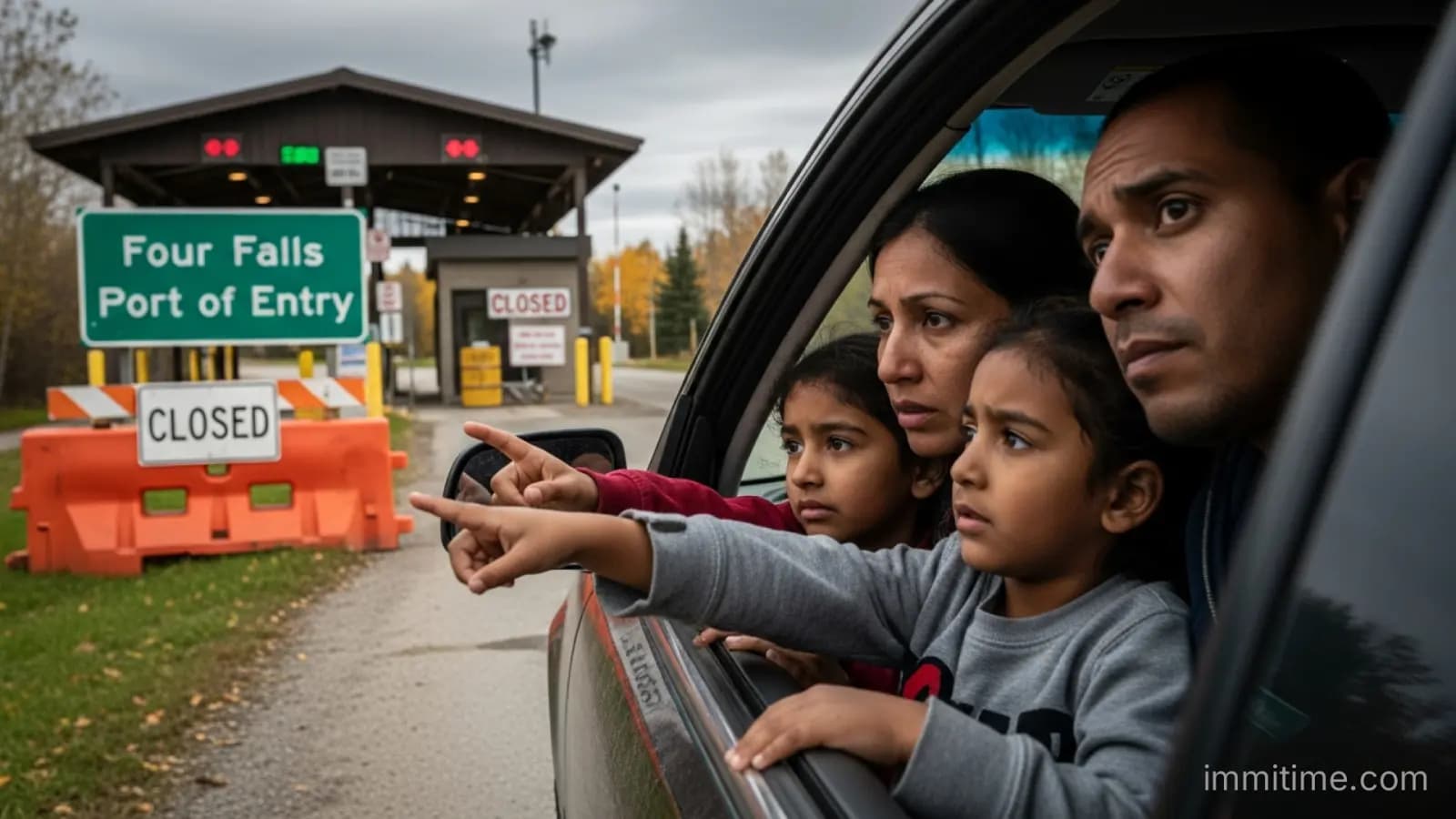
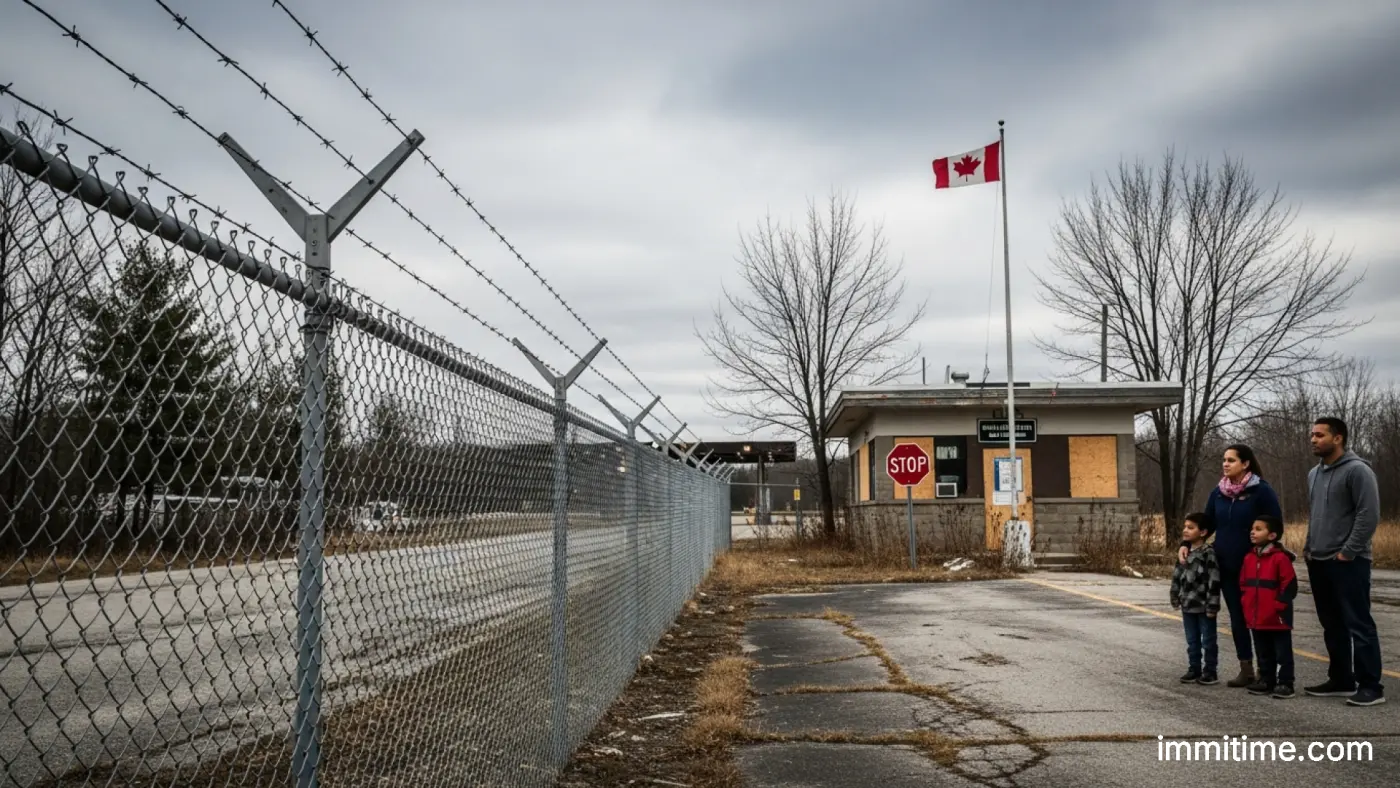
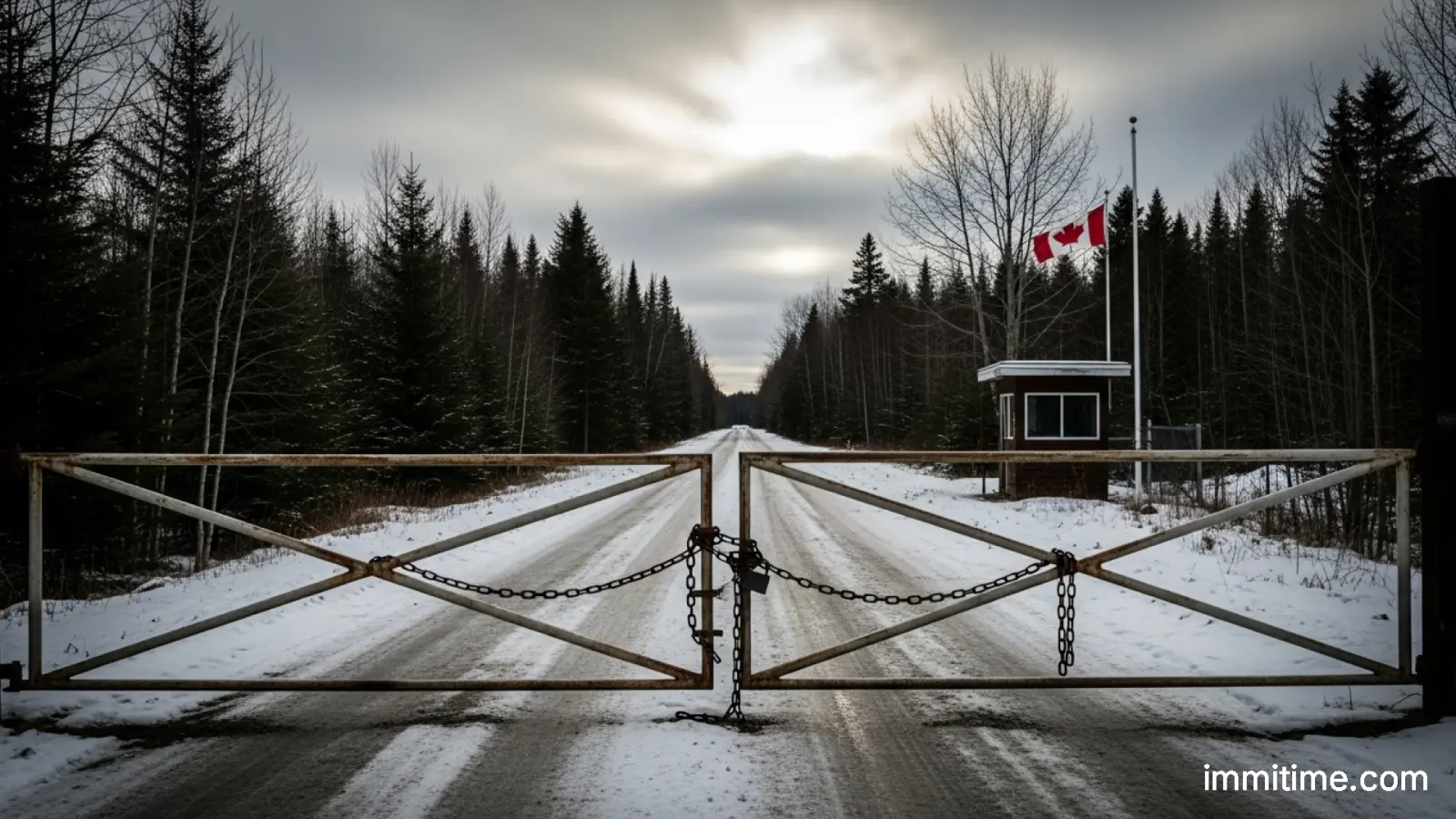
In a move that formalizes a reality in place for years, the Canada Border Services Agency (CBSA) has announced the permanent closure of the Four Falls port of entry (POE) in New Brunswick. The announcement, made on May 11, marks the definitive end for a border crossing that had been a seasonal fixture in the northwestern part of the province. While the news may seem like a minor logistical update for a small, seasonal crossing, it serves as a significant case study in Canada's evolving border management strategy, resource optimization, and the lasting operational shifts following the COVID-19 pandemic.
The Four Falls crossing has not been in service since May 17, 2020, when it was first shuttered as part of the sweeping travel restrictions implemented to combat the global pandemic. What began as a temporary health measure transitioned into a multi-year suspension, which the CBSA extended on several occasions. The agency notes that these extensions occurred over the past six years, suggesting a long-term review process that predated or ran concurrently with the pandemic-era suspension, culminating in the recent decision to make the closure permanent.
For travellers, residents, and businesses in the region, this decision solidifies a change in the cross-border landscape. Individuals who once used the Four Falls POE must now integrate the use of nearby alternatives into their travel plans permanently.
Navigating the New Reality: Alternate Crossings and Compliance
With Four Falls now permanently off the map, the CBSA has directed all cross-border traffic to two other nearby ports of entry. Fortunately for travellers, these alternatives are located within a relatively short distance, ensuring that a pathway between Canada and the United States remains accessible in the region.
The designated alternate POEs are:
- Port of entry: Andover
- Location: 6 Route 190, Carlingford, NB
- Hours of operation: 24 hours a day, 7 days a week
- Port of entry: Gillespie Portage
- Location: 600 Route 375, California Settlement, NB
- Hours of operation: Daily, 7 a.m. to 7 p.m.
The availability of a 24/7 option at Andover provides crucial flexibility for commercial traffic and travellers on non-traditional schedules. However, the limited hours at Gillespie Portage mean that careful planning is essential. Travellers are strongly advised to consult the official Directory of CBSA Offices and Services for the most current contact details and hours. Furthermore, the CBSA’s official webpage provides regularly updated border wait times, a critical tool for planning an efficient crossing.
The Unwavering Requirement to Report
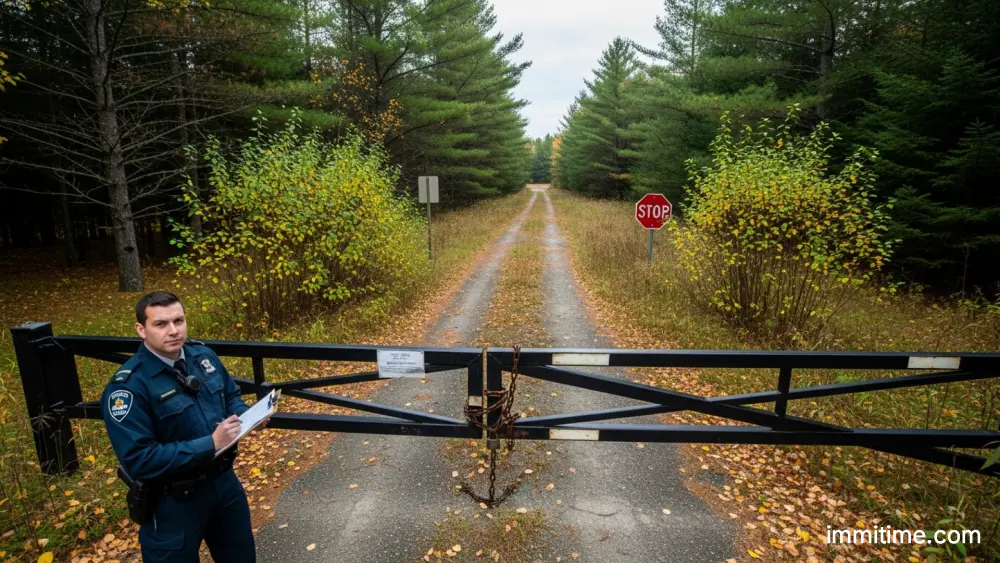
This closure serves as a stark reminder of a fundamental principle of Canadian immigration and customs law: all persons entering Canada must report to the CBSA at a designated port of entry. The closure of a POE does not create a legal vacuum or a permissible zone for crossing. Attempting to cross the border at a location like the former Four Falls site is illegal and carries severe consequences. As stipulated by Canadian law, failing to report can result in:
- Financial Penalties: Substantial fines can be levied against individuals who cross illegally.
- Seizure of Goods and Vehicles: The vehicle used to cross and any goods being transported can be seized.
- Loss of Privileges: Members of trusted traveller programs (like NEXUS) will have their status revoked.
- Criminal Prosecution: Offenders can be prosecuted under the Immigration and Refugee Protection Act or the Customs Act, leading to a criminal record and potential imprisonment.
Behind the Decision: An Analysis of the CBSA's Rationale
The CBSA's decision was not made in a vacuum. It was the result of a comprehensive review of operational needs in Atlantic Canada. The agency has publicly cited four key factors that drove the decision to permanently close the Four Falls POE. Analyzing these factors provides a clear window into the modern priorities of Canadian border management: efficiency, security, and bilateral alignment.
1. Seasonal Operations and Low Traffic Volume
The Four Falls crossing was never a year-round operation; it functioned seasonally from mid-April to mid-October. More importantly, its traffic volume was exceptionally low, handling only about 8,000 travellers per entire season. In the context of border management, this number is minuscule. Maintaining the infrastructure, technology, and staffing—even for a seasonal operation—for such a low volume of traffic represents a significant cost-per-traveller. In an era of fiscal prudence, the CBSA is clearly focused on allocating its resources to higher-traffic corridors where they can have the greatest impact on security and trade facilitation.
2. Proximity of Viable Alternatives
The existence of two other POEs within 15 km was arguably the most critical factor enabling this closure. The Andover and Gillespie Portage crossings provide sufficient coverage for the region's cross-border needs. From a planning perspective, having three POEs in such close proximity was an operational redundancy. Consolidating traffic into two more strategically managed points allows the CBSA to concentrate its personnel and technology, potentially leading to more efficient processing and stronger enforcement at those locations.
3. The 'One-Sided' Border: Aligning with U.S. Operations
Perhaps the most compelling logistical reason for the closure is the fact that the Four Falls POE had no corresponding U.S. port of entry on the other side of the border. This created an asymmetrical crossing, a remnant of historical travel patterns that makes little sense in the modern, integrated security environment. Such a setup is inherently inefficient and can create potential security vulnerabilities. The CBSA explicitly stated that closing Four Falls helps to align Canadian operations with those of the U.S. on this particular stretch of the border. This move toward harmonization reflects a broader, post-9/11 trend of Canada and the U.S. working to create a smarter, more secure, and more logically structured shared border.
Implications for Immigrants and Cross-Border Travellers
While the closure of a small, seasonal POE may not seem like a major immigration policy shift, it has practical implications and offers important lessons for anyone interacting with the Canadian border.
A Reminder on Admissibility
The source news item wisely includes a reminder that all travellers must be admissible to Canada. Having a criminal record, even for what might be considered a lesser offence like a Driving Under the Influence (DUI), can render a person criminally inadmissible to Canada and result in being turned away at the border. The closure of Four Falls and the redirection of travellers to busier POEs like Andover means that individuals will be interacting with officers at fully-equipped, 24/7 facilities where access to databases and secondary screening capabilities are robust. This is a critical reminder for anyone with a past offence to take the necessary legal steps, such as applying for a Temporary Resident Permit or Criminal Rehabilitation, well in advance of any planned travel to Canada.
The Importance of Preparation
This event underscores the dynamic nature of the Canada-U.S. border. Ports of entry can close, hours can change, and policies can be updated. For anyone crossing the border—whether for tourism, business, or immigration purposes like activating a work permit—preparation is key. Always verify your route, check the hours of operation for your chosen POE, and have all your documentation in order. Relying on outdated information or GPS data can lead to significant delays and frustration. The closure of Four Falls is a clear signal that the border is not static, and travellers must be proactive in planning their journey.
In conclusion, the permanent closure of the Four Falls port of entry is a microcosm of a larger trend in Canadian border management. It is a data-driven decision rooted in principles of fiscal responsibility, operational efficiency, and international cooperation. While it represents the end of a chapter for one small New Brunswick community, it points toward a future of a more streamlined, secure, and strategically managed Canada-U.S. border.
Frequently Asked Questions (FAQ)
Frequently Asked Questions
Why was the Four Falls port of entry in New Brunswick permanently closed?
The CBSA closed it after a review, citing four main reasons: it was a seasonal crossing with very low traffic (about 8,000 travellers per season), there are two other POEs within 15 km, and there was no corresponding U.S. port of entry on the American side.
What are the alternative border crossings now that Four Falls is closed?
Travellers can use two nearby ports of entry. The Andover POE is open 24/7, and the Gillespie Portage POE is open daily from 7 a.m. to 7 p.m.
When did the Four Falls port of entry officially close?
The permanent closure was announced on May 11. However, the crossing had already been out of service since it was temporarily closed on May 17, 2020, due to pandemic-related travel restrictions.
What happens if I try to cross the border where the Four Falls POE used to be?
You must report to the CBSA at a designated port of entry. Failing to do so is illegal and can result in serious consequences, including fines, seizure of your vehicle, prosecution under Canadian law, and loss of trusted traveller status.
Free Immigration Assessment
Complete our smart assessment form to check your eligibility for over 80+ Canadian immigration programs.
Last Updated: