Banking in Canada & Building Credit: A Newcomer's 2026 Guide
Welcome to Canada! This essential 2026 guide covers opening your first bank account, understanding the Canadian credit system, and the steps to build a strong financial future from day one.
Free Immigration Assessment
Complete our smart assessment form to check your eligibility for over 80+ Canadian immigration programs.
Introduction: Why Banking is Your Financial Foundation in Canada
When you arrive in Canada as a newcomer or immigrant, a bank account is more than just a place to store cash. In Canada, your financial life revolves around the concept of "Credit". Without a solid credit history, simple tasks like renting an apartment, buying a car, or even getting a monthly phone plan can become significant hurdles. This comprehensive 2026 guide covers everything you need to know about banking and building your credit score from day one.
Section 1: Understanding the Canadian Banking Ecosystem in 2026
Canada boasts one of the safest and most stable banking systems in the world. The landscape is dominated by the "Big Five" banks, but in 2026, digital neo-banks have also become major players, offering competitive rates and low fees.
1. The Big Five Banks
These banks have the most extensive branch and ATM networks across the country:
- RBC (Royal Bank of Canada): Canada’s largest bank, known for its stability and excellent newcomer packages.
- TD Bank (Toronto-Dominion): Famous for its "Always Open" philosophy, offering long hours and weekend service.
- Scotiabank: A top choice for those looking for rewards programs (like Scene+) integrated with shopping and entertainment.
- BMO (Bank of Montreal): Offers specialized packages for students and healthcare professionals.
- CIBC: Highly rated for its digital banking app and innovative online services.
2. Digital and Neo-Banks (Direct Banking)
For those seeking zero monthly fees and higher interest rates on savings:
- Tangerine: Owned by Scotiabank, offering a completely digital experience with no monthly fees.
- Simplii Financial: A division of CIBC, popular for its straightforward, fee-free banking.
- EQ Bank: Consistently offers some of the highest interest rates for savings accounts in Canada.
Section 2: Step-by-Step Guide to Opening Your First Account
Most major banks offer Newcomer Programs specifically designed for immigrants. These programs typically include 12–24 months of waived monthly fees, a free credit card, and sometimes cash incentives ranging from $300 to $600.
Required Documents:
In 2026, you generally need two pieces of government-issued ID:
- A valid Passport.
- Confirmation of Permanent Residence (COPR), a Work Permit, or a Study Permit.
- Social Insurance Number (SIN): While not strictly required for a basic chequing account, it is necessary for interest-bearing savings accounts for tax reporting.
Section 3: Deep Dive into Your Credit Score
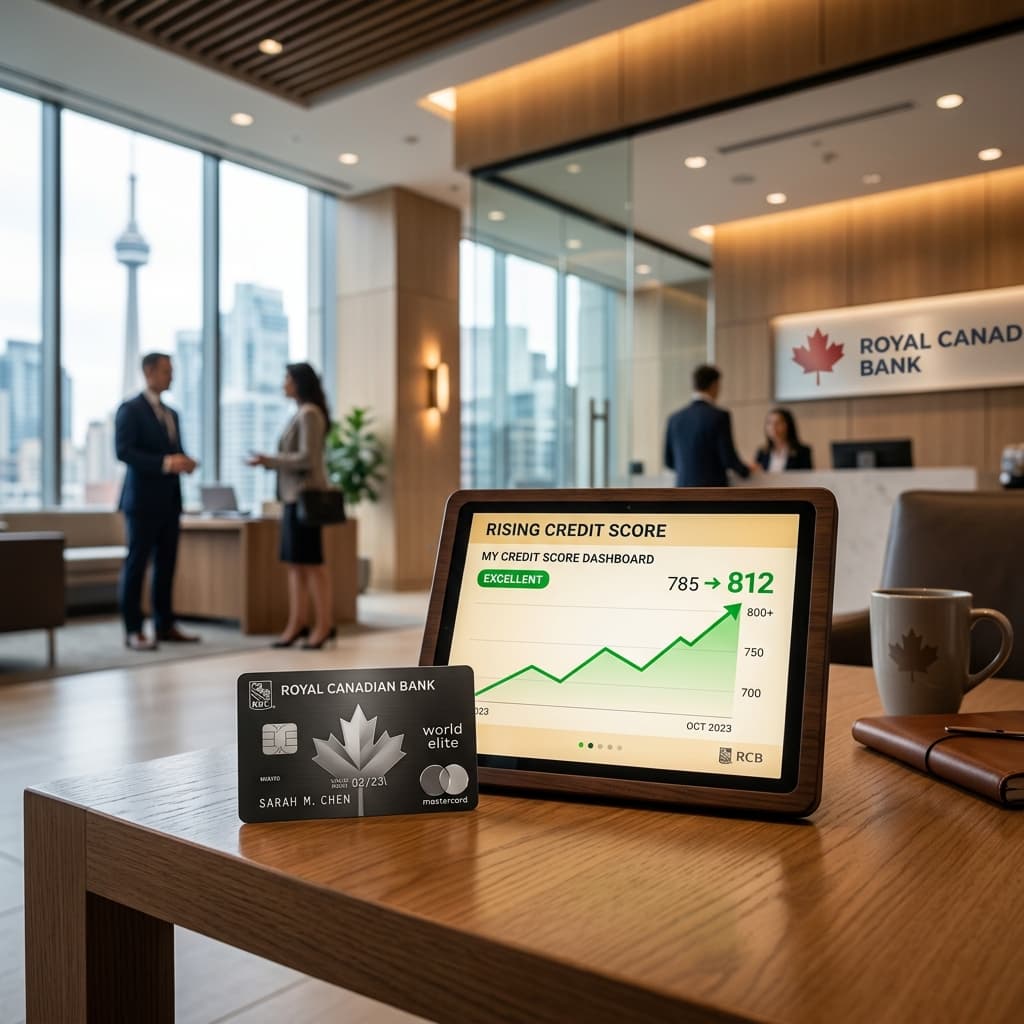
Your credit score is a number between 300 and 900 that tells lenders how likely you are to repay your debts.
Credit Score Ranges in Canada:
- 800 - 900 (Excellent): You will qualify for the best mortgage and car loan rates.
- 720 - 799 (Very Good): Most lenders will approve your applications with ease.
- 650 - 719 (Good): The Canadian average; sufficient for most financial services.
- 600 - 649 (Fair): You may face higher interest rates or stricter conditions.
- Below 600 (Poor): Immediate action is needed to rebuild your credit.
Section 4: Golden Strategies to Build Your Credit Score Quickly
As a newcomer, you don't start with a "zero" score—you start with no file at all. Follow these steps to build a strong profile within your first 6 months:
1. Get a Secured Credit Card
If a bank denies you a regular credit card due to lack of history, apply for a Secured Credit Card. You provide a security deposit (e.g., $500), and the bank gives you a credit limit of the same amount. This activity is reported to credit bureaus and builds your score.
2. The 30% Rule (Credit Utilization)
Never use more than 30% of your available credit limit. If your limit is $1,000, keep your balance below $300. This shows lenders that you are not over-reliant on borrowed money.
3. Pay Bills on Time, Every Time
Even a one-day delay in paying your phone, internet, or credit card bill can negatively impact your score. Set up Auto-pay for all recurring bills.
Section 5: Strategic Savings Accounts in Canada
Understanding these accounts can save you thousands of dollars in taxes:
- TFSA (Tax-Free Savings Account): Any growth or interest earned in this account is 100% tax-free.
- RRSP (Registered Retirement Savings Plan): Contributions reduce your taxable income, helping you save for retirement while paying less tax now.
- FHSA (First Home Savings Account): A newer tool (since 2023) specifically designed to help Canadians save for their first home down payment with tax-advantaged growth.
Section 6: Financial Security and Avoiding Scams
In 2026, financial scams have become more sophisticated. Remember:
- Banks will NEVER ask for your password, PIN, or SIN via text or email.
- Beware of "Phishing" links claiming your account is locked.
- Always enable Two-Factor Authentication (2FA) on your banking apps.
Frequently Asked Questions (FAQ)
1. Does having multiple credit cards help my score?
In the long run, yes. However, applying for too many at once when you first arrive can cause "Hard Inquiries" that temporarily lower your score. Start with one and wait 6 months for the next.
2. How long does it take for my credit score to appear?
Typically, after 3 to 6 months of active and responsible credit use, your first score will appear in Equifax and TransUnion reports.
3. Are funds brought from overseas taxable?
Generally, no. Settlement funds brought into Canada are not considered taxable income, though you may need to prove the source for anti-money laundering (AML) compliance.
Official Resources and Links
Free Immigration Assessment
Complete our smart assessment form to check your eligibility for over 80+ Canadian immigration programs.
Last Updated: