Beyond Books: How Canada's Public Libraries Have Become a Secret Weapon for Newcomer Success
For newcomers, Canada's public libraries are a powerful gateway to belonging. Learn how these community hubs provide essential free services for language, employment, and settlement.
Free Immigration Assessment
Complete our smart assessment form to check your eligibility for over 80+ Canadian immigration programs.
The Unsung Hero of Canadian Immigration: Deconstructing the Library's Role as a Primary Settlement Hub
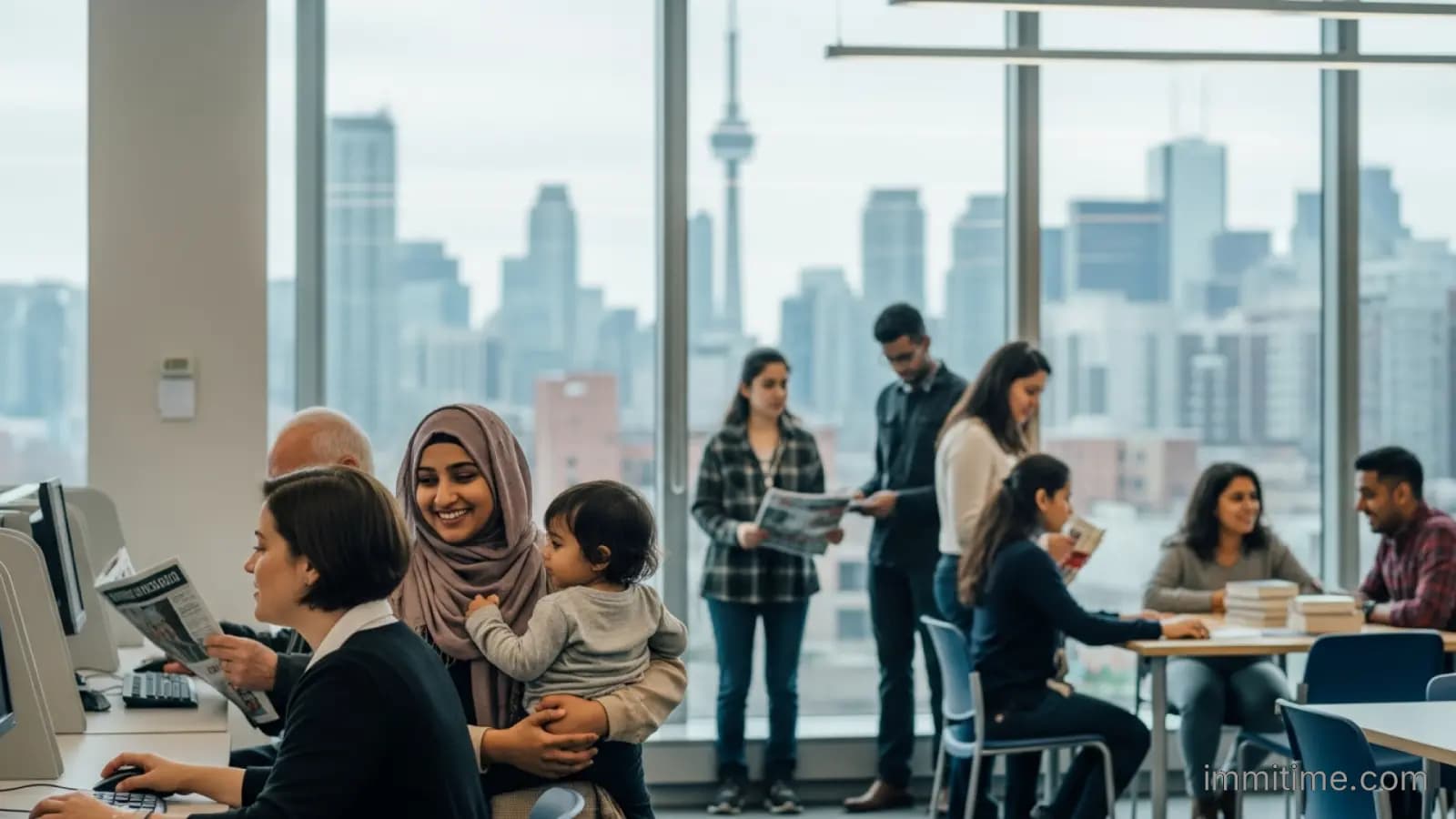
For generations, the public library has occupied a specific space in the Canadian psyche: a quiet sanctuary of books, a hushed environment for study, a place of silent, individual pursuit. But for the hundreds of thousands of newcomers who arrive in Canada each year, this perception is shattered on their first visit. What they discover is not a relic of a bygone era, but a dynamic, powerful engine of integration. The modern Canadian public library is a bustling "community hub," and as a recent bulletin from Immigration, Refugees and Citizenship Canada (IRCC) highlights, it is arguably one of the most critical, yet under-celebrated, pillars of the nation's settlement infrastructure.
This article moves beyond the headlines to provide an in-depth analysis of the library's transformative role. We will explore the strategic importance of these institutions in Canada's broader immigration policy, break down the specific, high-value services they provide, and offer practical, actionable advice for newcomers seeking to leverage this incredible, free resource. What many new arrivals quickly realize is that a simple, free library card is not just a pass to borrow books; it is a key that unlocks a suite of services that could otherwise cost thousands of dollars, providing a crucial "gateway to belonging" during the most challenging phase of their immigration journey.
The Paradigm Shift: From Book Depository to Essential Settlement Service
The evolution of the Canadian library from a passive repository of information to an active facilitator of community integration represents a significant, albeit quiet, policy success. While not a formal government agency, the library system has organically grown to fill gaps that are often difficult for more structured settlement programs to address. The IRCC's recent focus on these services is an official acknowledgment of a reality that immigrants and front-line support workers have known for years: the library is where settlement happens on the ground level.
The source material notes that for many, the first visit is "eye-opening." This is no exaggeration. Imagine arriving in a new country, facing the daunting tasks of finding housing, securing a job, learning a new language, and navigating a complex bureaucracy. Now, imagine discovering a single, welcoming place that offers direct, free assistance with every one of those challenges. This is the modern Canadian library. Its power lies in its unique combination of accessibility and trust, making it a perfect first point of contact for individuals and families starting their new life.
Deconstructing the Library's Settlement Toolkit: A Four-Pillar Framework
The services offered are not random; they form a comprehensive, four-pillar framework designed to address the most pressing needs of new immigrants. Understanding this framework is key to maximizing the benefits.
Pillar 1: Foundational Language and Literacy Support
For most newcomers, language is the first and highest barrier to successful integration. While formal language instruction is vital, libraries provide a crucial, complementary layer of support that is often more accessible and less intimidating. The source identifies several key offerings:
- Conversation circles: Often led by volunteers, these informal gatherings are perhaps the most valuable language tool a library offers. They provide a safe space to practice speaking and listening skills without the pressure of a graded classroom environment, helping newcomers build the confidence needed for real-world interactions.
- ESL (English as a Second Language) classes: Many libraries host formal or semi-formal ESL classes, often in partnership with local school boards or immigrant-serving agencies, bringing the classroom directly into a trusted community space.
- Online learning platforms and language apps: A library card frequently grants free access to premium language-learning software and applications that would otherwise require expensive subscriptions.
- Literacy tutoring: Recognizing that language needs extend to the whole family, libraries offer tutoring for both adults and children, supporting family literacy and helping parents engage with their children's education.
Expert Analysis & Advice: The informal nature of these programs is their superpower. They combat the common newcomer phenomenon of possessing strong theoretical language knowledge but lacking the practical confidence to speak. We strongly advise new arrivals to join a conversation circle immediately, even if they feel their English is poor. The goal is practice, not perfection. Ask librarians about access codes for online platforms like Mango Languages or Rosetta Stone, which are often free with your card.
Pillar 2: Navigating the System with Settlement Information
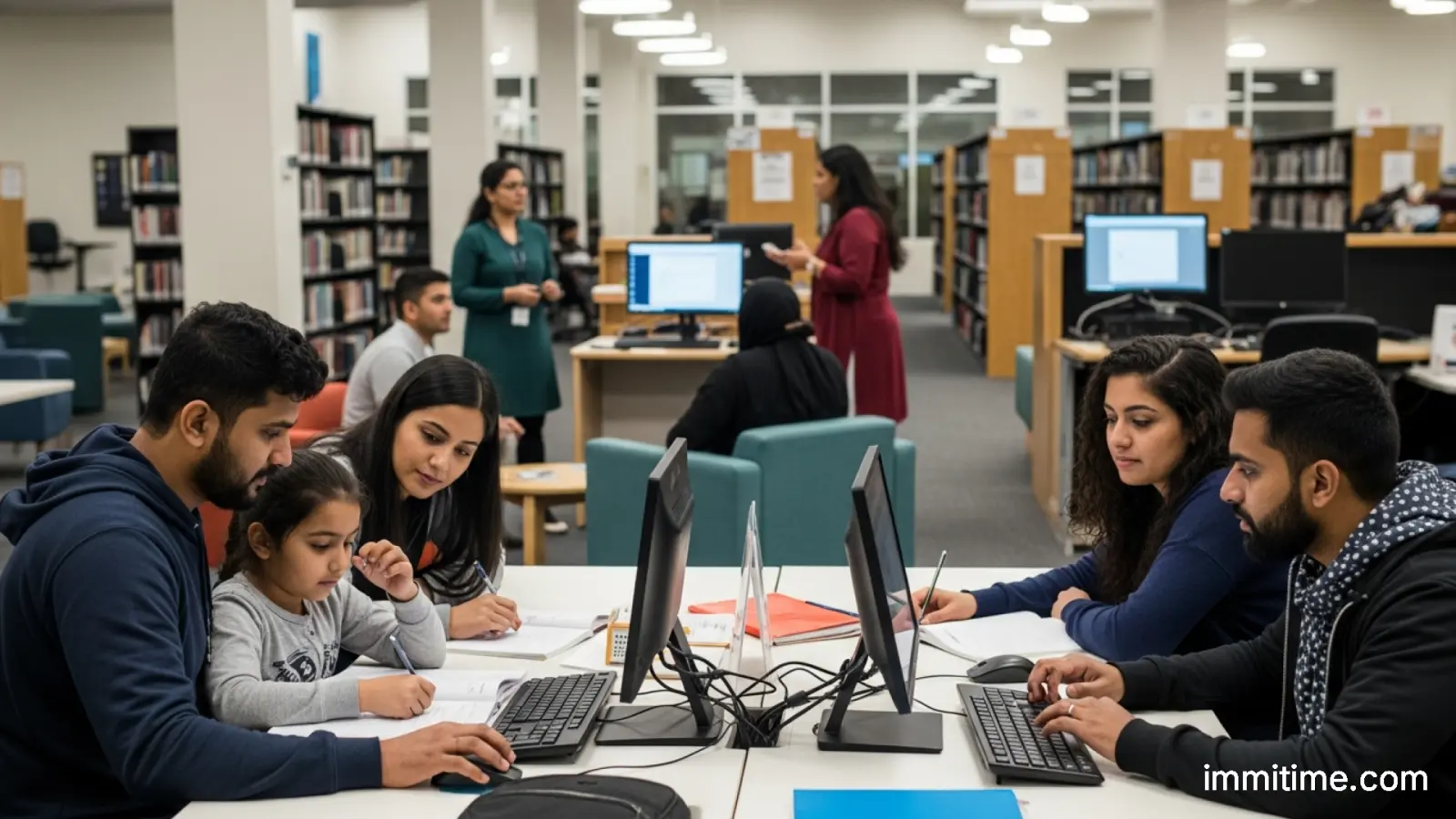
Canada's systems for healthcare, education, and housing can be bewildering. Libraries act as a crucial navigation point, providing trusted information and referrals. This is often accomplished through direct partnerships with immigrant-serving organizations. Key services include:
- Information on essential services: Librarians are trained to direct newcomers to resources on housing, healthcare (including how to apply for a health card), and enrolling children in school.
- Help with government services: While they cannot fill out applications for you, they can guide you to the right forms, websites, and agencies for everything from obtaining a SIN to understanding the tax system.
- Workshops on Canadian life: These sessions cover vital topics like tenant rights, workplace responsibilities, and civic engagement.
- On-site settlement workers: In a growing number of branches, settlement workers hold regular office hours directly within the library. This is a game-changing development, removing barriers of transportation and awareness by bringing expert advice to a place newcomers already feel comfortable visiting.
Expert Analysis & Advice: The library here functions as a neutral, non-governmental front door to the entire settlement ecosystem. This is invaluable for newcomers who may be wary of officialdom. Before you go, make a list of your most urgent questions. Check your local library's website for the schedule of any on-site settlement workers and book an appointment if possible. This is one of the most efficient ways to get personalized, expert advice for free.
Pillar 3: Unlocking Professional Potential with Employment Resources
Finding meaningful employment is the cornerstone of economic integration. Libraries play a direct role in helping newcomers overcome common job-hunting hurdles. The resources provided are practical and targeted:
- Resume and cover letter workshops: These are essential for teaching the specific formatting and language that Canadian recruiters expect, helping newcomers reframe their international experience for the local market.
- Job search databases: Libraries provide free access to specialized job search engines and career guides.
- Access to computers, printers, and internet: This is a critical piece of infrastructure. For a newcomer without a home office setup, the library becomes their job-searching headquarters, allowing them to apply for jobs online, print resumes, and conduct video interviews.
- Skill-building programs: From digital literacy courses to workshops that lead to specific certifications, libraries are increasingly offering programs to help newcomers upskill or re-skill for the Canadian job market.
Expert Analysis & Advice: Underemployment is a major challenge for skilled immigrants. Library employment resources are specifically designed to combat this. Take your existing resume to a workshop and be open to completely restructuring it. Use the library's computers to save money on internet costs and create a professional environment for your job search. These resources level the playing field, ensuring a lack of personal technology is not a barrier to finding work.

Pillar 4: Building Community and Combating Isolation
Settlement is not just about logistics and employment; it's about building a social fabric and a sense of belonging. Libraries excel at fostering these connections, helping to reduce the profound isolation many newcomers experience. They do this through a wide range of social programming:
- Cultural events and community celebrations: These events celebrate the diversity of the community and provide a platform for newcomers to share their own culture while learning about others.
- Book clubs and hobby groups: Joining a group based on a shared interest is a low-pressure way to meet people and practice conversational English.
- Family storytimes and early literacy programs: For newcomers with young children, these programs are a lifeline, connecting them with other parents in the neighbourhood and integrating the entire family into the community.
- Workshops and public talks: These events bring community members together to learn and discuss topics of shared interest.
Expert Analysis & Advice: Do not underestimate the power of this pillar. Social isolation is a significant risk to a newcomer's mental health and overall success. We advise clients to view these programs as a mandatory part of their settlement plan. Attend a family storytime not just for your child, but for yourself. Join a book club even if you don't finish the book. The primary goal is connection.
The Trifecta of Trust: Why the Library Model is So Effective
What makes the public library such a uniquely powerful force in immigrant settlement? The source material correctly identifies three core principles that, when combined, create an environment of unparalleled support.
- Free and Open to Everyone: This is the foundational principle. There are no financial barriers to entry. Unlike many other services, access to the library is not dependent on immigration status, income, or background. This universal accessibility ensures that help is available from day one.
- Trusted Sources of Information: In an online world filled with misinformation and predatory services targeting vulnerable newcomers, the library stands as a beacon of trust. It is a neutral, non-commercial, and non-governmental space. The information provided is vetted and aimed solely at helping the individual, not making a profit.
- Safe and Inclusive Spaces: This goes beyond physical safety. Libraries are bastions of psychological safety. They are welcoming environments where a person's accent is not judged, where asking a "silly" question is encouraged, and where people from all walks of life coexist respectfully. For a newcomer feeling self-conscious or overwhelmed, this sense of safety is invaluable.
This combination—free, trusted, and safe—creates a low-risk, high-reward environment that encourages newcomers to seek help, take chances, and begin the difficult process of building a new community network. It is a formula that formal government programs often struggle to replicate.
Your First Step in Canada: A Final Call to Action
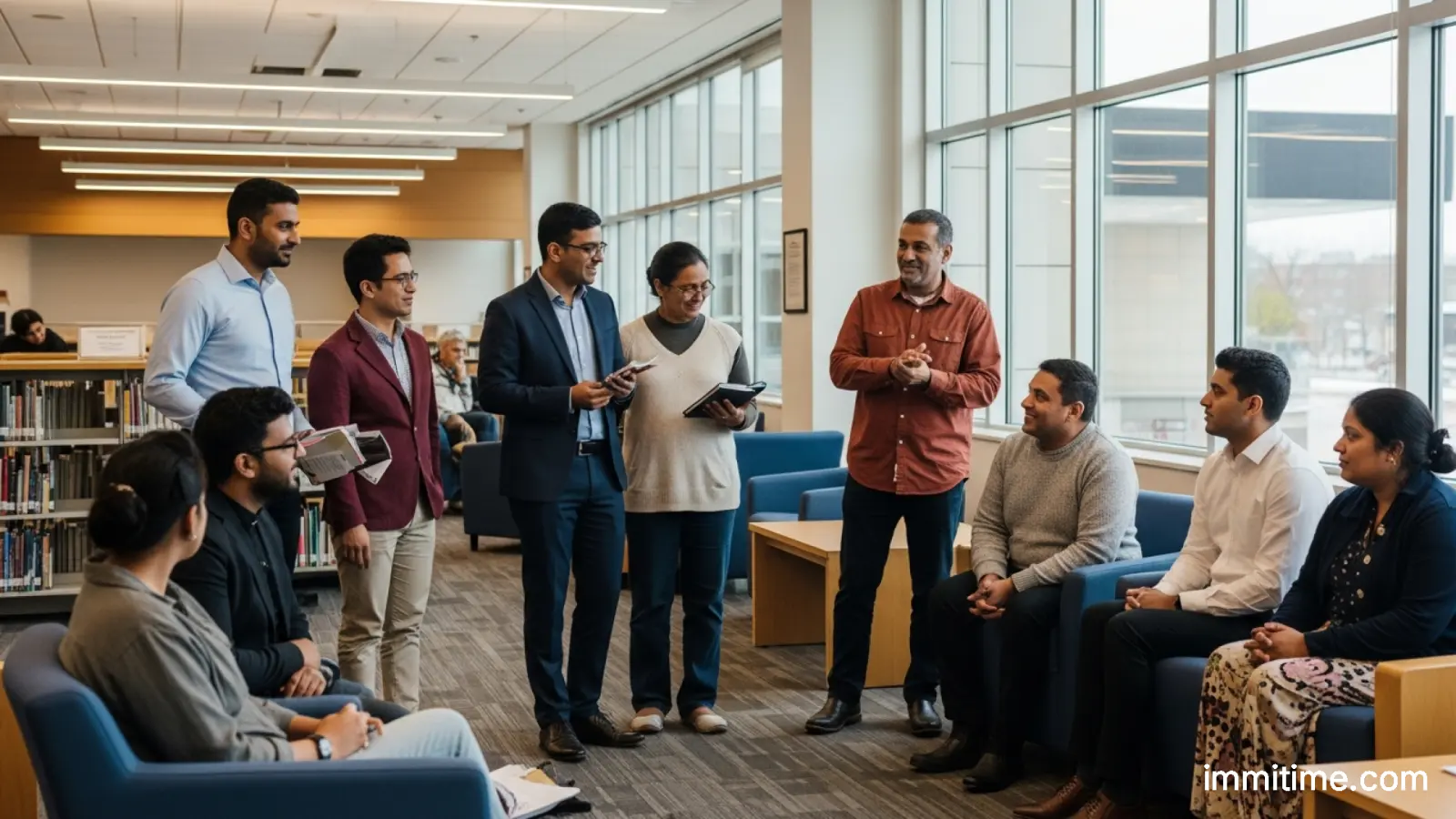
The journey of a new immigrant is filled with appointments, paperwork, and obligations. Amid the rush to get a health card, open a bank account, and find a home, one of the most powerful first steps is often overlooked: walking into the local public library and signing up for a free card.
As the IRCC's communication underscores, this is not merely a symbolic act. It is a strategic move that plugs you directly into a comprehensive support system. The library is not a passive building; it is an active partner in your settlement journey. It provides the tools to learn the language, the resources to find a job, the information to navigate your new society, and the opportunities to build the connections that will ultimately make Canada feel like home.
If you are new to Canada, consider this your first piece of expert advice: make visiting your local library a top priority. Explore its website, look at its program calendar, and speak to a librarian. It may be the single most important step you take in transforming your challenging transition into a story of success.
Frequently Asked Questions
What kind of services do Canadian public libraries offer to help newcomers?
Canadian public libraries offer a wide range of free services, including language support like conversation circles and ESL classes, settlement information on housing and healthcare, employment resources such as resume workshops, and programs to foster community connections.
Are the services for immigrants at public libraries actually free?
Yes, the source emphasizes that a core principle of public libraries is that they are free and open to everyone. A free library card unlocks access to a host of services, programs, and digital resources without any cost.
Can I get help finding a job at a Canadian public library?
Absolutely. Libraries provide key employment resources, including resume and cover letter workshops, access to job search databases, and free use of computers, printers, and the internet, which are all vital for a successful job search.
Why are libraries considered safe spaces for new immigrants?
Libraries are considered safe and inclusive because they are welcoming to everyone, regardless of their background or immigration status. They are neutral, non-judgmental environments where newcomers can ask questions and access resources without fear or pressure.
Free Immigration Assessment
Complete our smart assessment form to check your eligibility for over 80+ Canadian immigration programs.
Last Updated: