Canada Implements Sweeping Ebola-Related Immigration and Travel Restrictions: What You Need to Know
Canada has introduced stringent new Ebola-related immigration and travel restrictions, including mandatory 21-day quarantines for travellers from the Democratic Republic of Congo, Uganda, and South Sudan, and a 90-day suspension of TRVs, eTAs, and PRVs for residents of these nations. Expert analysis reveals the implications for applicants and offers crucial actionable advice.

Free Immigration Assessment
Complete our smart assessment form to check your eligibility for over 80+ Canadian immigration programs.
Canada's Proactive Stance: New Travel and Immigration Measures Amidst Ebola Concerns
In a significant and immediate response to ongoing Ebola outbreaks, Immigration, Refugees and Citizenship Canada (IRCC) has announced a comprehensive set of temporary travel and immigration restrictions impacting individuals with recent ties to the Democratic Republic of Congo, Uganda, and South Sudan. These measures, designed to safeguard public health, include both stringent quarantine requirements for returning travellers and a temporary suspension of various visa applications for residents of the affected nations. As an expert immigration journalist and policy analyst, I will delve into the intricacies of these new policies, their practical implications, and what individuals — from Canadian citizens to prospective immigrants — need to understand.
The announcement underscores Canada's commitment to prioritizing national health security, marking the first time since the lifting of COVID-19 travel restrictions in 2022 that the government has imposed such broad quarantine mandates on incoming travellers. This two-pronged approach, initiated with rapid succession, aims to manage potential risks effectively while continuously monitoring the evolving global health landscape.
Understanding the New Quarantine Mandate: Who, When, and How Long?
Effective May 30 at 11:59 p.m. EDT, Canada has implemented mandatory quarantine requirements for a broad spectrum of travellers who have recently visited the Democratic Republic of Congo, Uganda, or South Sudan. This critical measure is set to remain in place for an extended period, until August 29, 2026, signaling a long-term commitment to mitigating Ebola transmission risks.
Scope of the Quarantine Requirement
The quarantine applies to a wide range of individuals, irrespective of their citizenship or immigration status, provided they meet specific criteria. Specifically, the measure covers:
- Canadian citizens
- Permanent residents of Canada
- Persons registered under the Indian Act
- Foreign nationals
The overarching condition for this requirement is having been present in any of the three identified affected countries (Democratic Republic of Congo, Uganda, or South Sudan) within the previous 21 days prior to their arrival in Canada, and importantly, not exhibiting symptoms of Ebola. This broad scope ensures that all potential entry points for the virus are addressed, extending beyond just residents of the affected regions.
The 21-Day Isolation Period and Government Support
Individuals falling under these criteria will be mandated to quarantine for a period of 21 days immediately upon their arrival in Canada. This duration is aligned with the typical incubation period of the Ebola virus, aiming to ensure that any potential infection can be identified and contained before further transmission occurs within Canadian communities.
A crucial aspect of this policy is the provision for safe quarantine locations. Should a traveller not possess a suitable place where they can safely complete their 21-day isolation period, the Canadian government has committed to providing one. This proactive step helps ensure compliance and minimizes the risk of community spread due to inadequate self-isolation facilities.
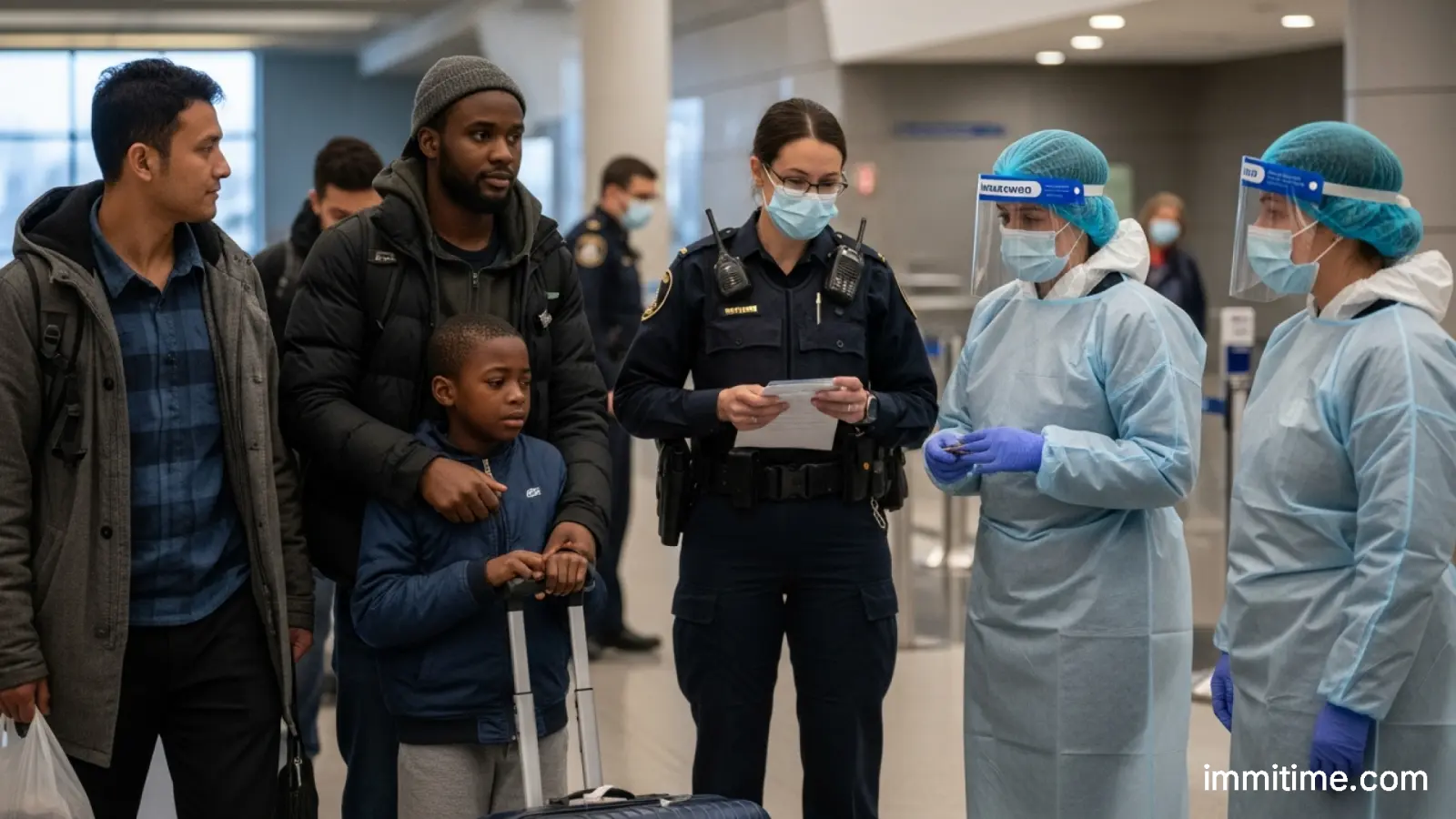
It is important to distinguish between asymptomatic travellers and those presenting symptoms. Travellers who arrive with symptoms suggestive of Ebola will not be directed to a quarantine facility but will instead be immediately isolated at a hospital for further medical assessment and appropriate care. This protocol ensures rapid response to potential active cases.

Temporary Suspension of Visa Processing: Impact on Residents of Affected Nations
Complementing the quarantine measures, Canada also announced a more direct impact on immigration applications from residents of the Democratic Republic of Congo, Uganda, and South Sudan. This second prong of the government's strategy focuses on limiting new entries from these regions for a defined period.
Suspension of Key Visa Categories
Starting May 27, and for a period of 90 days, Canada has suspended the issuance and processing of several key immigration documents for residents of the three aforementioned countries. These include:
- Visitor Visas (Temporary Resident Visas - TRVs)
- Electronic Travel Authorizations (eTAs)
- Permanent Resident (PR) Visas
In addition to the suspension of these visa types, IRCC has also paused the processing of new applications submitted by residents of these countries during the 90-day period. This means that individuals residing in the Democratic Republic of Congo, Uganda, or South Sudan who were planning to apply for any of these immigration streams will find their ability to do so temporarily halted.
Distinguishing Between the Two Measures
It is vital for affected individuals to understand the nuanced differences between the quarantine requirements and the visa suspensions. The quarantine rules apply to anyone who has been in the affected areas within 21 days before travelling to Canada, regardless of their nationality or residency status, and targets their entry and post-arrival behaviour. Conversely, the visa suspension and processing pause specifically address residents of the three countries who are planning to travel to Canada, impacting their ability to obtain the necessary authorization to enter in the first place.
This dual approach reflects a strategic effort to manage both potential direct exposure from incoming travellers and to temporarily reduce the influx of individuals from regions currently experiencing significant Ebola outbreaks. The 90-day duration for visa suspensions suggests a more immediate, tactical response, whereas the long-term quarantine mandate until August 29, 2026, indicates a sustained vigilance against the disease.
Expert Analysis: Navigating Complex Public Health-Driven Immigration Policies
As an expert in Canadian immigration policy, these measures represent a decisive, albeit impactful, move by the Canadian government to protect public health. The speed and scope of the announcements demonstrate a heightened sensitivity to global health threats, drawing parallels to the early stages of the COVID-19 pandemic response, though these are far more geographically targeted.
Historical Context and Policy Evolution
The explicit mention that this marks the first time since Canada lifted its COVID-19 travel restrictions in 2022 that such comprehensive quarantine requirements have been imposed is particularly noteworthy. It signals that while Canada has moved past the broad, pandemic-era travel bans, it remains prepared to implement targeted, robust public health interventions when faced with specific, high-risk infectious disease outbreaks like Ebola. This reflects a learned flexibility in policy-making, allowing for rapid deployment of measures tailored to the specific pathogen and its epidemiological profile.
The distinction between the long-term quarantine mandate (until August 29, 2026) and the shorter-term visa suspensions (90 days) is a key aspect of this policy. The extended quarantine period for all travellers from affected regions reflects the persistent nature of Ebola outbreaks and the need for sustained vigilance. The 90-day pause on new applications and visa processing, on the other hand, provides a temporary buffer, allowing the government to assess the immediate situation and potentially refine its approach without permanently disrupting immigration pathways.
Implications for Applicants and Immigrants
For individuals planning to travel to Canada or seeking to immigrate, these measures carry significant implications:
- For Canadian Citizens, Permanent Residents, and Indian Act Registrants: If you have been in the Democratic Republic of Congo, Uganda, or South Sudan within 21 days of your return, prepare for a mandatory 21-day quarantine upon arrival. This means planning for accommodation, supplies, and potential disruption to work or personal commitments. The government’s offer to provide a quarantine location if needed is a critical support mechanism.
- For Foreign Nationals (Non-Residents of Affected Countries): Similarly, if your travel itinerary included a stop or extended stay in any of the three designated countries within the 21-day window before coming to Canada, you will also be subject to the 21-day quarantine, regardless of your nationality.
- For Residents of Democratic Republic of Congo, Uganda, or South Sudan: Your ability to obtain a Temporary Resident Visa (visitor, study, work permit), eTA, or Permanent Resident Visa is suspended for 90 days from May 27. Furthermore, any new applications for these streams will not be processed during this period. This effectively puts a temporary halt on most new immigration and temporary stay pathways from these countries.
- For Existing Applicants from Affected Countries: While the source states a pause on *new* applications, it implies that applications already in process might also face delays, though this is not explicitly stated. It is prudent for existing applicants to anticipate potential slowdowns.
The government's stated intention to monitor the situation and adjust measures as needed provides a glimmer of hope for flexibility, but for now, the rules are firm. This proactive stance, while potentially disruptive, is a testament to Canada's commitment to public health security.
Practical Advice and Essential Next Steps for Affected Individuals
In light of these new and evolving policies, proactive engagement and careful planning are paramount for anyone potentially impacted. Here’s actionable advice for navigating this complex landscape:
Stay Informed Through Official Channels
The most crucial step is to continuously monitor official government sources. IRCC and Public Health Agency of Canada websites, along with Canada’s travel advisories page, will be the primary sources for the latest updates. Do not rely on unofficial news or social media for critical policy changes. The government has indicated it will continue to monitor the situation and adjust these measures as needed, making regular checks essential.
For Travellers Subject to Quarantine
If you are a Canadian citizen, permanent resident, person registered under the Indian Act, or a foreign national who has been in the Democratic Republic of Congo, Uganda, or South Sudan within the last 21 days and plan to travel to Canada:
- Plan for 21 Days of Isolation: Understand that you will be required to quarantine for 21 days upon arrival. This means arranging for a suitable place to stay where you can isolate effectively, or being prepared to utilize government-provided accommodation.
- Assess Your Health: If you develop any symptoms consistent with Ebola before or during your travel, seek immediate medical attention and do not attempt to travel. Upon arrival, if you have symptoms, you will be isolated at a hospital for assessment.
- Prepare Your Essentials: Ensure you have access to food, medications, and other necessities for the full 21-day period without leaving your quarantine location.
For Residents of Affected Countries Planning Travel to Canada
If you are a resident of the Democratic Republic of Congo, Uganda, or South Sudan and were planning to apply for a visitor visa, eTA, or permanent resident visa:
- Postpone New Applications: Be aware that new applications for these categories are paused for 90 days, starting May 27. It is advisable to wait until after this period, or until new guidance is issued, before attempting to submit an application.
- Monitor for Updates: Keep a close watch on IRCC announcements regarding the lifting of these suspensions or any new instructions for application processes.
- Re-evaluate Travel Plans: Your immediate travel plans to Canada will likely be affected for the duration of the 90-day suspension.
General Considerations
These measures are a testament to the dynamic nature of international travel and immigration in an era of global health challenges. While undoubtedly inconvenient for many, they are implemented with the primary goal of public safety. All individuals affected are encouraged to exercise patience, prioritize health and safety, and seek information directly from official Canadian government sources.
Conclusion: A Responsive Approach to Global Health Risks
Canada's decision to implement targeted quarantine requirements and visa suspensions for travellers and residents from Ebola-stricken regions underscores its commitment to public health security. These measures, while significant, are a calculated response to a serious global health threat, drawing on lessons learned from past public health emergencies. The distinction between the long-term quarantine for all travellers from affected areas and the temporary visa suspensions for residents highlights a nuanced, two-pronged strategy. As the situation evolves, affected individuals must stay informed through official IRCC channels and adjust their travel and immigration plans accordingly. The government's pledge to monitor and adapt these policies offers a degree of flexibility, but for now, adherence to these new regulations is mandatory for ensuring the safety and well-being of all Canadians.
Frequently Asked Questions
Which countries are currently affected by Canada's new Ebola-related travel and immigration measures?
Canada's new measures specifically target travellers who have recently been in, and residents of, the Democratic Republic of Congo, Uganda, and South Sudan due to ongoing Ebola outbreaks in these regions. These are the only countries explicitly named in the current policy.
Who is required to undergo the 21-day quarantine upon arrival in Canada?
The quarantine requirement applies to Canadian citizens, permanent residents, persons registered under the Indian Act, and foreign nationals who have been in the Democratic Republic of Congo, Uganda, or South Sudan within the previous 21 days and do not have symptoms of Ebola. Symptomatic individuals will be isolated at a hospital.
What types of visas are suspended for residents of the affected countries, and for how long?
For residents of the Democratic Republic of Congo, Uganda, and South Sudan, Canada has suspended Visitor Visas (Temporary Resident Visas), Electronic Travel Authorizations (eTAs), and Permanent Resident (PR) Visas. This suspension, along with a pause on processing new applications, took effect on May 27 for a period of 90 days.
How long will the mandatory quarantine requirement be in effect?
The mandatory 21-day quarantine requirement for travellers from the affected regions will take effect on May 30 at 11:59 p.m. EDT and is scheduled to remain in place until August 29, 2026. This indicates a long-term public health measure.
What should individuals do if they are subject to quarantine but do not have a safe place to isolate?
If a traveller is required to quarantine for 21 days upon arrival in Canada and does not have a suitable location where they can safely do so, the Canadian government has committed to providing a safe place for them to complete their isolation period.
Free Immigration Assessment
Complete our smart assessment form to check your eligibility for over 80+ Canadian immigration programs.
Last Updated: