Canada Imposes Temporary Immigration Document Suspension Amidst Ebola Concerns: A Deep Dive for Applicants and Residents
Canada has announced a temporary 90-day suspension of immigration documents for residents of Uganda, South Sudan, and the DR Congo, effective May 27, 11:59 p.m. EDT, due to Ebola outbreak concerns. This expert analysis delves into the implications for applicants, travelers, and Canada's border integrity.

Free Immigration Assessment
Complete our smart assessment form to check your eligibility for over 80+ Canadian immigration programs.
Understanding Canada's Urgent Immigration Document Suspension for Three African Nations
In a significant and immediate policy shift, Immigration, Refugees and Citizenship Canada (IRCC), acting on guidance from the Public Health Agency of Canada, has announced the temporary suspension of certain immigration documents for residents of the Democratic Republic of Congo, Uganda, and South Sudan. This decisive measure, effective from May 27, 11:59 p.m. EDT, is a direct response to what authorities describe as a “high or very high risk of outbreak of Ebola disease.” As an expert immigration journalist and policy analyst, this article will dissect the implications of this critical development, offering insights into its scope, the rationale behind it, and crucial advice for those impacted.
The Scope of the Suspension: Who is Affected and How?
The temporary border measures are slated to remain in effect for a period of 90 days. It is imperative for individuals to understand the broad reach of this suspension. It applies comprehensively to immigration documents that have been previously approved, meaning that residents of the three specified countries who are already holders of a valid temporary resident visa (TRV), an electronic travel authorization (eTA), or a permanent resident (PR) visa will be prevented from traveling to Canada while their documents are under suspension.
This means that even if you possess a valid document, its utility for travel to Canada is temporarily nullified for the duration of this 90-day period. This is a critical distinction, as it is not merely a halt on new applications but a suspension of existing travel authorizations.
Furthermore, during this 90-day window, Canada will also cease making decisions on new applications for immigration documents originating from residents of these countries. This pause on processing means that individuals who have submitted applications for TRVs, eTAs, or PR visas will experience a delay in receiving a decision until the suspension is lifted or reviewed.

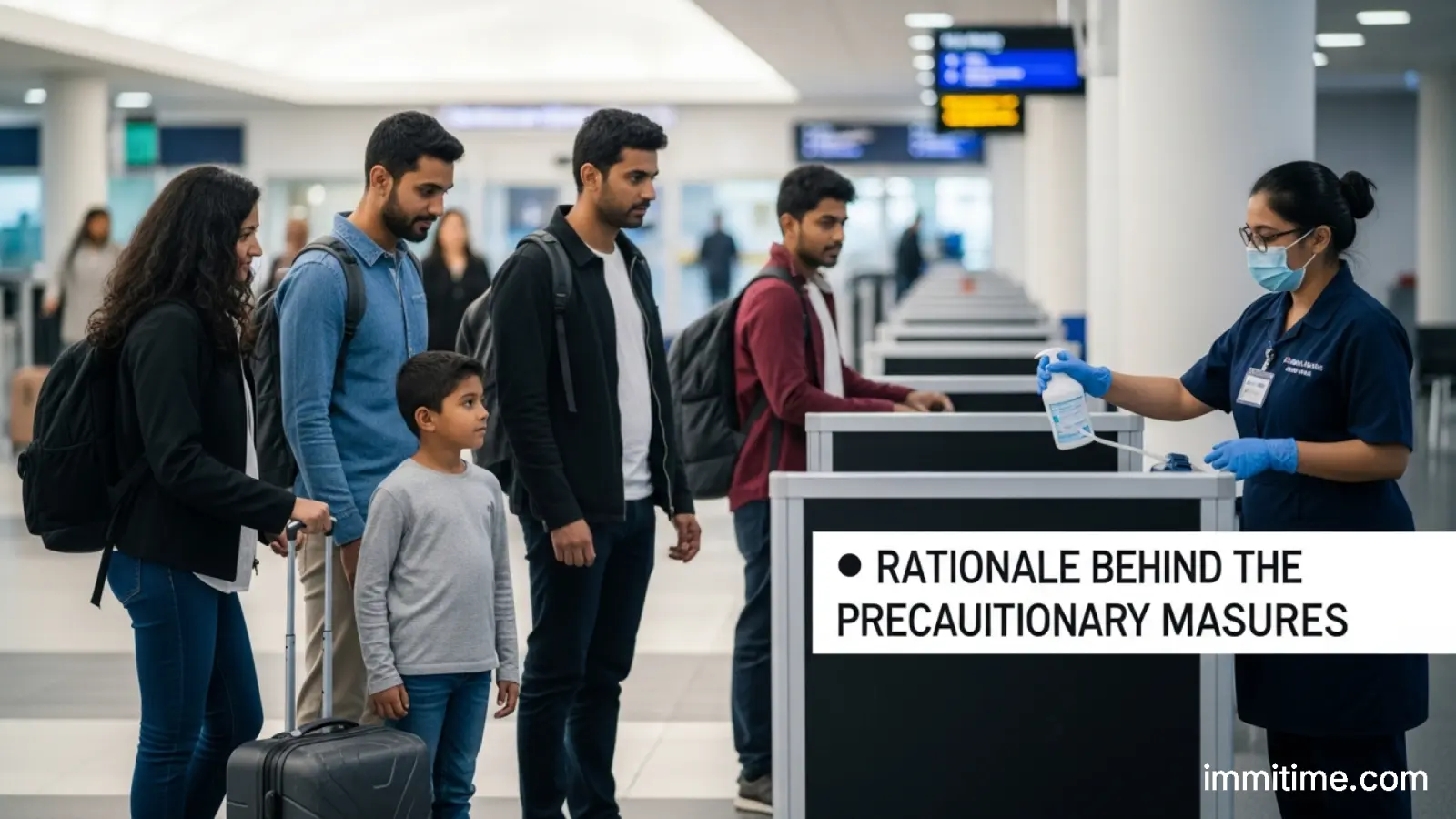
Rationale Behind the Precautionary Measures
The Canadian government has explicitly framed these measures as precautionary, underscoring the severe nature of the Ebola virus and the rapidly evolving international outbreak situation. The Public Health Agency of Canada’s announcement directly cites the “high or very high risk of outbreak of Ebola disease” as the primary motivator for this immediate action.
A particularly noteworthy detail highlighted in the news release is the upcoming FIFA World Cup 2026. Canada is scheduled to host 13 matches across Toronto and Vancouver between June 11 and July 19. This international event is anticipated to attract hundreds of thousands of visitors from across the globe, thereby significantly elevating the stakes for public health screening and border integrity. The confluence of a global health threat and a major international event underscores the government’s proactive stance.
“The measures we plan to introduce are necessary to protect Canadians and reinforce the integrity of our border against this threat to public health,” stated Lena Diab, Minister of Immigration, Refugees and Citizenship Canada. “We will continue to take proactive and decisive action in response to the emerging Ebola outbreak.”
This statement from the Minister emphasizes the government’s commitment to prioritizing public health and national security in its immigration and border policies. It also suggests a readiness to adapt and respond to emergent global health crises with decisive, albeit temporary, actions.
Who Remains Unaffected and What About Canadians?
It is important to clarify that not everyone is impacted by these new restrictions. Individuals from the Democratic Republic of Congo, Uganda, and South Sudan who are already present in Canada will remain unaffected by these specific measures. They are permitted to continue their stay in Canada for their authorized period.
Canadian citizens and permanent residents are also exempt from the travel suspension. They retain their right to return to Canada. However, upon their arrival at ports of entry, they will be subject to screening procedures. This is a standard public health protocol designed to identify and manage potential health risks, ensuring the safety of the wider Canadian population.
Additionally, individuals who have traveled in the affected countries within the last 21 days, regardless of their nationality or immigration status, will be required to adhere to specific quarantine measures upon entry to Canada. This 21-day period aligns with the known incubation period for the Ebola virus, serving as a critical public health safeguard.
Expert Analysis: Balancing Public Health and Immigration Access
This temporary suspension illustrates Canada's robust, albeit sometimes stringent, approach to public health at its borders. While such measures undeniably create significant disruption and uncertainty for prospective immigrants and visitors, they are rooted in the Canadian government's paramount duty to protect the health and safety of its population. The mention of the FIFA World Cup 2026 is critical, as it highlights a specific, high-stakes event that amplifies the need for heightened vigilance. The influx of international travelers for such an event presents a unique challenge for disease surveillance and control.
Historically, Canada has implemented various border measures in response to global health crises, demonstrating a precedent for such actions. While the specifics of this Ebola-related suspension are unique, the underlying principle of prioritizing public health over unrestricted travel is consistent with past responses to epidemics. The decision to suspend previously approved documents, rather than just halting new applications, signals the severity of the perceived risk and the urgent need to prevent potential entry of the disease.
The explicit statement that the suspension “may include any other countries that have a risk of outbreak of the Ebola disease in the future” serves as a clear warning. It indicates that Canada’s public health authorities are actively monitoring the global situation and are prepared to expand these measures if the outbreak spreads or new risks emerge. This proactive stance, while disruptive, aims to mitigate larger, more catastrophic public health scenarios.
Practical Implications and Actionable Advice for Affected Individuals
For individuals in the Democratic Republic of Congo, Uganda, and South Sudan who had plans to travel to Canada or had ongoing applications, this announcement brings immediate and significant changes. Here’s what you need to know and what steps you should consider:
- Travel Plans Halted: If you hold a valid TRV, eTA, or PR visa issued to a resident of these countries, you will not be able to use it to travel to Canada during the 90-day suspension period, starting May 27, 11:59 p.m. EDT. It is crucial not to attempt travel, as you will likely be denied boarding or entry.
- Application Decisions Paused: If you have an application for an immigration document currently under review, expect a delay. Decisions will be paused for the 90-day period. This does not mean your application is refused, but rather that its processing is temporarily on hold.
- Monitor Official Channels: The most important piece of advice is to continuously monitor Canada’s official travel advisories page for updates. The situation is dynamic, and while the initial suspension is for 90 days, extensions or modifications are possible depending on the evolution of the Ebola outbreak.
- Do Not Panic, But Be Prepared: Understand that these are temporary measures. While frustrating, they are not necessarily permanent bans. Use this time to ensure all your documentation is in order for when the suspension is lifted.
- Seek Clarification (if needed): While IRCC will likely issue further guidance, for specific complex situations, consulting with a regulated Canadian immigration consultant or lawyer might be beneficial, though information will be limited by the policy itself.
Conclusion: A Temporary Measure for Public Safety
Canada’s decision to suspend immigration documents for residents of the Democratic Republic of Congo, Uganda, and South Sudan is a stern, but temporary, measure driven by public health imperatives. Effective May 27, 11:59 p.m. EDT, and lasting for 90 days, this policy aims to safeguard Canadians against the potential spread of the Ebola virus, especially in light of major upcoming international events like the FIFA World Cup 2026.
While the implications for affected individuals are significant, it is crucial to remember the temporary nature of these restrictions. The Canadian government, through the Public Health Agency of Canada and IRCC, is signaling a clear commitment to proactive health security. Those impacted are strongly advised to stay informed through official government channels and prepare for a resumption of normal processing and travel once the public health risk has abated.
Frequently Asked Questions
Which countries are affected by Canada's immigration document suspension?
The suspension specifically applies to residents of the Democratic Republic of Congo, Uganda, and South Sudan. The Public Health Agency of Canada cited a "high or very high risk of outbreak of Ebola disease" as the reason for these measures.
When does the suspension of immigration documents begin and how long will it last?
The suspension takes effect on May 27, 11:59 p.m. EDT. These temporary border measures are planned to be in place for the next 90 days, with potential for review based on the evolving public health situation.
What types of immigration documents are affected by this suspension?
The suspension broadly applies to previously approved immigration documents, including valid temporary resident visas (TRVs), electronic travel authorizations (eTAs), and permanent resident (PR) visas. Holders of these documents from the affected countries will not be permitted to travel to Canada during the suspension period.
Are Canadian citizens and permanent residents affected by these measures?
No, Canadian citizens and permanent residents will still be able to return to Canada. However, they will undergo screening at ports of entry upon arrival to ensure public health safety, and those who have traveled in the affected countries within the last 21 days will need to adhere to quarantine measures.
Will Canada continue to process new immigration applications from residents of these countries?
During the 90-day suspension period, Canada will pause making decisions on applications for immigration documents from residents of the Democratic Republic of Congo, Uganda, and South Sudan. Processing will resume once the temporary measures are lifted or reviewed.
Free Immigration Assessment
Complete our smart assessment form to check your eligibility for over 80+ Canadian immigration programs.
Last Updated: