Canada's New PR Fast-Track: A Deep Dive into the 2026-2027 TR to PR Initiative for Rural Workers
Canada is fast-tracking permanent residence for up to 33,000 temporary workers. Discover who is eligible under the new TR-to-PR pathway and what it means for you.

Free Immigration Assessment
Complete our smart assessment form to check your eligibility for over 80+ Canadian immigration programs.
A New Pathway to Permanence: IRCC Accelerates PR for Regional Workers
In a significant policy development, Immigration, Refugees and Citizenship Canada (IRCC) has begun fast-tracking permanent residence applications for a select group of temporary residents already in Canada. A press release dated May 4, 2026, confirmed the launch of this accelerated processing stream, which falls under the federal government's one-time In-Canada Workers Initiative. This move is not a new application program, but rather an administrative measure designed to expedite the transition for temporary workers who have already applied for PR and demonstrated a commitment to living and working in smaller Canadian communities.
This initiative represents a pivotal moment in Canadian immigration policy, signaling a dual strategic priority: addressing persistent labour shortages in rural and remote regions while simultaneously managing the overall number of temporary residents in the country. For applicants already in the queue and for those planning their future immigration journey, understanding the nuances of this initiative is crucial. It provides a clear roadmap of the government's priorities and highlights the growing importance of regional immigration pathways.
The In-Canada Workers Initiative: Who Is Being Fast-Tracked?
The core of this new measure is the targeted selection of existing PR applicants. IRCC has been clear that individuals do not need to take any action or submit a new application. The department is proactively identifying and accelerating eligible files from its current inventories. This is a crucial distinction from previous large-scale TR to PR programs that required new submissions.
Eligibility and Targeted Programs
According to IRCC, the primary beneficiaries of this accelerated processing are workers who have already submitted a permanent residence application through specific regional and sector-based streams. A key qualifying criterion is that these individuals have been living in a smaller, non-metropolitan community in Canada for at least two years.
The government is specifically targeting applicants from the following programs:
- Provincial Nominee Program (PNP): The cornerstone of regional immigration, allowing provinces and territories to nominate individuals with the skills and experience needed in their local economies.
- Atlantic Immigration Program (AIP): A dedicated program designed to attract and retain skilled immigrants in Canada's four Atlantic provinces.
- Community immigration pilots: This includes programs designed to spread the benefits of immigration to smaller communities.
- Caregiver pilots: Pathways for in-home caregivers to gain permanent residence after acquiring Canadian work experience.
- Agri-Food Pilot: A program targeting experienced, non-seasonal workers in specific agriculture and food processing industries.
The stated goal is to grant PR to applicants “across a range of in-demand sectors in rural areas and communities with labour gaps.” This underlines the economic, rather than purely administrative, driver behind the policy.
By the Numbers: Targets and Progress
The In-Canada Workers Initiative is ambitious in its scope. First announced in the federal budget of November 2025, the one-time program aims to transition up to 33,000 temporary workers to permanent residence across 2026 and 2027.
The government has set a clear target to finalize at least 20,000 of these transitions in 2026 alone. Early progress reports are promising: between January 1 and February 28, 2026, IRCC successfully granted permanent residence to 3,600 workers under this initiative. This strong start suggests the department is on track to meet its annual goal, with the remaining transitions to be completed in 2027.

Policy Analysis: The Dual Strategy of Ruralization and Reduction
This initiative cannot be viewed in isolation. It is a key component of a much broader, multi-faceted strategy by the federal government to reshape Canada's demographic and economic landscape through immigration. Two major policy goals converge in this program: the push for regionalization and the mandate to reduce the temporary resident population.
The Rural and Regional Imperative
The most striking feature of this fast-tracking measure is its explicit focus on rural and smaller communities. In an April interview, Immigration Minister Lena Metlege Diab confirmed that the program would specifically exclude Census Metropolitan Areas (CMAs)—a classification that covers Canada's largest urban centres. This is a direct and powerful policy lever designed to incentivize population distribution away from major cities like Toronto, Vancouver, and Montreal.
This focus aligns with a wider pattern of recent policy changes:
- Temporary Foreign Worker Program (TFWP) Measures: Earlier this year, the government introduced temporary measures making it easier for employers in rural areas to hire and retain low-wage temporary foreign workers. In provinces that have opted in, these employers can retain workers above the usual cap and hire up to 15% of their workforce through the TFWP, an increase from the standard 10% limit.
- New Pilot Programs: Last year, IRCC launched both the Rural Community Immigration Pilot and the Francophone Community Immigration Pilot, both explicitly designed to address labour shortages and demographic challenges outside of major urban hubs.
By fast-tracking PR for those who have already spent at least two years in these communities, IRCC is rewarding retention and integration. It sends a clear message to prospective immigrants: a willingness to build a life outside of a major city can significantly accelerate your path to permanence.

Managing the Temporary Resident Population
The second major policy driver is the government's publicly stated goal to reduce Canada's temporary resident population to less than 5% of the country's total population by the end of 2027. This goal, first articulated alongside the 2025 budget announcement, has guided several recent policy shifts. The In-Canada Workers Initiative is a sophisticated tool in this effort. Rather than simply reducing the intake of new temporary residents, it strategically converts a desired cohort of existing TRs into PRs. This achieves two objectives simultaneously: it lowers the overall TR count while permanently retaining workers who are already integrated into key sectors and regions.
Practical Implications: What This Means for You
For temporary workers and PR applicants, this news brings both clarity and a call to strategic planning. Here’s what you need to know.
If You've Already Applied
If you have a pending PR application under one of the targeted streams (PNP, AIP, caregiver pilots, etc.) and have been living and working in a non-CMA community for over two years, this is excellent news. IRCC has stressed that no action is required on your part. The department will identify your file based on the information it already has. The best course of action is to ensure your contact information is up to date in your IRCC account and to monitor your application status and email for any official correspondence. This is an administrative acceleration, not a new program to apply for.
For Future Applicants
If you are a temporary resident in Canada considering your path to permanent residence, this initiative offers a clear lesson: regionalization is the future of Canadian immigration. While Express Entry and other federal programs remain viable, pathways tied to specific provinces, communities, and rural areas are receiving priority attention.
Consider the following strategic points:
- Explore Provincial Nominee Programs (PNPs): Every province (except Quebec, which has its own system) and territory has a PNP. Research the streams available in smaller provinces or the regional streams within larger ones.
- Look Beyond the Big Cities: Job opportunities and a willingness to relocate to a smaller town or rural area can dramatically expand your immigration options and, as this initiative shows, potentially speed up your processing time.
- Gain Relevant Experience: Focus on gaining work experience in sectors identified as in-demand, particularly in healthcare, skilled trades, agriculture, and other areas with known labour gaps in regional Canada.
This policy shift confirms that an applicant's location and willingness to integrate into a smaller community are becoming factors as important as their CRS score or occupation. The government is using the powerful incentive of faster PR processing to guide settlement patterns, and savvy applicants should take note.
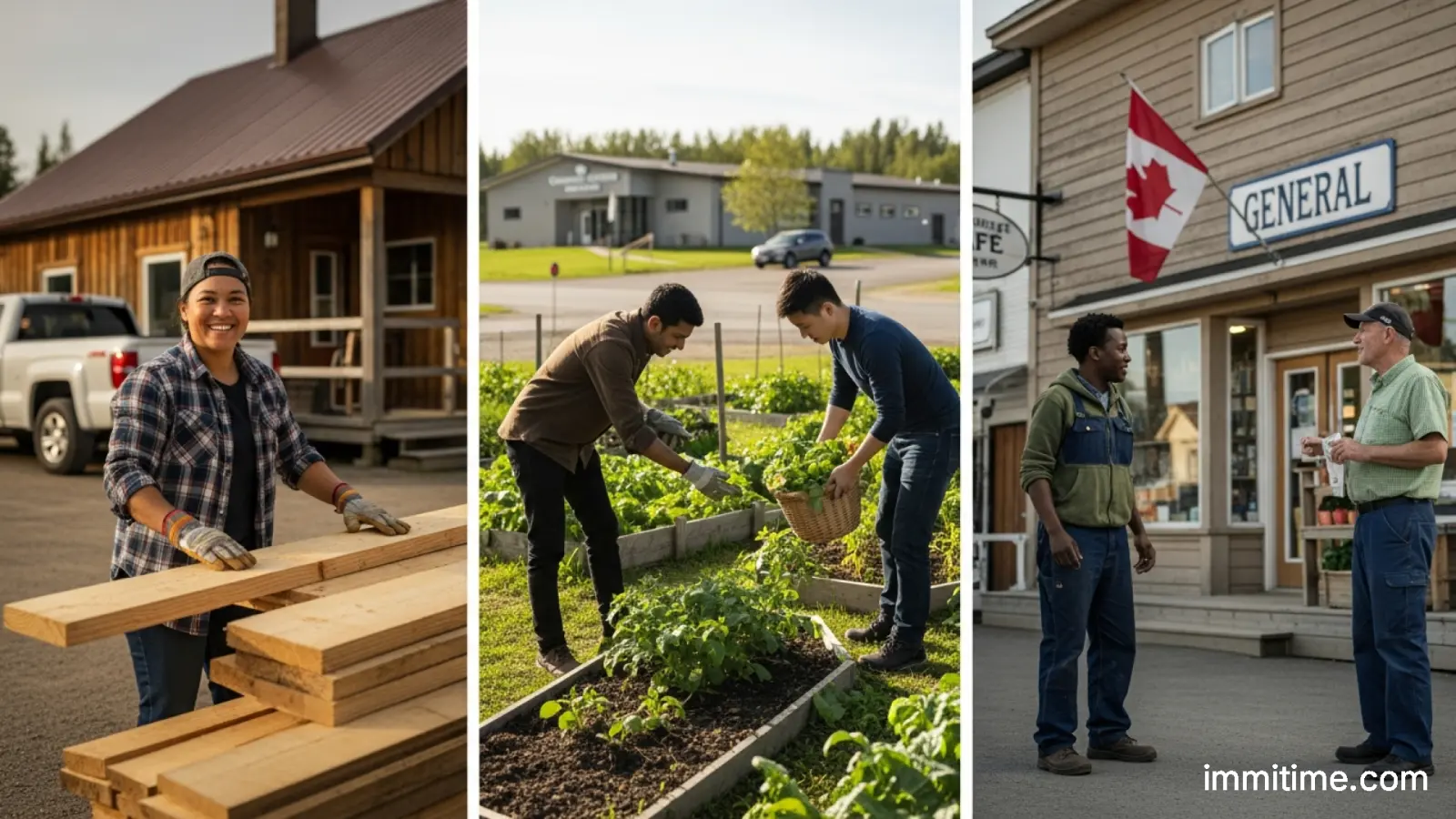
Conclusion: A New Chapter in Canadian Immigration
The In-Canada Workers Initiative is more than just a temporary measure to clear a backlog. It is a deliberate and strategic policy tool that reflects the evolving priorities of Canada's immigration system. By linking accelerated PR to regional retention and specific economic needs, IRCC is attempting to solve several complex challenges at once: distributing the benefits of immigration more evenly across the country, addressing critical labour shortages outside of urban cores, and managing the overall temporary resident population in a sustainable way.
While the initiative is a one-time program set to conclude in 2027, its underlying principles are likely to shape Canadian immigration policy for years to come. For temporary workers dreaming of a future in Canada, the message is clearer than ever: the path to permanent residence may be shorter and faster if it begins in a smaller community.
Frequently Asked Questions
Am I eligible for this new PR fast-tracking initiative?
Eligibility is limited to select applicants who have already applied for permanent residence through programs like the PNP, AIP, caregiver pilots, and others. A key requirement is having lived in a smaller, non-metropolitan community in Canada for at least two years.
Do I need to submit a new application for the In-Canada Workers Initiative?
No. IRCC has stated that applicants do not need to take any action. The department will identify and process eligible applications from its existing inventories of permanent residence applicants.
How many temporary workers will become permanent residents through this program?
The one-time initiative aims to transition up to 33,000 temporary workers to permanent residence in 2026 and 2027. The government is on track to approve at least 20,000 applications in 2026 alone.
Why is this program excluding applicants from Canada's largest cities?
The program excludes Census Metropolitan Areas to align with the government's strategy of promoting rural immigration. It aims to address labour gaps in smaller communities and encourage a more even distribution of new immigrants across Canada.
Free Immigration Assessment
Complete our smart assessment form to check your eligibility for over 80+ Canadian immigration programs.
Last Updated: