
How Canada's Green Energy Boom, Powered
Canada's clean energy sector is experiencing unprecedented growth, driven by major government investment and ambitious emissions targets. Learn about the jobs, projects, and opportunities powering this green boom.
Free Immigration Assessment
Complete our smart assessment form to check your eligibility for over 80+ Canadian immigration programs.
How Canada's Green Energy Boom is Powered: A 2026 Guide to Investment, Jobs, and Growth
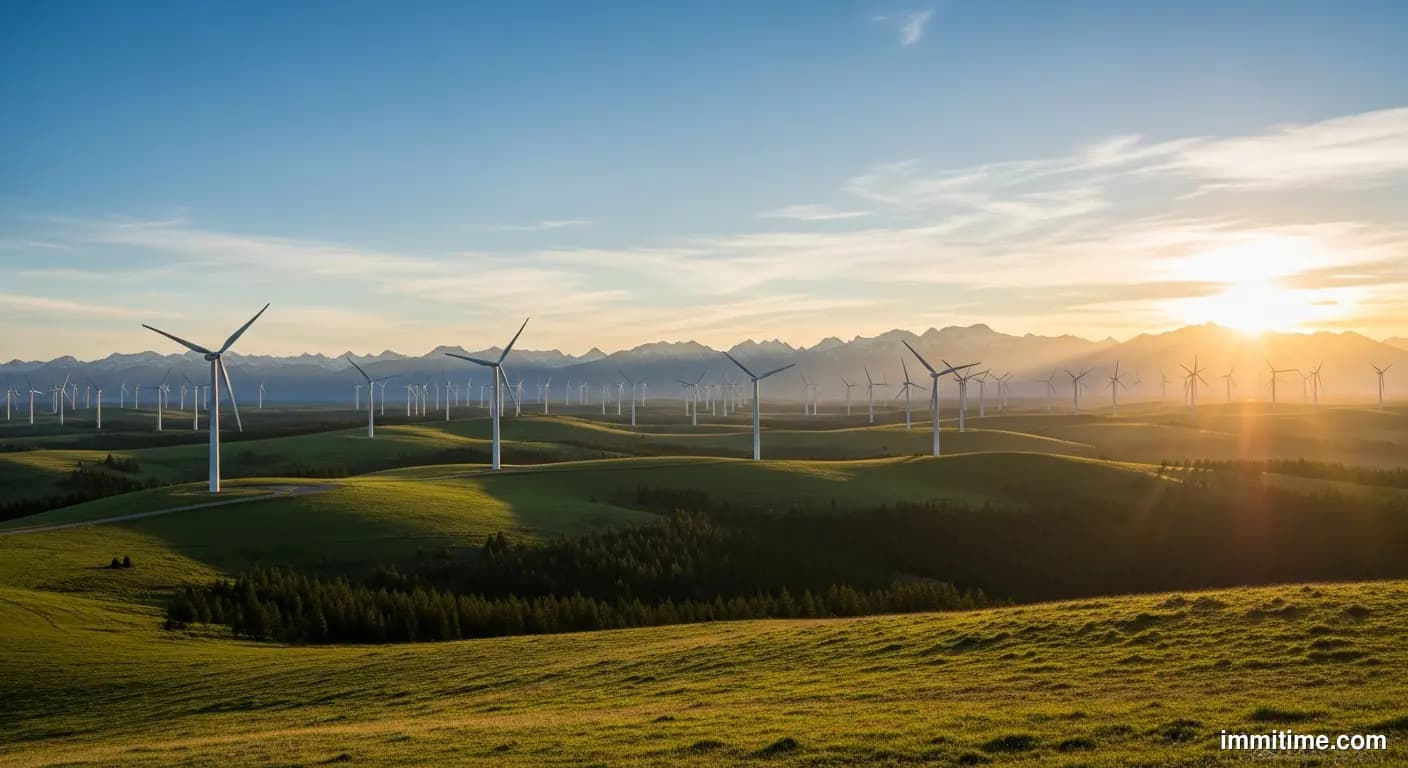
Canada is in the midst of a profound energy transformation, shifting its economic and industrial might towards a sustainable, low-carbon future. This green energy boom, fueled by significant government policy, massive private and public investment, and a surge in technological innovation, is reshaping the nation's landscape. From the vast wind farms of the prairies to the solar arrays in Ontario, a new economic engine is emerging.
This comprehensive guide explores the key drivers behind Canada's green energy sector in 2026, detailing the financial incentives, the rapidly growing job market, key projects, and the immigration pathways designed to attract the global talent needed to sustain this momentum.
Canada's 2026 Green Energy Landscape: An Overview
The scale of Canada's green transition is ambitious and accelerating. By 2026, the country's installed capacity for wind, solar, and energy storage is projected to see significant growth. This expansion sets the stage for a potential doubling of this capacity over the next decade, positioning Canada as a global leader in renewable power [2].
A primary catalyst for this expansion is the federal government's 2030 Emissions Reduction Plan. This comprehensive strategy is one of the most ambitious climate plans in the country's history, establishing a clear roadmap to reduce greenhouse gas (GHG) emissions by 40-45% below 2005 levels by the year 2030. To power this objective, the government has committed $9.1 billion in new investments, targeting everything from grid modernization to the adoption of clean technologies across industries [7, 13, 19].
The technological focus of this boom is clear. Onshore wind and solar photovoltaics represent the most mature and rapidly expanding segments. They are increasingly paired with advanced battery storage solutions to ensure grid stability and reliability. Alongside these established technologies, emerging fields like green hydrogen production and carbon capture, utilization, and storage (CCUS) are gaining significant traction, promising to unlock new pathways for decarbonization in heavy industry and transportation [2, 6, 25].
Economic Engine: Investment and Financial Incentives
The financial underpinnings of Canada's green boom are robust, designed to de-risk investment and spur rapid development. The federal government has rolled out a suite of powerful financial incentives to attract capital into the clean energy space. Chief among these are the Investment Tax Credits (ITCs), which include a 30% Clean Technology ITC for eligible equipment and infrastructure, and a Clean Hydrogen ITC that can reach up to 40% for projects that produce the cleanest forms of hydrogen [6]. These credits provide direct, tangible support that significantly improves the financial viability of new projects.
Public financing plays an equally critical role. The Canada Infrastructure Bank (CIB), a Crown corporation with a mandate to invest in revenue-generating infrastructure projects, has become a cornerstone financier for the sector. The CIB has committed $2.5 billion specifically for clean power projects, focusing its investments on supporting the generation and transmission of renewable energy and modernizing Canada's electricity grids to handle the influx of variable power sources [3, 21].
This combination of policy certainty and financial support has created a fertile ground for investment. In 2025 alone, total investment in Canada's energy transition reached an impressive $33.4 billion (USD). This capital flowed into various sectors, with renewable energy generation and energy storage projects seeing particularly strong growth, signaling high investor confidence in the long-term trajectory of Canada's green economy [22].
In-Demand Careers: The Green Collar Job Market
The transition to a green economy is not just about technology and infrastructure; it's about people. The clean energy sector is creating a wave of new, high-quality jobs for Canadians across the country. Projections show that employment in Canada's clean energy sector is set to grow by 3.4% annually—a rate nearly four times faster than the national average job growth [10].
This rapid expansion translates into significant opportunity. By 2030, the sector is expected to employ nearly 640,000 Canadians, marking a remarkable 50% increase from its 2020 workforce numbers [18]. These are not temporary positions but long-term careers foundational to the new economy.
The demand for skilled professionals is particularly acute. Occupations critical to building, operating, and maintaining the new energy infrastructure are in high demand. These roles include:
- Electrical and Power Systems Engineers
- Wind Turbine Technicians
- Solar Photovoltaic (PV) Installers
- Energy Advisors and Auditors
- Battery Storage Specialists
- Hydrogen Technology Experts
This demand spans the entire project lifecycle, from research and development to construction, operations, and maintenance, creating a diverse and resilient job market [41, 43].
Immigration Pathways for Green Sector Professionals
To meet the soaring demand for labour, Canada is actively seeking skilled professionals from around the world to contribute to its green energy sector. Federal and provincial immigration programs are being leveraged to attract individuals with the expertise needed to fill critical roles.
Skilled workers with experience in clean technology and renewable energy can utilize established and streamlined immigration pathways. The federal Express Entry system, which manages applications for Canada's main economic immigration programs, often targets candidates with experience in in-demand occupations. Provincial Nominee Programs (PNPs) are also a key tool, allowing provinces and territories to nominate individuals who meet specific local labour market needs [24, 35]. It is critical for 2026 applicants to note recent changes to the Express Entry system, which introduced category-based selection draws to target candidates in high-demand fields, including Healthcare, STEM occupations, Trades, Transport, and those with strong French-language proficiency. Furthermore, as of February 18, 2026, the minimum work experience requirement for all category-based selection draws was updated from six months of continuous experience to at least one year of experience—which does not need to be continuous—within the last three years, offering greater flexibility to applicants. [1, 4].
Provinces are increasingly creating specific streams and targeted draws to attract green sector talent. British Columbia, for example, has evolved its Provincial Nominee Program (PNP) draws; the former 'Tech Pilot' is now a permanent 'BC PNP Tech Stream.' In addition to tech-focused draws, the province also issues invitations for other high-priority sectors. In early 2026, this has included specific 'High Economic Impact' invitations based on high salary thresholds or overall points scores, which can benefit experienced professionals in the clean energy industry [19]. In Alberta, programs like the Green Economy Training (GET) initiative are specifically designed to help foreign-trained STEM professionals bridge any gaps and successfully transition their skills into the local clean energy economy, demonstrating a proactive approach to integrating international talent [37].
Key Growth Sectors and Major Projects
The tangible results of Canada's green energy strategy are visible in the major projects breaking ground across the nation. Wind and solar power are on a significant growth trajectory, with long-term projections showing their combined capacity could increase by a factor of 10 to 15 by the year 2050, fundamentally reshaping the country's energy mix [27, 29].
Recent provincial announcements underscore this momentum. In early 2026, Ontario approved 14 new large-scale solar and wind projects. These developments, the first of their kind in the province in over a decade, are set to add a combined 1,315 megawatts of new clean capacity to the grid, a major step in securing the province's future energy supply [39, 46].
Similarly, Quebec is making substantial investments to expand its formidable renewable energy infrastructure. The province is moving forward with new wind farms capable of producing 792 megawatts of power. This expansion is a key component of Quebec's ambitious 2035 energy roadmap, which aims to further solidify its status as a clean energy powerhouse [36].
Investing in the Green Boom: Opportunities for Individuals
The green energy boom offers opportunities not just for large corporations and skilled workers, but for individual homeowners and investors as well. A variety of programs and investment vehicles allow Canadians to participate directly in the energy transition.
For homeowners looking to reduce their carbon footprint and energy bills, the once-popular federal Canada Greener Homes Loan is no longer an option for new applicants. The program, which had offered interest-free loans for retrofits, officially closed its application portal in early 2026, and funding is no longer available for new projects [7, 8, 12]. At the municipal level, programs like the Toronto Home Energy Loan Program (HELP) provide additional support, allowing homeowners to borrow up to $125,000 for similar green upgrades [5].
For those looking to invest capital, the Canadian public markets offer a direct way to gain exposure to the sector's growth. Numerous publicly traded Canadian renewable energy companies are at the forefront of the boom. Firms like Brookfield Renewable Partners (BEP.UN) and TransAlta Corp (TA) are aggressively expanding their portfolios of green assets, including wind, solar, and hydroelectric facilities, offering investors a chance to share in the financial success of the green transition [26, 34].
Risk and Insurance in the Renewable Energy Sector
The rapid growth of the renewable energy sector brings with it a unique set of risks that require specialized management and insurance solutions. Canada's vast geography and extreme weather conditions present distinct challenges. For example, projects in Alberta must contend with the risk of severe hail, while installations in northern regions face icing conditions that can impact equipment performance and require specialized, robust technology [30].
The insurance industry has responded by developing sophisticated products tailored to the renewable sector. These solutions are designed to cover a wide spectrum of risks, including asset reliability, revenue certainty, and technology performance for solar, wind, hydro, and battery storage projects [25, 45]. Insurers work with developers and operators to ensure that projects are protected from unforeseen events that could impact their financial viability.
Key coverages for large-scale green energy projects typically include all-risk property insurance, business interruption coverage to protect against revenue loss during downtime, and machinery breakdown policies. A market of specialized underwriters has emerged to provide the necessary capacity for these large, complex installations, ensuring that the financial risks associated with building Canada's green future are well-managed [42, 45].
Frequently Asked Questions (FAQ)
1. What financial incentives are available for green energy projects in Canada? The federal government offers significant incentives, including a 30% Clean Technology Investment Tax Credit and up to a 40% Clean Hydrogen Investment Tax Credit. The Canada Infrastructure Bank (CIB) has also committed $2.5 billion for clean power projects.
2. What kind of jobs are in demand in Canada's clean energy sector? High-demand occupations include electrical and power systems engineers, wind turbine technicians, solar PV installers, and energy advisors. The sector's workforce is expected to grow by 3.4% annually, nearly four times the national average.
3. Are there immigration programs for professionals in the green energy field? Yes, skilled workers can use pathways like the Express Entry system and Provincial Nominee Programs (PNPs). Some provinces, like British Columbia and Alberta, have targeted initiatives to attract and integrate talent for their clean energy economies.
4. Can homeowners get help to install solar panels? No. The federal Canada Greener Homes Loan program is closed to new applications as of early 2026. However, homeowners may still find support through municipal-level initiatives, such as Toronto's Home Energy Loan Program (HELP), which provides loans for green upgrades.
5. What are the major growth areas in Canada's renewable energy sector? Onshore wind and solar photovoltaics are seeing the most significant growth, often paired with battery storage. Emerging technologies like green hydrogen and carbon capture are also gaining momentum as key future growth areas.
Official References
- [2]
- [3]
- [5]
- [6]
- [7]
- [8]
- [10]
- [13]
- [18]
- [19]
- [21]
- [22]
- [24]
- [25]
- [26]
- [27]
- [29]
- [30]
- [34]
- [35]
- [36]
- [37]
- [39]
- [41]
- [42]
- [43]
- [45]
- [46]
Free Immigration Assessment
Complete our smart assessment form to check your eligibility for over 80+ Canadian immigration programs.
Last Updated: