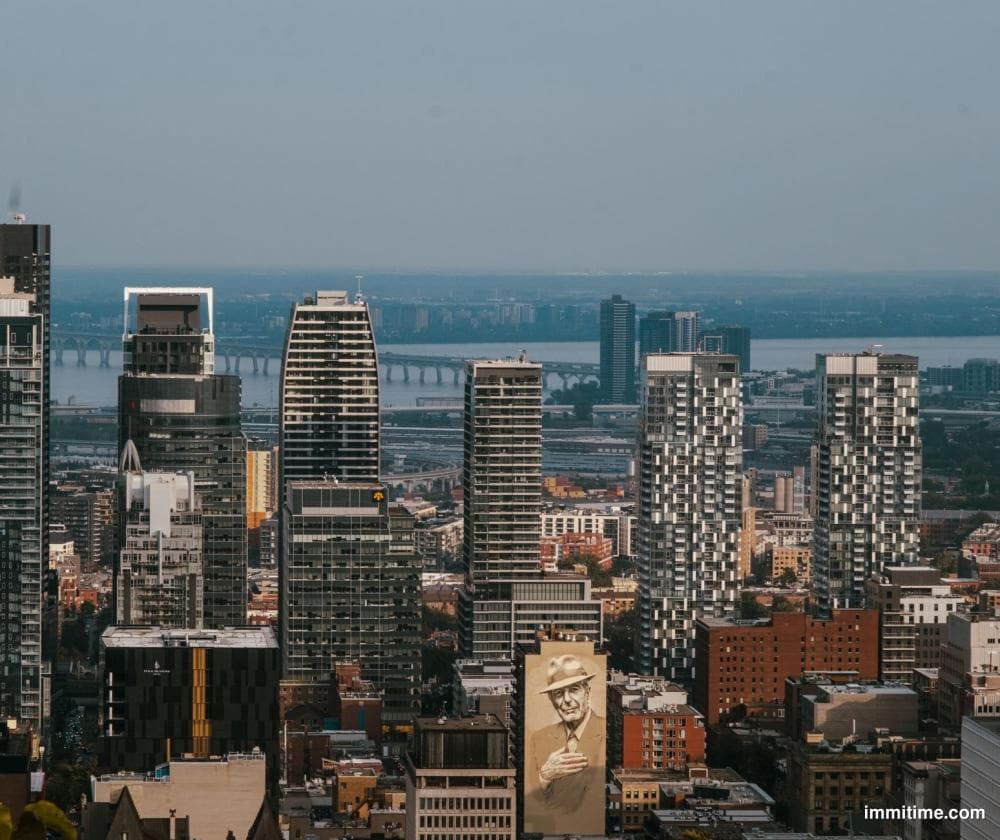
metro montreal: Complete Canadian Guide
This comprehensive guide, authored by a Regulated Canadian Immigration Consultant (RCIC), provides authoritative insights into immigrating to and settling in Metro Montreal, covering key immigration pathways, essential settlement information, and life in this unique Canadian city.

Free Immigration Assessment
Complete our smart assessment form to check your eligibility for over 80+ Canadian immigration programs.
Welcome to the definitive guide for navigating immigration and settlement in Metro Montreal, Canada. As a Regulated Canadian Immigration Consultant (RCIC), I understand the complexities and nuances of the Canadian immigration system, particularly for Quebec, which operates under unique agreements with the federal government. This article provides a comprehensive, authoritative overview, ensuring you have the most accurate and up-to-date information directly sourced from official Canadian government channels.
Montreal, Quebec's largest city and the second-largest in Canada, offers a unique blend of European charm and North American dynamism. It's a vibrant metropolis renowned for its culture, innovation, and bilingual environment. For prospective immigrants, understanding the specific pathways and requirements for Quebec is crucial, as the province maintains its own selection criteria for many economic immigration programs.
Understanding Metro Montreal: A Gateway to Opportunity
Metro Montreal, officially known as the Communauté métropolitaine de Montréal (CMM), is the most populous metropolitan area in Quebec and the second most populous in Canada. It encompasses the city of Montreal and 81 surrounding municipalities, forming a dynamic economic and cultural hub.
Geography and Demographics
Situated on an island in the Saint Lawrence River, Montreal is a city of islands, rivers, and diverse neighborhoods. Its strategic location has historically made it a significant port and commercial center.
- Population: The city of Montreal itself has a population of over 1.7 million, while the greater metropolitan area is home to over 4.3 million people.
- Languages: French is the official language of Quebec and the primary language of daily life in Montreal. However, Montreal is notably bilingual, with a significant English-speaking population and a strong presence of various other languages, making it a truly multicultural city. Proficiency in French is a significant asset and often a requirement for provincial immigration programs.
- Climate: Montreal experiences four distinct seasons: warm, humid summers; crisp, colorful autumns; cold, snowy winters; and mild springs. Adapting to winter conditions is an important consideration for newcomers.
Economy and Key Industries
Montreal boasts a diversified and robust economy. It is a major hub for several high-growth sectors, offering ample employment opportunities for skilled workers.
- Aerospace: Montreal is one of the world's leading aerospace centers, home to major companies like Bombardier, Pratt & Whitney Canada, and Bell Helicopter.
- Information and Communication Technology (ICT): The city has a thriving tech scene, particularly in artificial intelligence, video game development, and cybersecurity.
- Life Sciences and Healthcare: Montreal is a significant research and development hub, with numerous pharmaceutical companies, biotech firms, and world-class hospitals.
- Finance: As a major financial center, Montreal houses headquarters for several Canadian banks and financial institutions.
- Culture and Tourism: Its rich cultural scene, festivals, and historic sites make tourism a vital industry.
Understanding these key sectors can help prospective immigrants align their skills and experience with Montreal's labor market needs, improving their chances of successful integration.
Immigration Pathways to Metro Montreal
Immigrating to Quebec involves a two-step process for most economic categories: first, selection by the Province of Quebec, and then, approval by the federal government for permanent residence. This unique arrangement is governed by the Canada-Quebec Accord relating to Immigration and Temporary Admission of Aliens.
Quebec Skilled Worker Program (QSWP) / Arrima
The Quebec Skilled Worker Program (QSWP), managed by the Ministère de l'Immigration, de la Francisation et de l'Intégration (MIFI), is a primary pathway for skilled workers seeking to settle in Quebec. Candidates must submit an Expression of Interest (EOI) through the Arrima portal.
- Expression of Interest (EOI): Interested candidates create a profile in Arrima, providing information on their education, work experience, language proficiency (French and English), age, and other factors.
- Invitations to Apply (ITA): MIFI regularly issues invitations to candidates who meet specific criteria, often targeting those in high-demand occupations or with strong French language skills.
- Selection Factors: The selection grid considers factors such as:
- Education and training
- Work experience
- Age
- French and English language proficiency (French is highly weighted)
- Financial autonomy
- Presence of family in Quebec
- Validated job offer (though not mandatory, it awards significant points)
- Certificat de sélection du Québec (CSQ): Successful applicants receive a CSQ from MIFI, which is a prerequisite for applying for permanent residence to the federal government.
- Federal Application: Once a CSQ is obtained, candidates apply to Immigration, Refugees and Citizenship Canada (IRCC) for permanent residence. IRCC conducts admissibility checks, including medical, security, and criminal background checks.
For detailed information on the QSWP and Arrima, consult the official MIFI website: https://www.quebec.ca/en/immigration/immigrate-quebec/skilled-workers/arrima
Quebec Experience Program (PEQ)
The Programme de l'expérience québécoise (PEQ) is a fast-track program designed for temporary foreign workers and international students who have studied or worked in Quebec and wish to become permanent residents. It is known for its streamlined application process and typically faster processing times.
- Eligibility for Graduates:
- Hold an eligible Quebec diploma (e.g., Bachelor's, Master's, PhD, DEC, DEP).
- Have acquired at least 12 or 18 months of eligible work experience in Quebec (depending on the diploma) in the last 24 or 36 months, after completing their study program.
- Demonstrate advanced intermediate oral French proficiency (B2 level or higher).
- Eligibility for Temporary Foreign Workers:
- Have held an eligible full-time job in Quebec for at least 24 months in the last 36 months.
- Demonstrate advanced intermediate oral French proficiency (B2 level or higher).
- CSQ and Federal Application: Similar to QSWP, successful PEQ applicants receive a CSQ and then apply to IRCC for permanent residence.
For current PEQ requirements, refer to the MIFI website: https://www.quebec.ca/en/immigration/immigrate-quebec/peq

Temporary Foreign Worker Program (TFWP) and International Mobility Program (IMP)
Many individuals come to Quebec as temporary foreign workers before transitioning to permanent residence.
- TFWP (LMIA-based): Requires an employer to obtain a Labour Market Impact Assessment (LMIA) from Employment and Social Development Canada (ESDC), demonstrating that no Canadian or permanent resident is available to do the job.
- IMP (LMIA-exempt): Includes various categories such as CUSMA (formerly NAFTA) professionals, intra-company transferees, and Post-Graduation Work Permit (PGWP) holders. These programs do not require an LMIA.
For comprehensive information on work permits, visit IRCC: https://www.canada.ca/en/immigration-refugees-citizenship/services/work-canada.html
International Students
Studying in Montreal can be a pathway to permanent residence through programs like the PEQ.
- Study Permit: International students must obtain a Quebec Acceptance Certificate (CAQ) from MIFI first, and then apply for a study permit from IRCC.
- Post-Graduation Work Permit (PGWP): Graduates of eligible Canadian designated learning institutions (DLIs) in Quebec may be eligible for a PGWP, allowing them to gain valuable Canadian work experience.
Information on study permits and CAQ can be found here: https://www.quebec.ca/en/education/study-quebec and https://www.canada.ca/en/immigration-refugees-citizenship/services/study-canada.html
Family Sponsorship
Canadian citizens and permanent residents living in Quebec can sponsor eligible family members to immigrate to Quebec. This includes spouses, common-law partners, conjugal partners, and dependent children.
- Quebec Undertaking: Sponsors residing in Quebec must first submit an undertaking application to MIFI, committing to financially support the sponsored family member.
- Federal Sponsorship Application: Once the undertaking is approved by Quebec, the sponsor applies to IRCC for permanent residence for their family member.
Details on family sponsorship in Quebec are available on the MIFI website: https://www.quebec.ca/en/immigration/immigrate-quebec/family-reunification and for federal requirements on IRCC: https://www.canada.ca/en/immigration-refugees-citizenship/services/immigrate-canada/family-sponsorship.html
Business Immigration Programs
Quebec offers programs for entrepreneurs, investors, and self-employed individuals who wish to establish a business or invest in the province. These programs are complex and require significant financial investment and business acumen.
- Quebec Entrepreneur Program: For foreign nationals who wish to create or acquire a business in Quebec.
- Quebec Self-Employed Worker Program: For individuals who intend to create their own job by practicing a profession or trade on their own account.
- Quebec Investor Program: Currently paused for new applications.
For the latest information on these programs, consult MIFI: https://www.quebec.ca/en/immigration/immigrate-quebec/businesspeople
Express Entry and Quebec
It's important to note that Quebec does not use the federal Express Entry system for its own skilled worker programs (QSWP, PEQ). Candidates selected by Quebec through its provincial programs receive a CSQ, which then allows them to apply for permanent residence to IRCC. While a CSQ holder can technically create an Express Entry profile and receive 600 additional Comprehensive Ranking System (CRS) points (making it a "PNP stream" within Express Entry), the primary selection for Quebec-bound immigrants happens at the provincial level.
Settling in Metro Montreal: Essential Information
Moving to a new country and city involves more than just immigration paperwork. Successful settlement requires understanding local services, culture, and practicalities.
Housing: Rental and Purchase Market
Montreal offers a diverse housing market, from historic apartments in the Plateau to modern condos downtown and suburban family homes.
- Rental Market: The rental market can be competitive, especially for affordable units. Rent typically includes heating in older buildings but not always in newer constructions. Leases are usually for 12 months, starting July 1st.
- Average Costs: Rental costs vary significantly by neighborhood, size, and amenities. It is advisable to research current market rates on reputable real estate websites.
- Tenant Rights: Quebec has strong tenant protection laws. The Régie du logement (now Tribunal administratif du logement) is the provincial body that handles residential lease disputes.
- Purchasing Property: Foreign buyers may face certain restrictions or additional taxes. It is crucial to consult with a real estate agent and legal professional knowledgeable about Quebec's property laws.
For information on tenant rights, visit the Tribunal administratif du logement: https://www.tal.gouv.qc.ca/en/
Cost of Living
Montreal generally has a lower cost of living compared to major North American cities like Toronto, Vancouver, or New York. However, costs can add up quickly.
- Key Expenses: Rent, groceries, transportation, utilities, and childcare are significant expenses.
- Transportation: The Société de transport de Montréal (STM) offers an efficient public transit system (metro and bus) with affordable monthly passes.
- Utilities: Electricity is relatively inexpensive due to Hydro-Québec's renewable energy sources. Heating costs can be substantial in winter.
- Taxes: Quebec has its own provincial income tax in addition to federal taxes, often resulting in higher overall tax rates compared to other Canadian provinces.
For general cost of living estimates, various online tools and government resources provide comparisons, but personal spending habits will dictate actual costs.
Healthcare: Quebec Health Insurance Plan (RAMQ)
Quebec has a publicly funded healthcare system. Eligibility for the Quebec Health Insurance Plan (RAMQ) is crucial for accessing free healthcare services.
- Eligibility: New permanent residents typically become eligible for RAMQ after a waiting period, which can be up to three months from the date they establish residence in Quebec.
- Temporary Coverage: During the waiting period, it is strongly advised to obtain private health insurance to cover any medical emergencies.
- Services Covered: RAMQ covers most essential medical services, including doctor visits, hospital stays, and some prescription medications.
- Registration: Upon arrival, register with RAMQ as soon as possible.
For detailed information on RAMQ eligibility and registration: https://www.ramq.gouv.qc.ca/en
Education System
Quebec's education system is distinct from other Canadian provinces.
- Primary and Secondary Education: Public schools in Quebec are primarily French-language. Children of immigrants who are not Canadian citizens and who have not received the majority of their primary or secondary instruction in English in Canada must attend French-language public schools. English-language public schools are generally reserved for Canadian citizens whose parents attended English school in Quebec or elsewhere in Canada. Private schools offer both French and English instruction.
- CEGEPs (Collèges d'enseignement général et professionnel): A unique feature of Quebec's system, CEGEPs are pre-university and technical colleges that students attend after secondary school and before university.
- Universities: Montreal is home to several world-renowned universities, including McGill University, Concordia University, Université de Montréal, and Université du Québec à Montréal (UQAM).
For information on the education system in Quebec: https://www.quebec.ca/en/education
Employment and Job Search
Finding employment is a key aspect of successful settlement. Montreal's diverse economy offers opportunities, but strategic job searching is essential.
- French Language: Proficiency in French is a major asset and often a requirement for most jobs, especially in client-facing roles or the public sector. MIFI offers free French language courses for eligible immigrants.
- Credential Recognition: Have your foreign educational credentials assessed by a recognized organization to understand their equivalency in Quebec.
- Job Search Resources:
- Emploi Québec: The provincial employment service, offering job postings, career counseling, and training programs.
- Online Job Boards: Indeed, LinkedIn, Jobboom, and provincial government job sites.
- Networking: Professional associations, industry events, and informational interviews are vital.
- Settlement Agencies: Many organizations provide free employment assistance to newcomers.
For services offered by Emploi Québec: https://www.quebec.ca/en/employment

Language Learning and Integration
Embracing French is central to integrating into Quebec society.
- Francisation Services: MIFI offers free French courses, both full-time and part-time, for eligible immigrants. These courses often include financial assistance for participants.
- Cultural Integration: Participating in community events, volunteering, and joining local groups can help with cultural adaptation and building a support network.
For information on French courses offered by MIFI: https://www.quebec.ca/en/immigration/learn-french
Banking and Financial Services
Establishing your financial life in Canada is an early priority.
- Bank Accounts: Open a Canadian bank account (chequing and savings) shortly after arrival. Major banks include RBC, TD, BMO, Scotiabank, CIBC, and Desjardins (a Quebec-based credit union).
- Credit History: Start building a Canadian credit history early. This is crucial for renting, getting a phone plan, and future loans.
- SIN (Social Insurance Number): Apply for your SIN through Service Canada. It's required for employment and accessing government benefits.
For information on SIN: https://www.canada.ca/en/employment-social-development/services/sin.html
Transportation
Montreal's public transportation system is extensive and reliable.
- STM: The Société de transport de Montréal operates the metro (subway) and bus network. The metro is clean, efficient, and covers much of the island.
- Commuter Rail: Exo provides commuter rail service to surrounding areas of the CMM.
- Cycling: Montreal is a very bike-friendly city with an extensive network of bike paths. BIXI is a popular public bike-sharing service.
For public transit information: https://www.stm.info/en and https://exo.quebec/en
Key Services and Resources for Newcomers
Several organizations and government bodies are dedicated to assisting newcomers in Quebec.
- Ministère de l'Immigration, de la Francisation et de l'Intégration (MIFI): Provides comprehensive services for immigrants, including information on immigration programs, French courses, and settlement support.
- Service Québec: Offers a wide range of government services, including health and social services, employment, and education.
- Settlement Agencies: Numerous non-profit organizations throughout Montreal offer free services such as job search assistance, French language support, housing information, and social integration activities. Examples include YMCA, PROMIS, and multiple ethno-cultural community centers.
- Government of Canada Resources: IRCC provides online tools and guides for newcomers, including the "Welcome to Canada" guide.

Legal and Compliance: The RCIC Advantage
Navigating the Canadian and Quebec immigration systems can be complex, with constantly evolving regulations and specific documentation requirements. Engaging a Regulated Canadian Immigration Consultant (RCIC) provides a significant advantage.
- Expert Guidance: An RCIC is authorized by the College of Immigration and Citizenship Consultants (CICC) to provide immigration advice and representation. We ensure your application is complete, accurate, and adheres to all current policies.
- Avoiding Errors: Minor errors or omissions can lead to significant delays or even refusal of an application. An RCIC meticulously reviews all documentation.
- Up-to-Date Information: Immigration laws and policies are subject to change. An RCIC stays abreast of the latest updates from IRCC and MIFI.
- Ethical Representation: RCICs are bound by a strict Code of Professional Conduct, ensuring ethical and professional service.
- Fraud Prevention: Be wary of unauthorized individuals or "ghost consultants" offering immigration services. Always verify that your representative is registered with the CICC. You can check the public register on the CICC website: https://college-icc.ca/
Maintaining your immigration status is paramount. Whether you are a temporary resident (student, worker, visitor) or a permanent resident, understanding and adhering to the conditions of your status is critical to avoid complications.
Conclusion
Metro Montreal offers an exciting and rewarding destination for immigrants seeking new opportunities in Canada. Its vibrant culture, robust economy, and high quality of life make it an attractive choice. However, the unique immigration requirements for Quebec demand careful planning and accurate execution.
By understanding the various immigration pathways, preparing for settlement, and leveraging the expertise of official government resources and regulated professionals like an RCIC, you can significantly enhance your chances of a successful immigration journey to this dynamic Canadian metropolis. Remember, every step of your application must be based on factual, verifiable information from official sources to ensure compliance and success.
Frequently Asked Questions (FAQ)
Q1: Is French mandatory to immigrate to Montreal?
A1: While Montreal is bilingual, French is the official language of Quebec, and proficiency in French is a significant asset and often a requirement for many Quebec-specific economic immigration programs (e.g., QSWP, PEQ). For programs like the PEQ, advanced intermediate oral French (B2 level) is mandatory. Even for federal programs, demonstrating French proficiency can increase your chances of selection by Quebec.
Q2: How long does it take to get permanent residence through a Quebec program?
A2: Processing times vary significantly depending on the specific program (e.g., QSWP, PEQ, Family Sponsorship), the volume of applications, and individual case complexities. After receiving a Certificat de sélection du Québec (CSQ) from MIFI, the federal processing time for permanent residence by IRCC can range from several months to over a year. It is best to refer to the official IRCC and MIFI websites for current processing time estimates, as these are subject to change.
Q3: Do I need a job offer to immigrate to Montreal as a skilled worker?
A3: A valid job offer is not always mandatory for the Quebec Skilled Worker Program (QSWP), but it can significantly increase your points and improve your chances of receiving an Invitation to Apply (ITA) through Arrima. For the Quebec Experience Program (PEQ) for temporary foreign workers, having eligible work experience in Quebec is a core requirement, which implies having had a job offer that led to that experience.
Q4: What are the main steps for an international student to become a permanent resident in Montreal?
A4: The main steps typically involve: 1) Obtaining a Quebec Acceptance Certificate (CAQ) and an IRCC Study Permit to study at an eligible Designated Learning Institution (DLI) in Quebec. 2) Completing an eligible Quebec diploma (e.g., Bachelor's, Master's, DEC, DEP). 3) Obtaining a Post-Graduation Work Permit (PGWP) to gain eligible work experience in Quebec after graduation. 4) Applying for permanent residence through the Quebec Experience Program (PEQ) or another suitable program, provided all eligibility criteria, including French language proficiency and work experience, are met.
Q5: Where can I find official government information about immigrating to Quebec?
A5: The primary official sources for Quebec immigration are the Ministère de l'Immigration, de la Francisation et de l'Intégration (MIFI) website (https://www.quebec.ca/en/immigration) and the Immigration, Refugees and Citizenship Canada (IRCC) website (https://www.canada.ca/en/immigration-refugees-citizenship.html) for federal aspects. For specific services and resources within Quebec, Service Québec (https://www.quebec.ca/en/government/service-quebec) is also an essential resource.
Free Immigration Assessment
Complete our smart assessment form to check your eligibility for over 80+ Canadian immigration programs.
Last Updated: