Navigating Canada's Evolving Spousal Open Work Permit Landscape: A Deep Dive into Quebec's Healthcare Exemption
Canada has introduced a key exemption for spouses of Quebec healthcare workers, easing access to open work permits by waiving the 16-month validity rule, a crucial policy shift effective May 25, 2026, for specific medical professionals.

Free Immigration Assessment
Complete our smart assessment form to check your eligibility for over 80+ Canadian immigration programs.
Canada's Strategic Exemption: Bolstering Quebec's Healthcare Sector
Immigration, Refugees and Citizenship Canada (IRCC) recently announced a significant policy update, effective May 25, 2026, expanding access to open work permits for spouses and common-law partners of specific foreign-trained healthcare workers in Quebec. This targeted exemption provides a crucial reprieve from a more restrictive spousal open work permit (SOWP) policy implemented earlier in 2025, underscoring Canada's nuanced approach to addressing critical labor shortages in vital sectors.
As an expert immigration journalist and policy analyst, I recognize this move as a strategic intervention, specifically designed to support Quebec's efforts in recruiting and retaining essential healthcare professionals. While the broader landscape of SOWP eligibility has tightened, this carve-out demonstrates a federal willingness to collaborate with provincial initiatives to meet pressing economic and social needs.
Unpacking the January 2025 SOWP Reforms: A Foundation for Context
To fully appreciate the significance of this new Quebec exemption, it is imperative to understand the policy shifts that preceded it. On January 21, 2025, IRCC introduced substantial changes to the eligibility criteria for spousal open work permits. Prior to this date, spouses of most foreign workers in high-skilled occupations could qualify for an open work permit without a minimum validity requirement on the principal worker’s permit. This policy facilitated family reunification and offered greater flexibility for accompanying spouses to contribute to the Canadian economy.
However, the January 2025 reforms marked a notable tightening of access. Key among these changes was the introduction of a new stipulation: the principal foreign national's work permit had to be valid for at least 16 months from the date IRCC received the spouse's open work permit application. Furthermore, the eligibility for SOWPs was narrowed, limiting them primarily to spouses of foreign nationals working in high-skilled occupations classified under TEER 0 or 1, or in a select list of occupations at TEER 2 or 3, under IRCC's International Mobility Program (IMP).
These adjustments significantly reduced the number of foreign workers whose spouses could access open work permits in Canada, reflecting a broader governmental effort to manage temporary resident volumes and align immigration with specific labor market demands. The new Quebec exemption, therefore, does not reverse this broader shift but rather creates a very specific, limited exception.
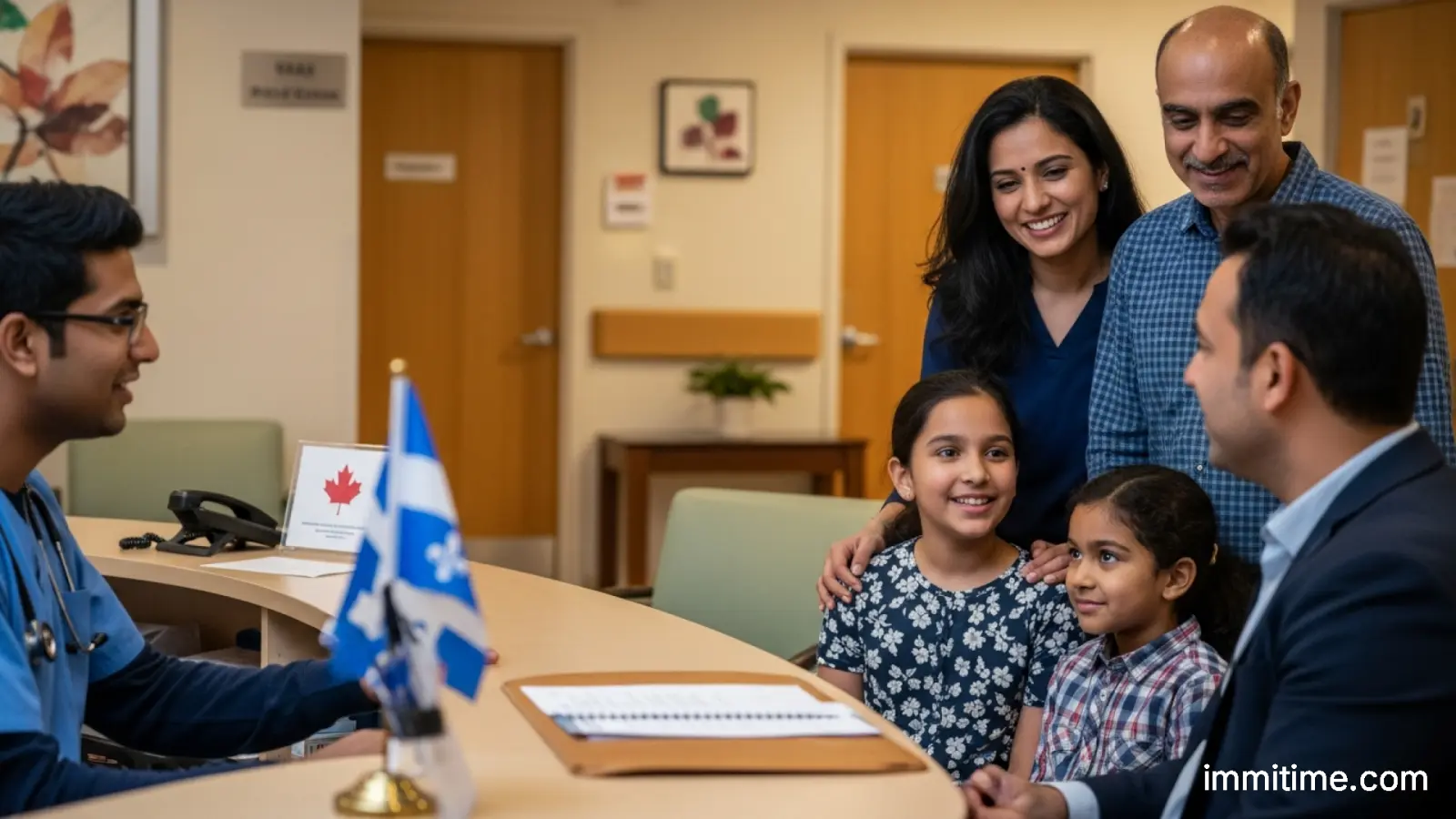
The Quebec Healthcare Exemption: Who Qualifies and Why It Matters
The recent update to IRCC's program delivery instructions, published on May 29, 2026, specifically targets a critical demographic within Quebec's healthcare system. This exemption provides a vital pathway for family reunification, removing the 16-month work permit validity requirement for eligible spouses. This is a crucial distinction, as all other spouses/partners of foreign workers applying for an SOWP must still adhere to the 16-month rule.
Principal Worker Eligibility: A Three-Pronged Requirement
For a spouse or common-law partner to qualify for this exemption, the principal foreign national—the healthcare worker—must meet stringent criteria:
- Occupational Specificity: The principal worker must be employed in one of three highly specialized healthcare occupations, as defined by Canada's National Occupation Classification (NOC) system:
- Registered nurses and registered psychiatric nurses (NOC 31301);
- Respiratory therapists, clinical perfusionists, and cardiopulmonary technologists (NOC 32103); or
- Medical laboratory technologists (NOC 32120).
- Admission to Specific Quebec Projects: The principal worker must have been admitted into one of three designated Quebec projects focused on the recruitment and recognition of foreign-trained healthcare professionals:
- Projet de reconnaissance des compétences d'infirmières et d'infirmiers recrutés à l'international;
- Projet de reconnaissance des compétences d'inhalothérapeutes formés à l'étranger; or
- Projet de recrutement et reconnaissance des compétences de technologistes médicaux formés à l'étranger.
- Joint Provincial Oversight: These critical projects are run collaboratively by Quebec's Ministry of Immigration, Francisation and Integration (MIFI), Ministry of Health and Social Services (MSSS), and Ministry of Higher Education (MES). This joint oversight highlights the provincial government's commitment to these initiatives.
It is important to note that, even with this exemption, the principal foreign worker must still be authorized to work in Canada at the time their spouse or partner applies for the open work permit, aligning with standard spousal open work permit rules.
Application Process: Navigating the Specifics
Eligible spouses will apply through the standard C41 spousal open work permit application process. No separate or special application form is required. However, applicants must meticulously follow two additional, crucial steps to ensure their application benefits from this specific exemption:
- Unique Code Entry: Applicants must enter the specific code “CONJOINTSANTQC” in two distinct fields on their application form: both the job title box and the brief description of duties box. Failure to include this code precisely as instructed may result in IRCC processing the application under the standard rules, thereby subjecting it to the 16-month validity requirement.
- Quebec Selection Letter Submission: Applicants must provide the principal worker’s Quebec selection letter. This letter is a critical piece of evidence; it must be signed by all three involved Quebec ministries (MIFI, MSSS, and MES) and explicitly confirm the principal worker’s admission into one of the three eligible projects mentioned above.
All other standard C41 eligibility requirements, such as demonstrating a genuine relationship and meeting general admissibility criteria, continue to apply. Diligence in meeting these specific requirements is paramount for a successful application.
Broader Context: Federal Support for Quebec's Workforce Needs
This May 25, 2026, exemption is not an isolated measure but rather the latest in a series of federal initiatives designed to support Quebec's strategic labor market objectives, particularly in the healthcare sector. In March 2026, for instance, the federal government announced another temporary measure aimed at assisting skilled workers in Quebec. This measure allows eligible workers who have received an invitation from Quebec to submit a Demande de Sélection Permanente (DSP) to obtain an employer-specific work permit for up to 12 additional months under the IMP, helping them remain employed while their provincial selection process unfolds.
These coordinated efforts highlight a collaborative approach between the federal government and Quebec to address specific economic challenges, particularly in sectors facing acute shortages. While IRCC's broader policy has moved towards more stringent SOWP criteria, these targeted exemptions demonstrate a pragmatic flexibility when critical provincial needs are identified and articulated through specific programs.

Implications and Actionable Advice for Affected Individuals
For foreign-trained healthcare professionals in Quebec and their families, this exemption represents a significant positive development. It alleviates a considerable burden by removing the 16-month work permit validity constraint, thereby facilitating family reunification and offering greater stability. The ability for spouses to obtain open work permits swiftly means they can enter the Canadian labor market sooner, contributing to the family's financial well-being and the broader economy, while also supporting the principal worker's retention in a critical healthcare role.
However, it is crucial for potential applicants to understand the precise and limited scope of this exemption. It applies exclusively to spouses of healthcare workers in specific NOC codes, admitted into specific Quebec projects, and requires meticulous adherence to the application instructions, including the special code and the Quebec selection letter.
What Affected Individuals Should Do Next:
- Verify Eligibility: Confirm that the principal foreign worker meets all criteria: specific NOC code, admission to one of the three Quebec projects, and current authorization to work in Canada.
- Gather Documentation: Secure the Quebec selection letter signed by MIFI, MSSS, and MES, confirming admission into the relevant project.
- Prepare Application Meticulously: When completing the C41 SOWP application, ensure the code “CONJOINTSANTQC” is entered correctly in both the job title and brief description of duties boxes.
- Consult an Expert: Given the nuances of immigration policy and the potential for missteps, consulting with an experienced immigration consultant or lawyer is highly advisable to ensure all requirements are met and the application is submitted accurately.
Conclusion: A Strategic Response to Sectoral Needs
The May 25, 2026, exemption for spouses of Quebec healthcare workers is a testament to Canada's adaptive immigration framework. While the overarching policy trend has been towards a more controlled approach to temporary resident volumes and SOWP eligibility, this targeted measure demonstrates IRCC's capacity to create specific carve-outs in response to acute labor market demands, particularly in essential sectors like healthcare. It offers a lifeline to families and reinforces Quebec's ability to attract and retain the medical talent it desperately needs. This policy ensures that while the principal healthcare workers are serving on the front lines, their families can remain united and contribute to Canada's social and economic fabric.
Frequently Asked Questions
What is the primary change introduced by this IRCC update for spouses of Quebec healthcare workers?
The primary change, effective May 25, 2026, is an exemption from the requirement that the principal worker's work permit be valid for at least 16 months for their spouse or common-law partner to qualify for an open work permit. This stipulation was initially added to SOWP eligibility at the start of 2025.
Which specific healthcare occupations and Quebec projects are covered by this exemption?
The exemption applies to spouses of principal workers in NOC 31301 (Registered nurses), NOC 32103 (Respiratory therapists, etc.), or NOC 32120 (Medical laboratory technologists), provided they were admitted into one of three specific Quebec projects: 'Projet de reconnaissance des compétences d'infirmières et d'infirmiers recrutés à l'international', 'Projet de reconnaissance des compétences d'inhalothérapeutes formés à l'étranger', or 'Projet de recrutement et reconnaissance des compétences de technologistes médicaux formés à l'étranger'.
What special steps are required when applying for the spousal open work permit under this exemption?
Applicants must take two special steps: first, enter the code “CONJOINTSANTQC” in both the job title box and the brief description of duties box on their application form; second, provide the principal worker’s Quebec selection letter, signed by MIFI, MSSS, and MES, confirming admission into one of the eligible projects.
Does this exemption reverse the broader SOWP tightening policies introduced in January 2025?
No, this exemption does not reverse the broader tightening of spousal open work permit access that began on January 21, 2025. It creates a limited carve-out specifically for a defined group of healthcare workers in Quebec and their spouses, while the 16-month rule and narrowed TEER eligibility still apply to most other SOWP applicants.
Free Immigration Assessment
Complete our smart assessment form to check your eligibility for over 80+ Canadian immigration programs.
Last Updated: