The Great Canadian Ancestry Rush: How a New Law Has Millions of Americans Seeking Roots and Passports
A landmark change in Canadian law has made millions of Americans eligible for citizenship by descent, causing an unprecedented rush for ancestral documents.

Free Immigration Assessment
Complete our smart assessment form to check your eligibility for over 80+ Canadian immigration programs.
A Landmark Shift in Canadian Citizenship Law
In a move that has sent ripples across the border, Canada has fundamentally altered its citizenship laws, inadvertently sparking a modern-day genealogy gold rush. The catalyst is Bill C-3, a piece of legislation that took effect on December 15, 2025. This bill eliminated the long-standing “first-generation limit” on citizenship by descent. The implications are staggering: anyone born before this date, regardless of their place of birth, can now claim Canadian citizenship if they can prove a direct lineage to a Canadian ancestor, no matter how many generations back that connection may be.
Previously, Canadian citizenship could generally only be passed down one generation if the child was born abroad. This “first-generation limit” meant that the grandchild of a Canadian-born person, if also born outside Canada, would typically not be a citizen. Bill C-3 has erased that barrier, opening the door for millions of Americans with distant Canadian roots to claim a birthright they never knew they had. This legislative change represents one of the most significant expansions of access to Canadian citizenship in recent history, and its consequences are just beginning to unfold.
The New Brunswick Bottleneck: A Case Study in Unintended Consequences
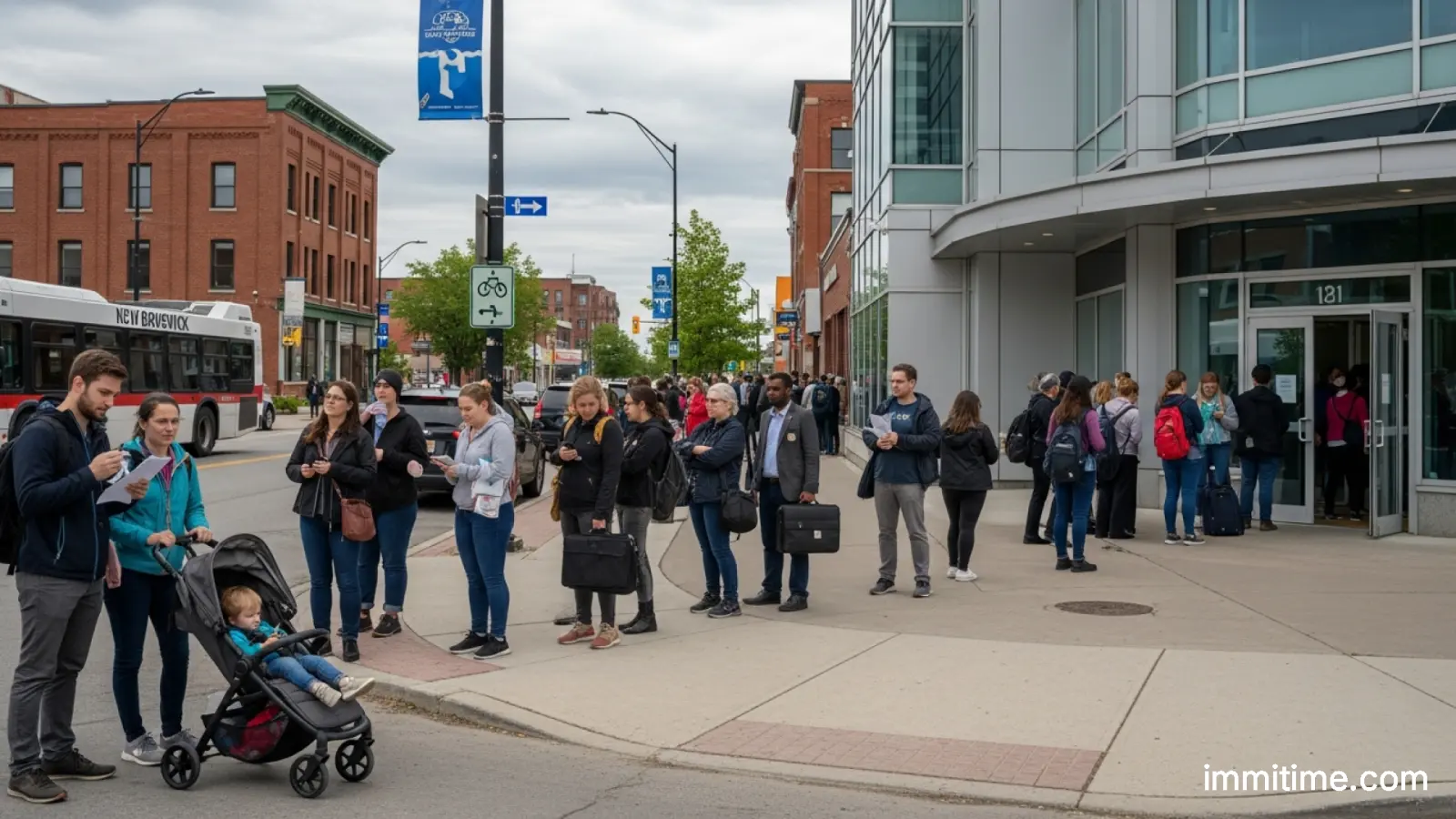
The immediate and most visible impact of this policy shift is not at the border, but in the quiet, climate-controlled rooms of Canada's archives. The Provincial Archives of New Brunswick has found itself at the epicenter of this surge. To apply for a proof of Canadian citizenship certificate—a mandatory first step before obtaining a passport—applicants must provide official documentation of their lineage. This has led to an unprecedented flood of requests for vital records.
According to provincial archivist Joanna Aiton Kerr, the numbers tell a dramatic story. Throughout 2025, the archive handled approximately 100 genealogy-related requests per month. By the spring of 2026, that number had quadrupled to an estimated 400 citizenship-related requests a month. The archive even began tracking these requests as a distinct category in February 2026, noting a “slow but steady increase” since then.
“We didn’t see this coming,” Aiton Kerr admitted, highlighting the strain this has placed on resources not just in New Brunswick, but across the country. “The surge in requests for vital statistics records in the wake of C-3 is putting pressure on the resources of archives across the country.” The majority of these requests are from American applicants seeking birth records, though demands for marriage certificates, death records, land records, and even school cumulative files are also common.

Historical Echoes: Why New Brunswick is Ground Zero for American Applicants
The intense focus on New Brunswick records is not a coincidence; it is a direct consequence of a painful chapter in North American history: the Expulsion of the Acadians. Beginning in 1755, the British government forcibly removed thousands of French-speaking settlers, the Acadians, from their homes in what are now Canada’s Atlantic provinces, including New Brunswick.
Many of these displaced families were scattered across the American colonies and beyond. A significant number eventually found refuge in Louisiana, years before the Louisiana Purchase made it part of the United States. Over generations, their descendants formed the heart of Louisiana's unique Cajun culture—a term derived directly from the word “Acadian.” Today, their descendants are discovering that this deep, historical connection to Canada's past now provides a direct pathway to Canadian citizenship in the present.
The “Plan B” Passport: Security in an Uncertain World
For many of the Americans pursuing this path, the goal is not necessarily to pack up and move to Canada. Instead, a Canadian passport is seen as a powerful form of insurance—a “backup plan” or a contingency against political and social uncertainty at home. This phenomenon aligns with a broader global trend where individuals are increasingly seeking second passports as a means of securing personal freedom, mobility, and opportunity.
Canada’s reputation as a stable, prosperous, and welcoming country makes its passport particularly desirable. The passage of Bill C-3 has, therefore, arrived at a moment of particularly high demand. The ability to live and work freely in a second country, coupled with the security of having an alternative, is a powerful motivator driving this rush for ancestral documents.
A Practical Guide for Aspiring Canadians by Descent
For the millions of Americans now contemplating this journey, the path involves patience, diligence, and a clear understanding of the process. Here is a breakdown of the steps involved.
Step 1: The Document Hunt and the Virtue of Patience
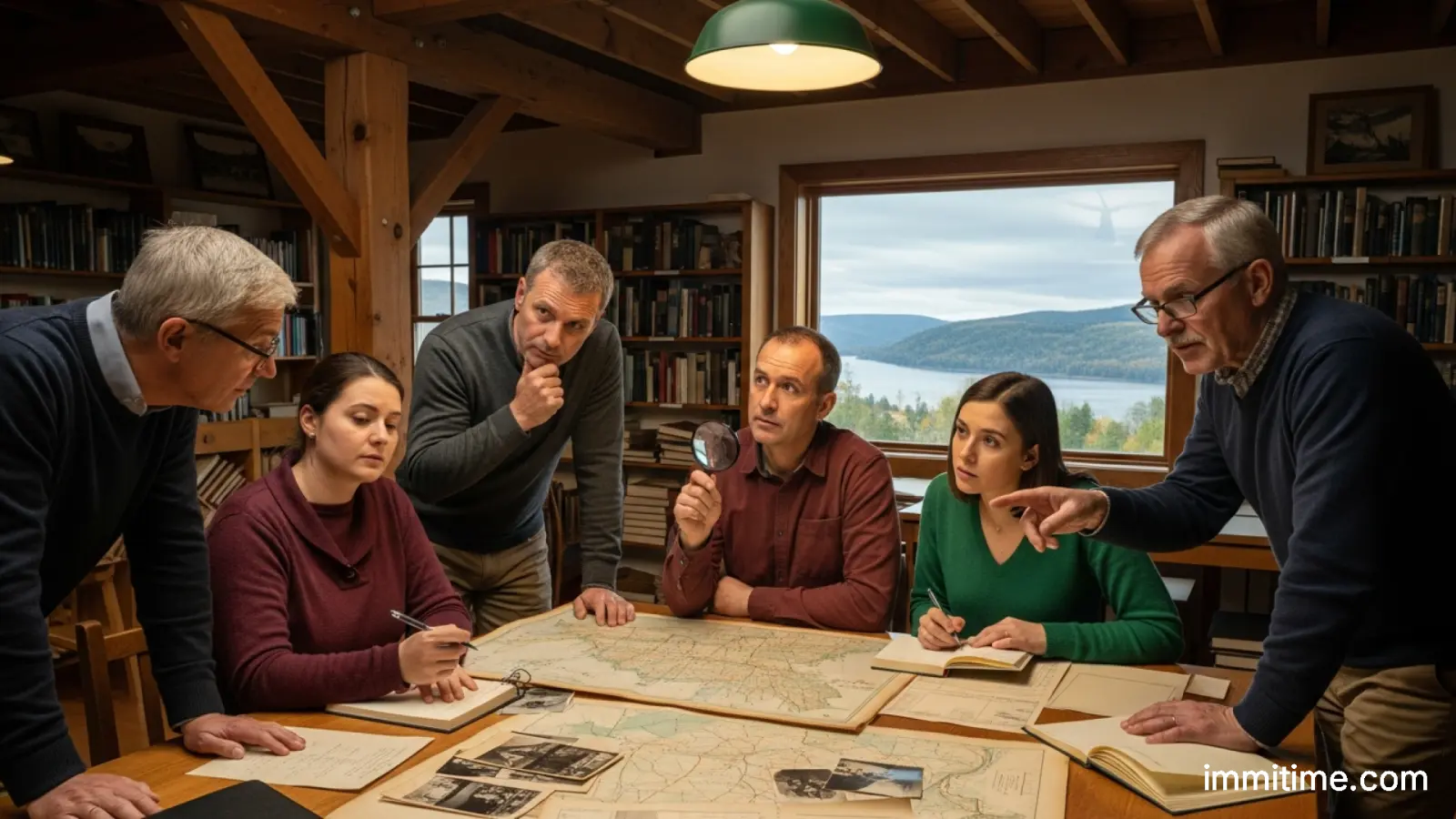
The entire process hinges on your ability to prove your lineage. This is the first and most critical step. You must gather the official documents that create an unbroken chain from you to your Canadian ancestor. This includes birth certificates, marriage certificates, and other vital records for each generation. As the situation in New Brunswick demonstrates, the archives holding these records are under immense pressure. Joanna Aiton Kerr’s plea for patience is a crucial piece of advice for all applicants.
“Canadian archivists want to be helpful — it is our nature — and we want to connect people with the information they are seeking whenever possible,” she stated. “But it is going to take us longer to do it... Patience is the name of the game.” Applicants should prepare for longer-than-usual response times as staff work through significant backlogs.
Step 2: Navigating the System and Seeking Professional Help
The complexity of tracing ancestry and dealing with bureaucratic processes has led many to seek professional assistance. It is important to note that only Canadian lawyers and licensed Canadian immigration consultants are authorized by the Canadian government to represent applicants in this matter. This expertise can be particularly valuable when dealing with archives that may prioritize requests from local residents, such as the Bibliothèque et Archives nationales du Québec (BAnQ). A qualified representative can help navigate these hurdles and ensure an application is compiled correctly.
Step 3: The Official Application Process
Once you have all the necessary supporting documents, the formal process begins.
- Proof of Citizenship Certificate: You must first submit a paper application for a proof of Canadian citizenship certificate to Immigration, Refugees and Citizenship Canada (IRCC). This certificate is the official government document that confirms your status as a Canadian citizen.
- Canadian Passport: After you have received your citizenship certificate, you can then apply for a Canadian passport. This is a separate application. According to the source, passport applications are typically processed within a relatively swift 10 to 20 business days.
The Perks of a Second Passport: Dual Citizenship with Canada
The reward for this effort is significant. Both Canada and the United States recognize dual citizenship, meaning you do not have to renounce your American citizenship. As a U.S.-Canadian dual citizen, you enjoy the full rights of citizenship in both nations. This includes the right to live, work, and study in both countries without the need for visas or work permits.
Crucially, for American citizens, obtaining Canadian citizenship does not create new tax burdens in Canada. Unlike the United States, which taxes its citizens on their worldwide income regardless of where they live, Canada does not apply a worldwide tax on its non-resident citizens. Therefore, a U.S.-Canadian dual citizen living in the U.S. will not gain any additional Canadian tax obligations simply by holding a Canadian passport.
Bill C-3 has redrawn the map of Canadian identity, extending its reach deep into the historical fabric of North America. For countless Americans, a story that began with an ancestor's journey from Canada centuries ago may now end with their own journey back—if only on paper—to claim the rights and security of a Canadian passport.
Frequently Asked Questions
What changed with Canadian citizenship law on December 15, 2025?
On December 15, 2025, Bill C-3 took effect, eliminating Canada's first-generation limit on citizenship by descent. This means anyone born before this date with a Canadian ancestor can now claim citizenship, regardless of how many generations ago that ancestor lived.
Why are so many Americans suddenly requesting records from New Brunswick?
Many Americans, particularly those of Cajun descent in Louisiana, trace their ancestry to Acadian settlers who were forcibly expelled from New Brunswick by the British starting in 1755. This historical connection makes New Brunswick's archives a primary source for the documents they need to prove their Canadian lineage.
What is the process to get a Canadian passport through ancestry?
It is a two-step process. First, you must gather your ancestral documents and apply for a proof of Canadian citizenship certificate. Once you receive that certificate, you can then submit a separate application for a Canadian passport.
If I become a dual US-Canadian citizen, will I have to pay Canadian taxes?
No, obtaining Canadian citizenship will not create new tax obligations for a US citizen living in the United States. Unlike the US, Canada does not tax its non-resident citizens on their worldwide income.
Free Immigration Assessment
Complete our smart assessment form to check your eligibility for over 80+ Canadian immigration programs.
Last Updated: