
The Great Canadian Comeback: How a New Ancestry Law Unlocked Citizenship for Millions and Overwhelmed a Nation
A new Canadian law granting citizenship to descendants of any Canadian ancestor has led to millions of eligible Americans, overwhelming provincial archives and creating massive backlogs.

Free Immigration Assessment
Complete our smart assessment form to check your eligibility for over 80+ Canadian immigration programs.
A Landmark Policy Shift Redefines Canadian Identity
In a move that has sent ripples across the continent, the Canadian government has fundamentally altered its citizenship laws, creating an unprecedented pathway for millions of Americans to claim their Canadian heritage. The recent legislative change eliminated the long-standing “first-generation limit” on citizenship by descent. Previously, citizenship could typically only be passed down one generation if born abroad. Now, in a dramatic expansion, anyone born prior to December 15, 2025, with at least one Canadian ancestor has the right to Canadian citizenship, regardless of how many generations separate them from their Canadian-born relative.
This policy decision has been met with an immediate and overwhelming response. While it represents a generous and inclusive vision of Canadian identity—one that reaches back through history to embrace a wider diaspora—it has also triggered a cascade of logistical challenges. The dream of a Canadian passport has collided with the reality of bureaucratic capacity, as millions of newly eligible individuals, predominantly from the United States, begin the complex process of proving their lineage.
The Archival Bottleneck: A System Under Siege
The journey to a Canadian passport for these new applicants is not a simple one. Before they can apply for a passport, they must first obtain a proof of Canadian citizenship certificate. This critical document requires meticulous genealogical evidence, authenticated by official vital records such as birth, marriage, and death certificates. The gatekeepers to this evidence are Canada’s national and provincial archives, and they are now at the epicenter of an administrative storm.
Across the country, archives are reporting a deluge of requests on a scale never seen before. The demand is so intense that it is grinding systems to a halt, creating staggering backlogs and leaving applicants in a state of prolonged uncertainty.
Quebec and the Echoes of the 'Great Hemorrhage'
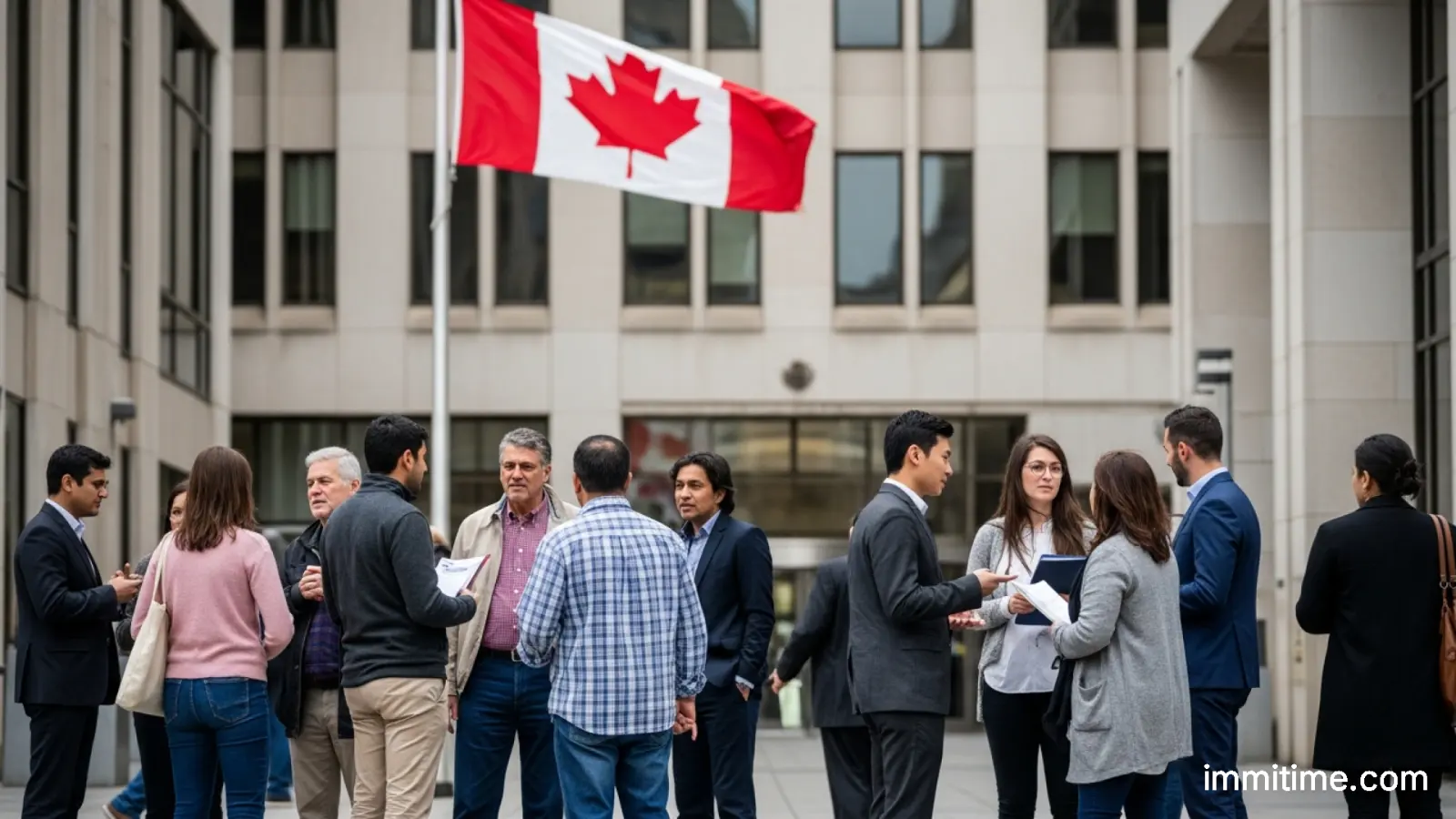
Nowhere is this pressure more acute than in Quebec. The Bibliothèque et Archives nationales du Québec (BAnQ) has reported a staggering 3,000% increase in requests. This incredible surge is directly linked to a major historical migration known as the “Great Hemorrhage,” which saw vast numbers of French Canadians move to the New England states between 1840 and 1930 in search of economic opportunity. Generations later, their American descendants are now tracing those roots back to Quebec, armed with the new law and a desire to formalize their connection.
The Maritimes: A Surge Rooted in 18th Century Displacement
The Atlantic provinces of New Brunswick, Nova Scotia, and Prince Edward Island are experiencing a similar, historically-rooted phenomenon. The surge in these regions traces back to the 18th-century displacement of the Acadians, a French-speaking cultural group forcibly expelled from what is now Eastern Canada by the British government starting in 1755. Many of these displaced Acadians eventually settled in Louisiana, becoming the ancestors of today’s Cajun population. Their descendants are now a significant portion of the Americans seeking to reclaim their Canadian ties.
The numbers paint a stark picture of the strain:
- Nova Scotia: As reported by CBC News in March, the Nova Scotia Archives witnessed 10 times more requests in January and February than in the same period of the previous year. By March, the archive’s backlog had swelled to around 600, with 270 new requests added. The source further notes that from January to March of 2026, the archives received 1,354 requests, a figure more than five times the 262 requests received throughout the entire calendar year of 2024.
- New Brunswick: The Provincial Archives of New Brunswick is grappling with a backlog of over 1,000 requests. According to the CBC, an additional 400 citizenship-related requests are pouring in each month. Archivist Joanna Aiton Kerr noted that the surge began in December and has shown no signs of slowing. The situation is so severe that the archives currently advise a wait of six to eight weeks just to receive a response to an initial inquiry.
- Prince Edward Island: The province’s Public Archives and Records Office has seen a 143 per cent increase in requests so far this year. The volume is so high that the office has implemented an automatic email response stating that it cannot provide a timeline for when orders will be completed.
This data collectively illustrates a system pushed to its limits. The very institutions that hold the keys to citizenship are now the biggest bottleneck in the process.

The American 'Insurance Policy': Analyzing the Motivation
The overwhelming majority of applicants are Americans, outnumbering those from the United Kingdom—the second-highest source country—by a factor of ten. But what is driving this massive wave of interest from the United States? For many, it is not about immediate relocation. Instead, obtaining a Canadian passport is viewed as acquiring a powerful “back-up plan” or an “insurance policy.”
Since both Canada and the United States permit dual citizenship, Americans have realized that claiming their Canadian heritage comes with a host of benefits and virtually no downsides.
Key Advantages for U.S. Applicants:
- Tax Freedom: A significant driver is Canada's tax policy. Unlike the United States, which imposes a worldwide tax on its citizens regardless of where they live, Canada does not. This means a U.S.-Canadian dual citizen living in the U.S. does not become subject to any additional Canadian tax obligations by simply obtaining a passport.
- Enhanced Mobility and Rights: Dual citizenship grants the full rights and privileges of both nations. This includes the right to enter, live, and work in Canada at will, providing a valuable escape hatch or opportunity for personal and professional expansion.
- A More Powerful Passport: In a world of increasing travel complexities, passport power matters. The Canadian passport currently ranks higher than the U.S. passport on the Henley Passport Index, offering visa-free or visa-on-arrival access to more destinations.
These factors combine to make Canadian citizenship a highly desirable asset. It represents an increase in personal freedom, security, and global mobility, all without requiring any immediate, drastic life changes or creating new financial burdens.
Expert Analysis: What Applicants Must Do Now
As an immigration analyst, my primary advice to anyone eligible and interested under this new law is twofold: act decisively and be patient. The window of opportunity is clear, but the path is fraught with delays. The demand is far from abating, and the backlogs are only projected to grow.
Actionable Steps for Prospective Applicants:
- Start Immediately: The six-to-eight-week response time for a mere inquiry in New Brunswick is a canary in the coal mine. These timelines will likely lengthen across all provinces. The sooner you initiate your request for archival documents, the sooner you enter the queue.
- Gather Your Family History: Before even contacting an archive, do your homework. Compile as much information as you can about your Canadian ancestor(s): names, dates of birth, marriage dates, locations, and so on. The more specific your request to the archives, the more likely they are to locate the correct documents efficiently.
- Prepare for a Marathon, Not a Sprint: Obtaining the proof of citizenship certificate, and subsequently the passport, will be a multi-stage, lengthy process. Manage your expectations. This is not an overnight solution but a long-term investment in your future optionality.
- Ensure Accuracy: Any error or omission in your application to IRCC for the citizenship certificate will result in it being returned or rejected, sending you to the back of the line. The stakes are too high for simple mistakes. Meticulous preparation is essential.
The Canadian government has opened a historic door. For the millions of Americans with roots stretching north, it is an invitation to reconnect with a part of their identity. However, navigating the journey requires a clear understanding of the challenges. The surge is a testament to the enduring appeal of Canada, but it also serves as a critical lesson in how landmark policy must be matched with the administrative capacity to deliver on its promise.
Frequently Asked Questions
Who is eligible for Canadian citizenship under the new law?
Any person born prior to December 15, 2025, who can trace their lineage back to a Canadian ancestor is now eligible for citizenship. The new law removed the previous 'first-generation limit,' so it does not matter how many generations ago your ancestor lived in Canada.
Why are Canadian provincial archives so overwhelmed?
To get a Canadian passport, newly eligible applicants must first get a proof of Canadian citizenship certificate. This requires submitting official documents proving their ancestry, which are held in provincial archives. The sudden eligibility of millions of Americans has led to a massive surge in requests for these documents, with some archives seeing increases of up to 3,000%.
What are the benefits for an American to get dual Canadian citizenship?
For Americans, dual citizenship offers several advantages with no downsides. They gain the right to live and work in Canada, and acquire a Canadian passport which currently ranks higher than the U.S. passport. Importantly, Canada does not impose a worldwide tax on its non-resident citizens, so there are no new tax obligations for U.S. residents.
What is the first step if I believe I am eligible?
The first step is to apply for a proof of Canadian citizenship certificate from Immigration, Refugees and Citizenship Canada (IRCC). However, before you can apply, you must gather the necessary vital records (like birth and marriage certificates) to prove your lineage, which involves contacting the relevant provincial archives where your ancestor lived.
Free Immigration Assessment
Complete our smart assessment form to check your eligibility for over 80+ Canadian immigration programs.
Last Updated: