Tracing Quebec Roots: How Church Baptismal Records Support Canadian Citizenship by Descent Claims
Why pre-1994 Quebec baptismal and parish records can be key evidence for a citizenship by descent claim, and which archive to contact.
Free Immigration Assessment
Complete our smart assessment form to check your eligibility for over 80+ Canadian immigration programs.
Key Takeaways
- Before 1994, Quebec births, marriages, and deaths were often recorded in parish or church registers rather than by a centralized government office, making baptismal records essential proof for older citizenship by descent files.
- Quebec's Directeur de l'état civil (DEC) only holds civil-status records from roughly the last 100 years; earlier records must come from Bibliothèque et Archives nationales du Québec (BAnQ) or directly from the parish or diocese.
- Immigration, Refugees and Citizenship Canada (IRCC) accepts a baptismal record as supporting evidence for a proof of citizenship application as long as it was created within a reasonable time of birth and comes from the original issuing authority — not a third-party genealogy site.
Gathering Documents Is Often the Hardest Part
For many people applying for a proof of Canadian citizenship certificate, assembling the paperwork trail is the most demanding stage of the process — and that challenge is amplified for applicants tracing Quebec ancestry, where a large share of historical births and marriages were never recorded by a government office at all. Instead, they were entered into the registers of a local parish.
What Counts as a Baptismal Record?
A baptismal record is created by a church at the time an infant was baptized. It typically includes the baptism date, the parish name, the presiding priest, and the names of the parents and godparents. Since baptisms were usually performed soon after birth, these documents sometimes — though not always — also list the date of birth itself.
Immigration, Refugees and Citizenship Canada (IRCC) will accept a baptismal certificate as supporting documentation in a proof of citizenship file, provided the baptism took place within a reasonable window following the birth.
A System That Predates Quebec's Modern Registry
Quebec did not centralize its civil-status recordkeeping until 1994, when the Directeur de l'état civil (DEC) took over as the province's official registrar. Until that point, parish registers effectively served as the province's vital records system for generations of families.
This means a document that looks like an official birth or marriage certificate — but predates 1994 — usually is not sufficient on its own for a citizenship application. Applicants in this position need to obtain a current copy issued directly by the DEC.
Requesting Records from the DEC
The DEC can supply either a certificate or a full copy of an act, and IRCC's stated preference is for a full colour copy of the act itself.
Because Quebec restricts access to its civil-status register to protect the privacy of the individuals named in it, requesters generally must either be named in the record themselves or demonstrate a valid reason for the request. A parent, for instance, can always request their child's birth certificate no matter the child's current age. Someone requesting a deceased person's record as their spouse, child, or sibling does not need to provide additional justification, even if they are not named in the act. Anyone else must explain their reason and attach supporting proof, such as a power of attorney or a will.
Some immigration law firms can arrange to order post-1923 Quebec birth certificates on a client's behalf.
When BAnQ Becomes the Right Contact
The DEC's holdings generally cover only the past 100 years. For anything older, applicants must turn instead to Bibliothèque et Archives nationales du Québec (BAnQ), the province's archival body.
BAnQ can issue copies or certified reproductions of archival civil-status entries — including baptismal, marriage, and burial records — but it does not issue Quebec birth certificates. Anyone submitting a baptismal certificate in place of a birth certificate for older Quebec ancestry will also need to show evidence that they attempted to obtain a birth certificate, such as a letter from the Quebec archives confirming none exists, or a copy of Quebec's stated policy on birth records more than a century old.
If Neither BAnQ nor the DEC Has the Record
When neither institution can locate the required baptismal record, applicants may need to contact the specific parish, diocese, or other archive that holds it directly. Any baptismal record submitted must come from the original issuing authority or custodian — third-party genealogy databases cannot be relied upon as a sole source.
If a record is faded or difficult to read, it helps to pair it with another government-issued document that confirms the ancestor's Canadian birthplace, such as a death certificate or the birth certificate of a next of kin. Requesting records directly from a Quebec parish — rather than through BAnQ — can also pose extra complications for applicants who don't read or speak French.
Records Written in French
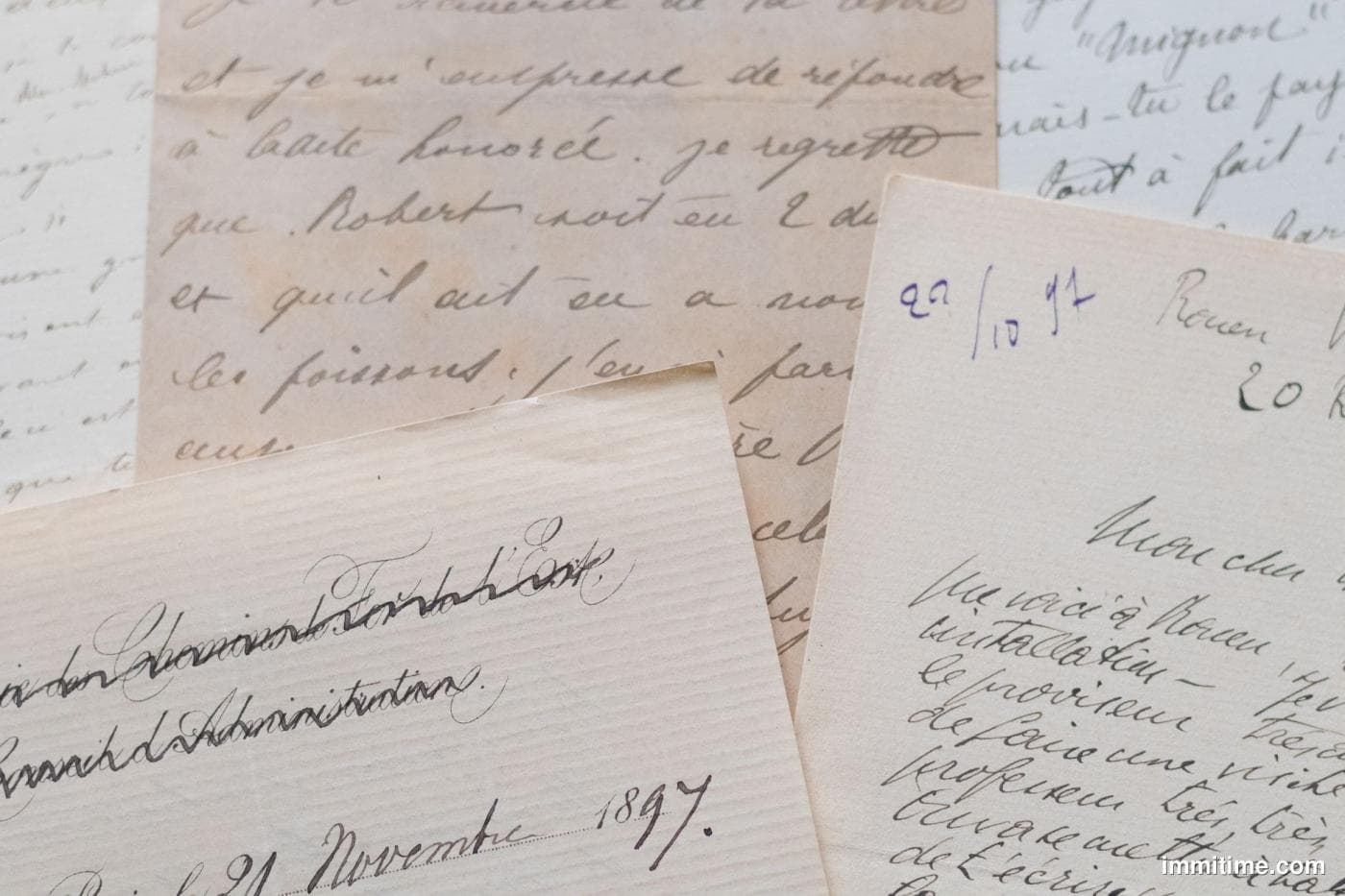
A handwritten French-language record from a small Quebec parish is valid on its own, provided it comes from the original issuing authority. Because French is one of Canada's two official languages, IRCC accepts documents in either English or French, so no translation is required.
What This Means for Applicants
For descendants piecing together a Quebec citizenship by descent claim spanning multiple generations, understanding which body holds which record — the DEC for the past century, BAnQ for anything older, and the parish itself as a last resort — can save months of delay. Applicants uncertain about their ancestor's paperwork should confirm current requirements directly with IRCC or with Quebec's official record-keeping bodies before submitting a proof of citizenship application.
Free Immigration Assessment
Complete our smart assessment form to check your eligibility for over 80+ Canadian immigration programs.
Last Updated: