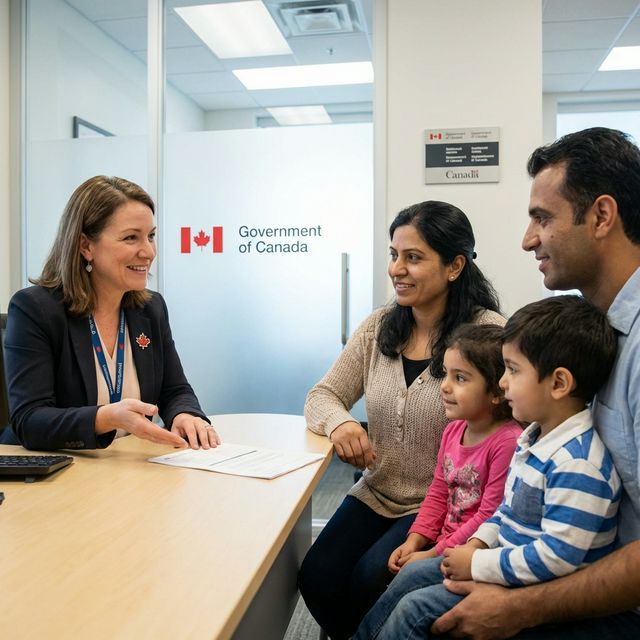
Canada stands as a global leader in humanitarian immigration, consistently opening its doors to those fleeing persecution, war, and conflict. At the heart of this commitment is the Government-Assisted Refugee (GAR) program, a vital pathway for the most vulnerable individuals and families to find safety and a new beginning in Canada. As a Regulated Canadian Immigration Consultant (RCIC), it's crucial to understand that the GAR program is a cornerstone of Canada's broader refugee resettlement strategy, reflecting the nation's values of compassion, human rights, and international responsibility.
A Government-Assisted Refugee (GAR) is an individual who has been identified as a refugee by the United Nations High Commissioner for Refugees (UNHCR) or another designated referral organization due to a well-founded fear of persecution. These individuals are typically outside their home country and often in dire circumstances, lacking local protection or durable solutions in their host countries. Unlike Privately Sponsored Refugees (PSRs) or Blended Visa Office-Referred (BVOR) refugees, GARs are referred directly to Canada by these international bodies.
The Canadian government, through Immigration, Refugees and Citizenship Canada (IRCC), then assumes primary responsibility for their resettlement. This comprehensive support system is designed to provide immediate and essential assistance upon arrival, facilitating their integration into Canadian society. This includes, but is not limited to, initial reception, temporary and sometimes permanent housing, financial aid for basic needs, access to healthcare, language training, employment services, and orientation to Canadian life. The intent is to ensure that these vulnerable newcomers receive a stable foundation upon which to rebuild their lives, contributing to Canada's social and economic fabric in the long term.
The GAR program is critical because it targets those refugees who have no other means of escape or resettlement. They often arrive with little to no resources, having endured significant trauma and hardship. Canada's program provides not just a safe haven, but a structured pathway to recovery and self-sufficiency. It underscores Canada's adherence to international conventions on refugee protection and its proactive role in addressing global humanitarian crises. For an RCIC, understanding the nuances of the GAR program is essential when advising clients on the various refugee streams and the distinct support systems associated with each. It's a testament to Canada's commitment to offering a lifeline to those most in need, ensuring that vulnerability is met with comprehensive support and the promise of a brighter future.
The Government-Assisted Refugee (GAR) program is not an open application program; rather, it is a referral-based system. This means individuals cannot apply directly to IRCC to become a GAR. Eligibility is determined through a rigorous process involving international organizations and the Canadian government. Here are the detailed eligibility and requirements:
-
Referral by a Designated Organization:
- The primary requirement is that the individual must be referred to Canada by the UNHCR or another designated referral organization that has an agreement with IRCC. These organizations identify individuals who meet Canada's refugee criteria and are in urgent need of resettlement.
- This typically means the individual has been living in a refugee camp or urban refugee setting in a third country and has been identified by the UNHCR as having no durable solution (i.e., local integration, voluntary repatriation, or resettlement to another country).
-
Meeting the Definition of a Refugee:
- Applicants must meet Canada's definition of a Convention Refugee or a Person in Need of Protection, as outlined in the Immigration and Refugee Protection Act (IRPA).
- Convention Refugee: Someone who, by reason of a well-founded fear of persecution for reasons of race, religion, nationality, membership in a particular social group, or political opinion, is outside their country of nationality and is unable or unwilling to avail themselves of the protection of that country.
- Person in Need of Protection: Someone in Canada who would face a risk to their life, a risk of cruel and unusual treatment or punishment, or a danger of torture if they were returned to their home country. (Note: For GARs, this is typically assessed while they are outside Canada).
-
Location Outside Canada:
- GARs must be outside Canada at the time of their referral and application processing. The program is designed for overseas resettlement, not for individuals already within Canada.
-
Admissibility to Canada:
- All applicants, including GARs, must undergo and pass comprehensive admissibility checks, which include:
- Medical Examination: A mandatory medical examination is required to ensure the applicant does not pose a public health risk to Canadians and does not have a condition that would cause excessive demand on Canada's health or social services.
- Security Checks: Extensive background checks are conducted by Canadian security agencies to ensure the applicant does not pose a security risk to Canada.
- Criminality Checks: Applicants must not have been convicted of crimes that would make them inadmissible to Canada. This includes serious criminal offenses, war crimes, or crimes against humanity.
- All applicants, including GARs, must undergo and pass comprehensive admissibility checks, which include:
-
No Other Durable Solution:
- The UNHCR and IRCC prioritize refugees who genuinely have no other options for safety or integration in their current host country. This aligns with the principle of resettlement as a last resort.
-
Family Members:
- Eligible family members (spouse/common-law partner, dependent children) can be included in the application and will undergo the same admissibility checks. The primary applicant and their dependents are typically processed together as a unit.
-
No Prior Refugee Claim in a Safe Third Country:
- Individuals who have made a refugee claim in a designated safe third country (e.g., the United States) are generally not eligible for resettlement to Canada under the GAR program.
-
Willingness to Resettle in Canada:
- Applicants must express a genuine desire and willingness to resettle permanently in Canada and abide by Canadian laws.
It is critical for anyone interested in the GAR program to understand that direct application is not possible. If you or someone you know believes they meet these criteria, the first step is typically to register as a refugee with UNHCR in the country where they are seeking asylum. UNHCR then assesses their eligibility for resettlement to various countries, including Canada, based on their vulnerability and specific needs.
The processing of a Government-Assisted Refugee (GAR) application is a multi-stage process involving international organizations and the Canadian government. While the refugee themselves cannot initiate the application, understanding the sequence of events is crucial for all stakeholders. Here's a numbered breakdown of the typical steps:
-
Identification and Referral by UNHCR or Designated Organization:
- A refugee, living in a refugee camp or urban setting, is identified by the United Nations High Commissioner for Refugees (UNHCR) or another designated referral organization (e.g., a UN agency, a recognized private sponsorship organization, or a foreign government).
- UNHCR assesses the individual's situation, determines if they meet refugee criteria, and identifies if resettlement is the most appropriate durable solution due to their vulnerability or lack of local integration options.
- If resettlement is deemed necessary, UNHCR refers the case to Canada (or another resettlement country) based on Canada's resettlement quotas and specific criteria.
-
Initial Review by IRCC Visa Office:
- Upon receiving the referral, an IRCC visa office abroad conducts an initial review of the submitted documentation to ensure the case meets Canada's basic eligibility for the GAR program.
- IRCC confirms that the individual is indeed a Convention Refugee or a Person in Need of Protection and is eligible for resettlement.
-
Application Submission and Documentation:
- If the initial review is positive, the refugee is provided with application forms. Often, UNHCR staff or IRCC officials provide assistance in completing these forms, which detail personal information, family composition, refugee narrative, and previous experiences.
- Supporting documents, such as identity papers (if available), birth certificates, marriage certificates, etc., are collected.
-
Interview with IRCC Officer:
- The applicant attends an interview with an IRCC officer. During this interview, the officer verifies the information provided in the application, assesses the refugee claim, and determines the applicant's admissibility to Canada.
- The officer also assesses the applicant's potential for successful integration into Canadian society. This is a critical step in the process.
-
Medical Examination:
- The applicant and all accompanying family members undergo a comprehensive medical examination conducted by a panel physician approved by IRCC. This is to ensure they are not medically inadmissible to Canada.
- Results are submitted directly to IRCC.
-
Security and Criminality Checks:
- Extensive background checks are performed on the applicant and all adult family members. This involves security screenings by Canadian intelligence agencies and criminal record checks to ensure there are no inadmissibility concerns related to security, human rights violations, or criminality.
-
Decision on Application:
- Based on all collected information, including the interview, medical results, and background checks, the IRCC officer makes a final decision on the application.
- If approved, the applicant is granted permanent resident status upon arrival in Canada.
-
Pre-Departure Orientation and Travel Arrangements:
- Approved refugees typically receive a pre-departure orientation (PDO) session, often delivered by the International Organization for Migration (IOM) or other partners. This session provides vital information about Canadian life, laws, climate, and what to expect upon arrival.
- IRCC, often in collaboration with IOM, arranges travel to Canada. This includes flights and often transit accommodation. Travel costs are generally covered by IRCC, often as a repayable loan, though specific conditions can lead to waivers or specific repayment terms.
-
Arrival in Canada and Initial Reception:
- Upon arrival at a Canadian airport, GARs are met by representatives from a local Resettlement Assistance Program (RAP) service provider organization.
- These organizations are funded by IRCC to provide immediate and essential services.
-
Initial Settlement and Support:
- The RAP service provider assists with immediate needs, including:
- Temporary accommodation (e.g., reception centres, hotels).
- Assistance in finding permanent housing.
- Orientation to Canadian life, public services, and community resources.
- Registration for social insurance numbers (SIN), provincial health insurance, and banking.
- Referrals to language training (ESL/FSL), employment services, and schooling for children.
- Provision of financial assistance for basic needs (food, clothing, transportation) for up to one year, or until the refugee becomes self-sufficient, whichever comes first.
- The RAP service provider assists with immediate needs, including:
This comprehensive process ensures that GARs are thoroughly vetted and receive the necessary support to begin their new lives successfully in Canada.
Understanding the processing times and financial implications for Government-Assisted Refugees (GARs) is essential. Unlike other immigration streams, the cost burden for GARs themselves is significantly reduced, with the Canadian government covering most expenses.
Processing Times
The processing times for Government-Assisted Refugee applications are highly variable and can range significantly. It is challenging to provide a precise timeline, as many factors influence the duration from referral to arrival in Canada:
- Country of Origin and Context: The geopolitical situation in the refugee's country of origin or asylum can heavily impact processing. Conflict zones, remote locations, or areas with limited Canadian diplomatic presence can lead to longer processing times.
- Volume of Referrals: High volumes of referrals from UNHCR or other designated organizations can create backlogs at IRCC visa offices, extending wait times.
- Completeness and Complexity of Application: While applicants receive assistance, any missing information or complex individual circumstances (e.g., large family size, previous travel history, security concerns) can delay processing.
- Security and Medical Checks: These checks are thorough and can take several months, particularly if additional information or follow-up appointments are required. The availability of panel physicians in certain regions can also be a factor.
- IRCC Capacity and Resources: The availability of IRCC officers and resources at specific visa offices can influence how quickly applications are processed.
- Travel Arrangements: Once approved, coordinating travel can take time, especially for large families or individuals with special needs, or if international travel restrictions are in place.
General Estimation: While it's difficult to pinpoint an exact duration, GAR processing can range from several months to over two years, and in some complex cases, even longer. Applicants should be prepared for a potentially lengthy process, understanding that each step requires careful consideration to ensure both humanitarian goals and Canada's security interests are met. There is no publicly available "service standard" for GAR processing from referral to arrival, given the external factors involved.
Costs
One of the defining characteristics of the GAR program is that the financial burden on the refugee is minimal, as the Canadian government covers the majority of the costs associated with resettlement.
- Application Fees: There are no application fees charged by IRCC for Government-Assisted Refugee applications. This is a critical distinction from many other immigration programs.
- Travel Costs:
- The cost of transportation to Canada (flights, transit) for GARs and their accompanying family members is initially paid by the Canadian government.
- However, these costs are typically considered a repayable loan under the Immigration Loans Program (ILP). The refugee is expected to repay this loan after they have settled in Canada and are able to work.
- The terms of these loans are generally favourable, with low or no interest and flexible repayment schedules. In some cases, depending on the refugee's financial situation, portions of the loan may be waived.
- Initial Settlement Costs:
- Upon arrival, GARs receive comprehensive financial support through the Resettlement Assistance Program (RAP). This program provides income support for basic needs (food, housing, clothing, local transportation) for up to one year, or until the refugee becomes self-sufficient, whichever comes first.
- RAP also covers the costs of immediate reception services, temporary accommodation, and assistance with finding permanent housing.
- Medical Expenses:
- The cost of the mandatory medical examination is generally covered by IRCC.
- Upon arrival, GARs are immediately eligible for provincial health insurance, ensuring access to necessary medical care without out-of-pocket expenses.
- Settlement Services:
- The Canadian government funds a wide range of settlement services provided by Resettlement Assistance Program (RAP) service providers and other community organizations. These services, including language training, employment support, and orientation, are provided free of charge to GARs.
In summary, while the processing time for a GAR can be extensive and unpredictable, the financial support provided by the Canadian government is robust, designed to remove significant financial barriers and provide a stable foundation for refugees to start their new lives in Canada.
1. Can I apply directly to be a Government-Assisted Refugee?
No, you cannot apply directly to IRCC to become a Government-Assisted Refugee (GAR). The GAR program is a referral-based system. This means that individuals must first be identified as a refugee by the United Nations High Commissioner for Refugees (UNHCR) or another designated referral organization that has an agreement with the Canadian government. These organizations assess refugees' eligibility and vulnerability, and then refer them to Canada for resettlement. If you are outside Canada and believe you are a refugee, your first step should be to register with UNHCR in the country where you are seeking asylum. UNHCR will then determine if you meet their criteria for refugee status and if resettlement to a third country, such as Canada, is the appropriate durable solution for your situation.
2. What support do Government-Assisted Refugees receive upon arrival?
Government-Assisted Refugees (GARs) receive comprehensive support upon arrival in Canada through the Resettlement Assistance Program (RAP), funded by IRCC. This support is designed to help them meet their immediate needs and begin integrating into Canadian society. Key services include:
- Initial Reception: Being met at the airport by a RAP service provider.
- Temporary Accommodation: Provision of temporary housing (e.g., reception centres, hotels) upon arrival.
- Financial Assistance: Income support for basic needs like food, housing, clothing, and local transportation for up to one year, or until they become self-sufficient, whichever comes first.
- Housing Assistance: Help finding and securing permanent housing.
- Orientation Services: Information and guidance on Canadian laws, culture, public services, transportation, banking, and community resources.
- Access to Healthcare: Assistance in applying for provincial health insurance.
- Social Insurance Number (SIN): Help applying for a SIN, which is necessary for employment and government benefits.
- Language Training: Referrals to free English or French language training programs.
- Employment Services: Referrals to programs that help with job searching, resume writing, and career counselling.
- Schooling for Children: Assistance with enrolling children in the Canadian school system.
This holistic support system aims to provide a stable foundation for GARs to rebuild their lives in a new country.
3. How is a Government-Assisted Refugee different from a Privately Sponsored Refugee?
While both Government-Assisted Refugees (GARs) and Privately Sponsored Refugees (PSRs) are pathways for refugees to resettle in Canada, they differ significantly in their referral, funding, and settlement support:
- Referral:
- GARs: Identified and referred by the UNHCR or other designated international organizations. They cannot apply directly.
- PSRs: Sponsored by private Canadian citizens or organizations (e.g., Sponsorship Agreement Holders, Groups of Five, Community Sponsors). These sponsors identify and often locate the refugees themselves.
- Funding & Support:
- GARs: Primarily funded by the Canadian government through the Resettlement Assistance Program (RAP), which provides financial aid and settlement services for up to one year.
- PSRs: Financial and settlement support is provided by their private sponsors for a minimum of 12 months. Sponsors are responsible for housing, food, clothing, and other needs, as well as providing emotional and social support.
- Vulnerability:
- GARs: Typically represent the most vulnerable refugees, often with no other durable solutions and significant immediate needs.
- PSRs: While also vulnerable, the ability to be sponsored by private groups often means they have some existing connection or network that can facilitate their resettlement.
In essence, GARs rely on government-provided support, while PSRs rely on the commitment and resources of private citizens or groups in Canada.
4. Are GARs eligible for permanent residency in Canada?
Yes, upon arrival and successful completion of all admissibility requirements (medical, security, criminality checks), Government-Assisted Refugees (GARs) are granted permanent resident status in Canada. This means they have the right to live, work, and study anywhere in Canada, and are entitled to most of the social benefits that Canadian citizens receive, including healthcare coverage. After meeting the residency obligations and other criteria (such as language proficiency and passing a knowledge test), they are then eligible to apply for Canadian citizenship, typically after living in Canada for a certain number of years as a permanent resident. The GAR program is explicitly designed to offer a path to permanent integration and eventual citizenship for those who qualify.
5. What if I have family members who are still abroad and want to join me?
If you arrive in Canada as a Government-Assisted Refugee (GAR) and have eligible family members (spouse/common-law partner, dependent children, and in some cases, other close relatives) who were not included in your original application or were left behind, you may be able to sponsor them through the One-Year Window of Opportunity (OYW) program. This program allows Convention Refugees Abroad and members of the humanitarian-protected persons abroad classes to apply to sponsor certain family members within one year of becoming a permanent resident in Canada. It is crucial to apply within this one-year window. The sponsored family members will also need to meet all Canadian immigration requirements, including medical, security, and criminality checks. Consulting with an RCIC can help you understand the specific requirements and navigate the OYW application process for your family.