Canada's Citizenship-by-Descent Review: Navigating New Scrutiny and Uncertainty for Applicants
Canada's immigration department has paused some citizenship-by-descent applications and is re-examining approved cases, leading to heightened scrutiny and uncertainty for thousands. Learn what this means for applicants and how to navigate the new, stricter documentary requirements for Canadian citizenship by descent.

Understanding Canada's Recent Pause on Citizenship-by-Descent Applications
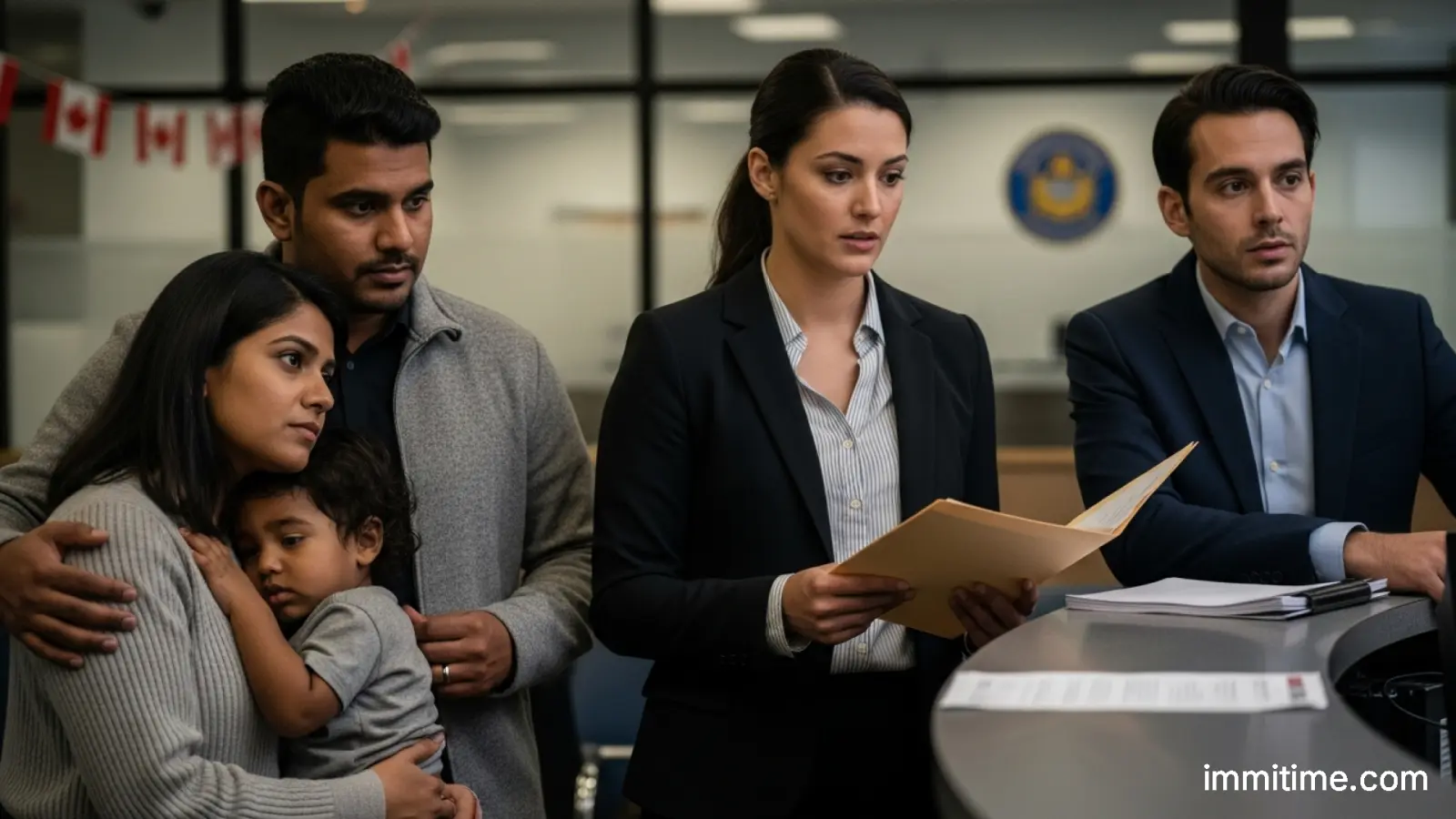
Recent developments within Immigration, Refugees and Citizenship Canada (IRCC) have introduced a significant period of uncertainty and heightened scrutiny for individuals seeking Canadian citizenship by descent. As an expert immigration journalist and policy analyst, I’ve been closely following this situation, which has seen IRCC temporarily halt the finalization of certain new citizenship-by-descent applications. This pause, initially brought to light through reporting by Global News and The Canadian Press, stems from an internal review prompted by the unprecedented step of asking previously approved individuals to surrender their citizenship certificates.
The implications of these actions are far-reaching, affecting not only those who have already received their proof of citizenship but also the tens of thousands of individuals currently awaiting a decision. This article will delve into the specifics of IRCC’s current stance, provide essential context, and offer actionable advice for both affected parties and prospective applicants navigating this evolving landscape.
The Unfolding Situation: Pause, Surrender Letters, and Internal Review
The core of the current issue revolves around two critical actions by IRCC. Firstly, the department has paused the processing of some new citizenship-by-descent applications. This means that for an undisclosed subset of applications, the finalization step has been put on hold, creating delays and anxiety for applicants who have often waited considerable periods.
Secondly, and perhaps more controversially, IRCC sent letters to a few dozen individuals who had already been approved and issued citizenship certificates. These letters instructed recipients to surrender their certificates for re-examination. This move, as reported by CIC News earlier, cited a regulation allowing the Registrar of Canadian Citizenship to request a certificate back when there’s reason to question entitlement, pointing to alleged gaps in the documentation previously submitted by applicants.
In response to the ensuing public and applicant outcry, IRCC issued a statement late Wednesday, as reported by Global News and The Canadian Press. This statement confirmed an internal review has commenced to determine “how this occurred.” The department also committed to taking steps to ensure all applications are assessed fairly and lawfully. It is important to note that this official statement itself has not been made publicly available by IRCC.
Legal Standing and Practicalities for Those Affected
For individuals who have received a surrender letter, the situation is undoubtedly distressing. However, the news outlets’ reporting provides crucial clarity regarding their legal status and immediate permissions while their files are under review:
- Continued Canadian Citizenship: Per Canadian citizenship laws, applicants who have been issued a surrender letter are still considered Canadian citizens while their application undergoes review. This is a critical distinction, as the surrender of the certificate does not equate to a revocation of citizenship at this stage.
- Work Authorization in Canada: Those who received a certificate, have moved to Canada, and subsequently received a surrender letter are permitted to continue working while the review process unfolds. This provides a measure of stability for individuals who have already established lives in Canada based on their approved citizenship status.
- Passport Restrictions: A key limitation is that individuals under review cannot use a Canadian passport. IRCC has stated it is notifying affected individuals of this restriction. A citizenship certificate is the foundational document that proves status and enables a passport application, so its re-examination directly impacts the ability to travel with a Canadian passport.
Should the review confirm Canadian lineage, the surrendered certificate will be returned to the applicant. Furthermore, anyone who received a surrender letter will be given the opportunity to submit additional documentary evidence to support their claim.
Historical Context: The Impact of Bill C-3 on Citizenship by Descent
To fully grasp the current situation, it is essential to understand the legislative changes that preceded this surge in applications and subsequent scrutiny. Canada's citizenship laws underwent a significant amendment with Bill C-3, which took effect on December 15. This legislative change was pivotal, as it enabled individuals born before that date to claim Canadian citizenship without needing to meet any residency requirements. The sole proviso was the ability to trace and prove a direct lineage, generation by generation, to a Canadian ancestor.
This amendment was widely celebrated by many who had previously been excluded from Canadian citizenship due to earlier restrictive rules. It aimed to correct historical injustices and expand access to citizenship for individuals with legitimate Canadian heritage.
The Surge in Applications and System Strain
Predictably, the implementation of Bill C-3 triggered a substantial surge in applications for proof of Canadian citizenship. This increase was particularly pronounced from Americans, many of whom were tracing long-lost Canadian roots. The popularity of the program quickly led to significant operational challenges:
- Overwhelmed Archives: Provincial archives across Canada reported being overwhelmed by requests for old vital records. The vast majority of these requests originated from Americans meticulously tracing their Canadian ancestry, highlighting the scale of interest in the new pathway to citizenship.
- Growing Backlog: The proof-of-citizenship queue at IRCC experienced a dramatic increase. The wait time for these applications climbed to roughly 15 months, indicating a considerable processing bottleneck.
- Massive Pending Caseload: Currently, more than 82,000 applications are pending, underscoring the immense volume of cases IRCC is managing. This existing backlog is now further complicated by the temporary pause in processing, which will likely lead to even greater wait times for some of these applications.
Heightened Scrutiny: What Has Changed for Applicants?
A crucial point to emphasize is that the underlying law governing citizenship by descent, Bill C-3, has not changed. The eligibility rules remain precisely as they were on December 14, prior to the pause. What has demonstrably changed, however, is the level of documentary scrutiny that new applicants, and those already in the queue, should now expect from IRCC.
The New Standard for Documentary Evidence
The current re-examination process and the statements emanating from IRCC officials, including Immigration Minister Lena Diab, clearly indicate a shift towards a more rigorous assessment of supporting documents. The strongest protection against a review, or indeed, against an initial refusal, is an application file that robustly proves an unbroken line of descent through highly credible records.
- Preference for Original Records: The emphasis is now firmly on obtaining records directly from the offices that originally issued them. This means birth certificates, marriage licenses, and other vital records should ideally be official copies from government archives or vital statistics offices.
- Avoidance of Secondary Sources: Transcripts or copies sourced from genealogy websites are now explicitly cited by Minister Diab as examples of documents lacking sufficient evidence. While these can be useful for initial research, they are unlikely to satisfy the heightened scrutiny now being applied by IRCC.
- Documentation for Unavailable Records: In instances where an original record cannot be located, applicants are advised to provide a comprehensive written explanation. This explanation should meticulously document the search effort undertaken to find the record, demonstrating due diligence and the impossibility of obtaining the preferred documentation.
Unresolved Legal Questions and Constitutional Concerns
The decision to request the surrender of citizenship certificates has not been without its critics. Some applicants and legal observers have argued that the government has effectively shifted the documentary standard retrospectively, approving files based on certain evidence and then later questioning the same evidence. This raises significant concerns about fairness and consistency in administrative decision-making.
Furthermore, a constitutional concern has been raised: whether the forced surrender of a certificate—a document intrinsically tied to a person’s status—before any formal finding of ineligibility has been made, could be deemed unconstitutional. These legal questions remain unresolved at this time and may lead to further challenges as the review process continues.
Implications for Applicants and Actionable Advice
The current situation presents both challenges and opportunities for those seeking Canadian citizenship by descent. Understanding the implications and taking proactive steps are crucial for navigating this period of increased scrutiny.
For Those with Pending Applications (the 82,000+):
If your application is among the more than 82,000 pending, you should anticipate potential further delays beyond the already estimated 15-month wait time. While the pause primarily affects the finalization of some new applications, the internal review and re-examination of existing files will undoubtedly consume IRCC resources, potentially slowing down the entire processing pipeline. It would be prudent to review your submitted documentation against the new, stricter standards. If you believe there are gaps or if you relied heavily on secondary sources, begin gathering more robust evidence now.
For Recipients of Surrender Letters:
Your primary action should be to meticulously gather any additional documentary evidence that can unequivocally prove your unbroken lineage. This is your opportunity to strengthen your case and ensure the certificate is returned. Consider consulting with an immigration lawyer specializing in citizenship cases to help organize your evidence and present a compelling response to IRCC’s request. Remember, you are still considered a Canadian citizen during this review period, but your ability to travel with a Canadian passport is suspended.
For New Applicants and Those Considering Applying:
The most critical takeaway for prospective applicants is the absolute necessity of submitting an ironclad application from the outset. The era of potentially relying on less robust documentation appears to be over. Here’s what you should do:
- Prioritize Original Records: Invest the time and effort to obtain official copies of all vital records directly from the government offices that issued them. This includes birth certificates, marriage certificates, and death certificates for every generation linking you to your Canadian ancestor.
- Document Search Efforts: If an original record cannot be found, compile a detailed, written explanation of all efforts made to locate it. This demonstrates due diligence and can help IRCC understand the challenges you faced.
- Avoid Genealogy Website Transcripts: While useful for initial research, do not submit transcripts or copies from genealogy websites as primary evidence. They are now explicitly flagged as potentially insufficient.
- Pre-Submission Review: Before submitting your application, conduct a thorough self-assessment of your documents against the highest possible standard. Ask yourself if an IRCC officer would find an unbroken, undeniable chain of evidence.
- Seek Expert Consultation: Given the heightened scrutiny, consulting with an immigration lawyer who works under the Bill C-3 framework is highly advisable. An experienced lawyer can help you understand where your family line stands, identify potential weaknesses in your evidence, and assist in building a file that will withstand review on the first submission. They can also advise on the nuances of proving lineage and address specific challenges in your case.
Conclusion: A Call for Diligence and Professional Guidance
Canada’s temporary pause on certain citizenship-by-descent applications and the re-examination of previously approved cases signal a new era of stringent documentary requirements. While IRCC has affirmed its commitment to fair and lawful assessments, the immediate impact is increased uncertainty and potentially longer wait times for thousands of applicants. The law itself, Bill C-3, remains in force, and eligibility criteria are unchanged. However, the path to proving that eligibility has become considerably more demanding.
For anyone navigating this complex process, whether awaiting a decision, responding to a surrender letter, or preparing a new application, diligence in documentation and, where appropriate, professional legal guidance are paramount. Ensuring your application presents an irrefutable, generation-by-generation proof of lineage through robust, official records is now the strongest defense against delays and re-examinations, securing your rightful claim to Canadian citizenship.
Frequently Asked Questions
Why has IRCC paused some citizenship-by-descent applications?
IRCC has temporarily stopped finalizing some new applications and initiated an internal review to determine how certain approvals occurred. This follows a decision to re-examine previously approved cases, asking individuals to surrender their citizenship certificates due to alleged gaps in documentation.
What happens if I received a letter asking me to surrender my Canadian citizenship certificate?
If you received a surrender letter, you are still considered a Canadian citizen while your application is under review. You can continue to work in Canada if you've moved there, but you cannot use a Canadian passport. You will have the opportunity to submit more documentary evidence to prove your lineage.
How does this affect the requirements for new citizenship-by-descent applications?
While the law (Bill C-3) and eligibility rules haven't changed, the level of documentary scrutiny has significantly increased. Applicants should now prioritize submitting original records from issuing offices, rather than transcripts or copies from genealogy websites, and provide written explanations if original records are unavailable.
What is the current wait time for proof of Canadian citizenship applications?
The wait time for proof of Canadian citizenship applications has climbed to roughly 15 months, with more than 82,000 applications currently pending. The recent pause and internal review are likely to cause even greater wait times for some of these applications.
Are there any constitutional concerns raised by IRCC's actions?
Yes, some applicants and observers have raised a constitutional concern that the forced surrender of a certificate, which is tied to a person's status, before any formal finding has been made, may be unconstitutional. These legal questions remain unresolved at this time.
Last Updated: