Canada's Ancestral Citizenship Expansion: Navigating the Surge in Demand Post-Bill C-3
Canada's landmark Bill C-3, enacted in December 2025, has removed the first-generation limit on citizenship by descent, leading to an extraordinary surge in document requests, particularly from American applicants seeking to prove their Canadian ancestry and obtain a Canadian passport.

Free Immigration Assessment
Complete our smart assessment form to check your eligibility for over 80+ Canadian immigration programs.
Canada's Ancestral Citizenship Expansion: Navigating the Surge in Demand Post-Bill C-3
Canada's immigration landscape has undergone a significant transformation with the implementation of Bill C-3, a legislative change that dramatically reshaped the path to Canadian citizenship for individuals with ancestral ties. Effective December 15, 2025, this landmark legislation eliminated the long-standing first-generation limit on citizenship by descent, opening the door to countless individuals worldwide, particularly those in the United States, to claim their Canadian heritage. As an expert immigration journalist and policy analyst, I can attest that the immediate aftermath of this policy shift has been nothing short of extraordinary, manifesting in an unprecedented surge in demand for ancestral records and a strain on both provincial and federal processing systems.
The Policy Shift: Bill C-3 and Its Far-Reaching Implications
Prior to December 15, 2025, Canadian citizenship by descent was generally limited to the first generation born outside Canada. This meant that if your Canadian parent was born in Canada but you were born abroad, you could acquire Canadian citizenship. However, if your Canadian grandparent was born in Canada, but your parent was born abroad, and then you were also born abroad, you would typically not be eligible for Canadian citizenship through that lineage. Bill C-3 fundamentally altered this framework. By removing the first-generation limit, it now allows individuals to claim Canadian citizenship regardless of how many generations separate them from their Canadian ancestor, provided they can establish a verifiable line of descent.
This policy change represents a profound expansion of Canadian citizenship rights, aligning Canada with other nations that have more expansive jus sanguinis (right of blood) principles. For many, it's an opportunity to connect with their roots, gain the benefits of Canadian citizenship, including the right to live and work in Canada, and carry a Canadian passport. The anticipation of this change was palpable, with interim measures introduced in October 2025 already hinting at the impending demand. These interim measures, allowing for discretionary grants of citizenship based on Canadian ancestry, served as a precursor to the full implementation of Bill C-3, effectively signaling the government's intent and preparing the ground for the deluge of applications that followed.
An Unprecedented Avalanche of Document Requests
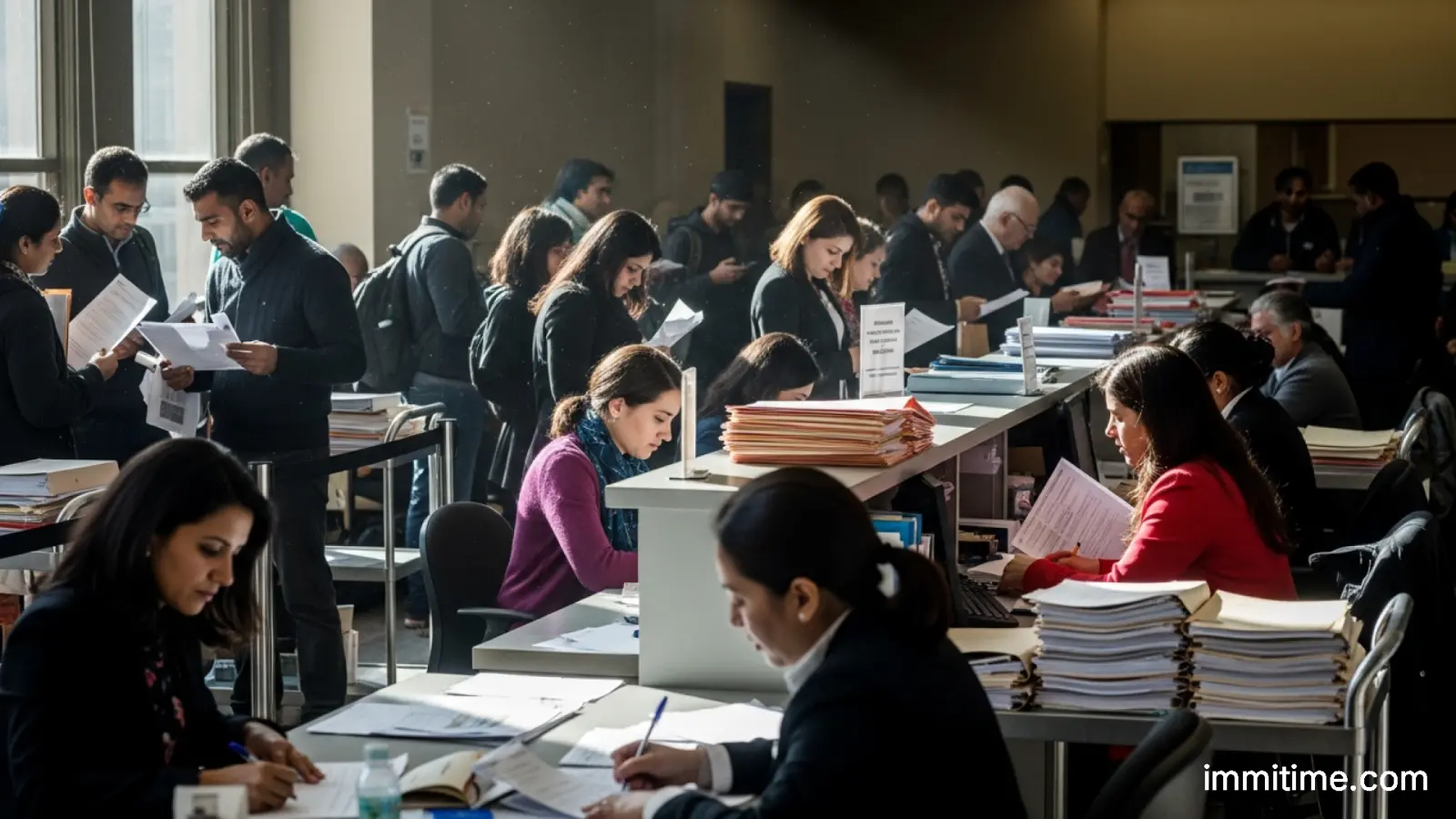
The practical consequence of Bill C-3's enactment has been an immediate and overwhelming demand for ancestral documentation. The first critical step for any applicant seeking proof of Canadian citizenship is to gather official copies of documents that meticulously establish their Canadian ancestry. This requirement has sent a tidal wave of requests into provincial archives and records offices across Canada, with Prince Edward Island (PEI) serving as a stark example of this national phenomenon.
According to the Public Archives and Records Office of Prince Edward Island, the numbers are staggering. The office reported an increase of 150% in monthly requests for ancestry records. To put this into perspective, throughout the entirety of 2025, PEI's archives received 585 requests. In stark contrast, from January 1 to the end of April 2026 alone, the office processed an astounding 1,776 requests. Adding to this immense pressure, May 2026 contributed another 732 requests. The spokesperson for the PEI archives succinctly captured the situation, stating, “We currently have received four years’ worth of requests in four months.”
This surge began noticeably in October 2025, coinciding with the introduction of interim measures for ancestral citizenship, and intensified significantly after the Christmas holidays. The office noted, “Coming back from Christmas holidays, we came back to a large amount of requests. It was instant, and requests are only increasing as time goes on.” The vast majority of these requests, specifically 99.9%, have originated from American applicants, with a smaller fraction coming from other countries such as Ireland, Australia, and France.

Applicants are not just seeking birth records. The office confirms that individuals are primarily looking for a comprehensive range of vital statistics documents, including baptismal records, marriage certificates, death records, and census records. These documents are all essential components in constructing the robust paper trail necessary to conclusively prove a line of Canadian ancestry, stretching back through generations.
The System Under Strain: Extended Wait Times and Backlogs
The unprecedented volume of requests has inevitably led to severe backlogs and significantly extended processing times across the board. For the Public Archives and Records Office of PEI, what was once a response time of “a week at most” has now stretched to an estimated “approximately three months.” Critically, the office cautions that “This is not an accurate estimate, as our numbers are still surging, so these numbers are likely to increase.” This highlights the dynamic and worsening nature of the situation.
PEI is not an isolated case. Archives and record-keeping institutions nationwide are grappling with similar pressures. Quebec’s Bibliothèque et Archives nationales du Québec (BAnQ) has reported an astonishing 3,000% increase in requests. The Provincial Archives of New Brunswick has witnessed its genealogy-related requests quadruple in 2026 compared to 2025 figures. Many provincial archives have reported wait times extending to six weeks or even longer at the time of reporting.
The advice from these overwhelmed offices is consistent: patience is paramount. The Public Archives and Records Office of PEI, for instance, has explicitly stated, “We have several online resources available to help people locate and order these type of records. We do not offer any expedition of the process nor can we provide any timeline updates. We ask that individuals not resubmit requests or reach out to us in regards to wait times.” This directive underscores the severity of the backlog and the need for applicants to manage their expectations and utilize available self-service resources.
The impact of this surge extends beyond provincial archives to the federal level. Immigration, Refugees and Citizenship Canada (IRCC), the federal department responsible for processing proof of Canadian citizenship certificates, is also experiencing immense pressure. Processing times for these essential certificates have now extended to an estimated year. This means that applications submitted today may not see completion until May 2027, marking a significant increase from previous timelines. This federal bottleneck adds another layer of delay to an already lengthy process, impacting the ultimate goal of obtaining a Canadian passport.

Practical Steps for Aspiring Canadian Citizens by Descent
For Americans and others considering an application for proof of Canadian citizenship through ancestry, a strategic and methodical approach is essential. The process, while now more accessible, is not without its complexities, particularly given the current processing delays.
- Confirm Eligibility and Identify Required Documents: The absolute first step is to thoroughly confirm your eligibility under Bill C-3 and precisely identify the specific documents needed to establish an unbroken line of descent from your Canadian ancestor. This often involves creating a detailed genealogical chart and identifying critical life events (births, marriages, deaths) that occurred in Canada or involved Canadian citizens.
- Source Official Records:
- For more recent records (typically within the last 100 or 120 years), provincial or regional vital statistics offices are the primary source for birth certificates, marriage certificates, and death certificates.
- For older records, or specific types like baptismal records, local churches or religious institutions are often the custodians.
- For records extending further back in time, regional and provincial archives, like those in PEI, Quebec, and New Brunswick, become indispensable. These archives hold a wealth of historical documents, including census records, which can be crucial for establishing ancestral links.
- Complete the Application Package: Once all necessary documentation is collected, the next step involves meticulously completing the paper application package for proof of Canadian citizenship. This includes attaching all required documentation, photographs, and paying the applicable fee. Accuracy and completeness are paramount to avoid further delays or rejection.
- Apply for a Canadian Passport: Upon successful receipt of your Canadian citizenship certificate, you can then apply for a Canadian passport. Typically, passport applications are processed within 10 to 20 business days, a relatively swift process compared to the preceding stages.
The Value of Professional Guidance
Given the inherent complexities of gathering historical documents, navigating various provincial and federal bureaucracies, and the significantly extended processing times, many Americans and other foreign nationals are opting to work with experienced immigration lawyers or consultants. A qualified professional can offer invaluable assistance by:
- Ensuring Eligibility: Helping to confirm your eligibility and identify the most direct and verifiable ancestral links.
- Document Procurement Strategy: Advising on the most efficient methods for sourcing and obtaining official copies of required documents, potentially leveraging their experience with various provincial archives and vital statistics offices.
- Application Preparation: Ensuring that the application package is thoroughly prepared, all forms are correctly filled out, and all supporting documentation is properly organized and submitted, thereby minimizing the risk of rejections or requests for additional information that could prolong the process.
- Managing Expectations: Providing realistic timelines and managing expectations regarding the current processing delays at both provincial archives and IRCC.
- Troubleshooting: Offering guidance should any issues or complexities arise during the application process.
While engaging professional assistance represents an additional cost, the potential savings in time, frustration, and the reduced risk of errors can be substantial, particularly in an environment of surging demand and stretched resources. For many, this investment provides peace of mind and increases the likelihood of a successful and timely outcome.
Conclusion: A New Era for Canadian Ancestral Citizenship
The enactment of Bill C-3 marks a new era for Canadian citizenship by descent, offering a pathway to millions who previously had no clear route to claim their heritage. The resulting surge in demand, as evidenced by the “four years’ worth of requests in four months” experienced by PEI's archives and the 3,000% increase reported by Quebec's BAnQ, underscores the profound significance of this policy change. While the current backlogs and extended processing times present considerable challenges for applicants, the opportunity to secure Canadian citizenship remains a powerful draw.
For those embarking on this journey, meticulous preparation, an understanding of the multi-layered document acquisition process, and patience are more crucial than ever. The expansion of citizenship rights through Bill C-3 is a testament to Canada's evolving identity and its commitment to recognizing deep-seated ancestral connections, but navigating this expanded landscape requires diligence and strategic planning from every prospective Canadian citizen by descent.
Frequently Asked Questions
What is Bill C-3 and when did it take effect?
Bill C-3 is a Canadian legislative change that eliminated the first-generation limit on citizenship by descent. It officially took effect on December 15, 2025, opening up Canadian citizenship to individuals who can prove descent from a Canadian ancestor, regardless of how many generations back that connection goes.
What kind of documents are applicants primarily seeking to prove Canadian ancestry?
Applicants are primarily seeking a range of vital statistics documents. These include birth certificates, baptismal records, marriage certificates, death records, and census records, all of which are commonly needed to establish a verifiable paper trail of Canadian ancestry.
How have processing times been affected for ancestry document requests and proof of Canadian citizenship certificates?
Provincial archives, like PEI's, have seen wait times for ancestry records increase from 'a week at most' to 'approximately three months,' with expectations of further increases. Federally, processing times for proof of Canadian citizenship certificates have extended to an estimated year, meaning applications submitted now may not be completed until May 2027.
Where are most of the new applications and document requests originating from?
The vast majority of new applications and document requests, specifically 99.9%, have originated from American applicants. A small number of requests have also been noted from other countries, including Ireland, Australia, and France.
What is the typical processing time for a Canadian passport after obtaining a citizenship certificate?
Once an applicant successfully receives their Canadian citizenship certificate, the subsequent application for a Canadian passport is typically processed within 10 to 20 business days, a comparatively quicker stage in the overall process.
Free Immigration Assessment
Complete our smart assessment form to check your eligibility for over 80+ Canadian immigration programs.
Last Updated: