Canada's Citizenship Act Update: Unlocking Dual Citizenship for Millions of Americans with Ancestral Ties
Canada's Citizenship Act update on December 15, 2025, eliminates the first-generation limit for citizenship by descent, making millions of Americans, especially in New England, eligible for dual Canadian-U.S. citizenship through their Canadian ancestry.

Free Immigration Assessment
Complete our smart assessment form to check your eligibility for over 80+ Canadian immigration programs.
A Landmark Shift: Canada's Citizenship Act and the Redefinition of Descent
The landscape of Canadian citizenship by descent has undergone a significant transformation, profoundly impacting millions of Americans, particularly those with deep historical ties to Canada. On December 15, 2025, Immigration, Refugees and Citizenship Canada (IRCC) enacted a pivotal update to its Citizenship Act, effectively eliminating the long-standing first-generation limit to inheriting Canadian citizenship by descent. This policy revision has opened a direct pathway for countless individuals to claim their Canadian heritage, potentially leading to dual Canadian-U.S. citizenship and access to a Canadian passport.
This critical amendment means that individuals who can trace a continuous line of descent from a Canadian ancestor, regardless of how many generations separate them from that ancestor, may now be eligible. The implications are particularly pronounced in the Northeastern United States, where historical migration patterns have endowed a substantial portion of the population with Canadian roots. States like New Hampshire, Vermont, and Maine stand out, with a remarkably high probability of residents qualifying for Canadian citizenship through this newly clarified ancestral link.
The Historical Tapestry: Tracing the 'Great Hemorrhage' to Modern-Day Eligibility
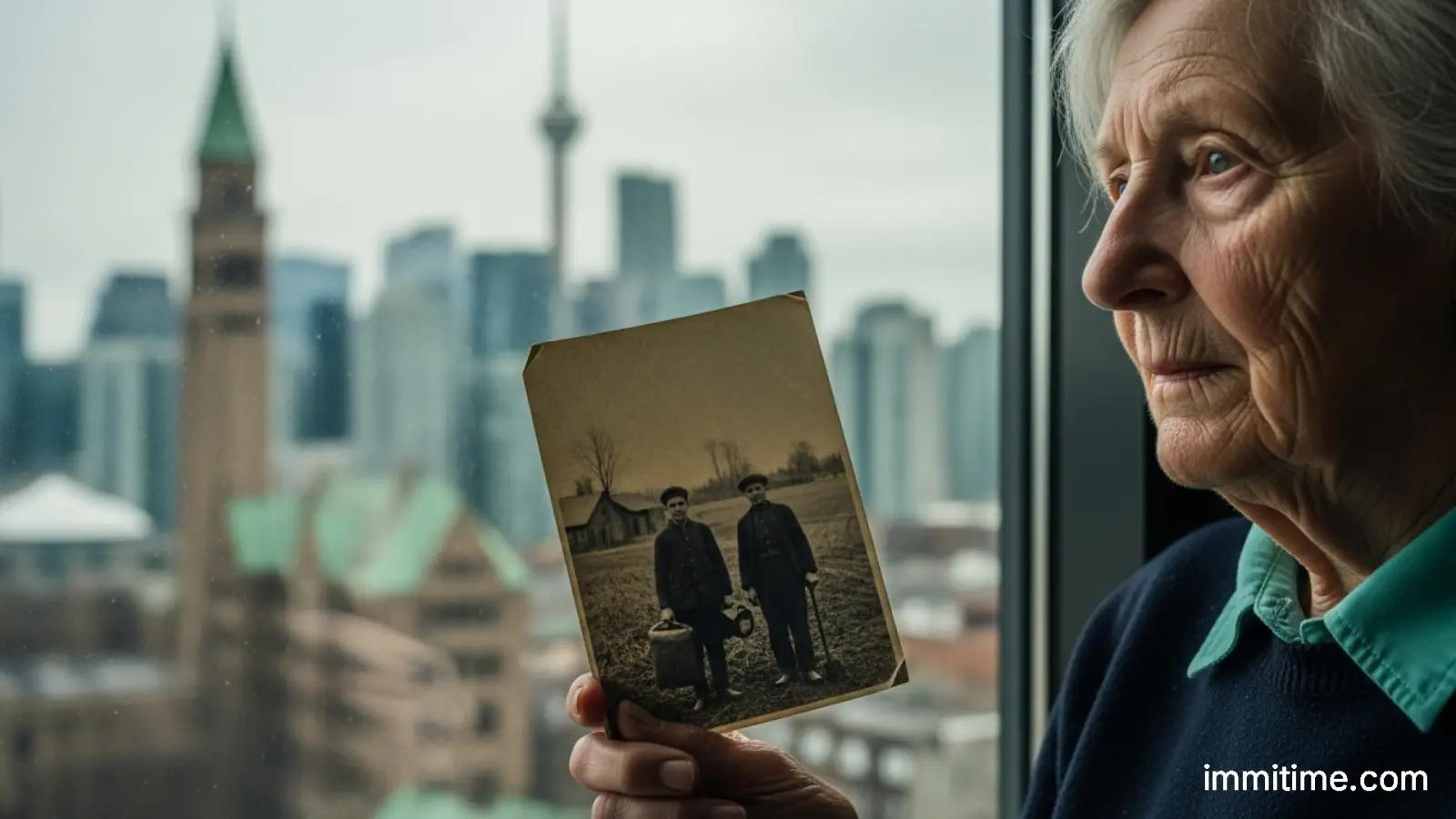
The concentration of Canadian ancestry in New England is not coincidental but a direct legacy of a profound historical event: the mass migration of almost one million French Canadians from the Canadian province of Quebec to the Northeastern United States. This significant demographic shift, often referred to as the “Great Hemorrhage,” occurred between 1840 and 1930. Driven by economic opportunities, particularly in burgeoning industrial centers, these migrants established vibrant communities that have maintained their cultural and familial connections across generations.
For individuals whose family histories are intertwined with this migration, the December 2025 policy change represents more than just a legal update; it is a recognition of a shared heritage. Descendants of these French Canadians now possess a clear right to Canadian citizenship, which, in turn, grants them the ability to apply for a Canadian passport. This historical context is vital for understanding why certain American states are now at the forefront of this new wave of potential dual citizens.

Geographic Hotbeds of Canadian Ancestry: A State-by-State Look
Data from the U.S. Census Bureau in 2024, based on self-reported Canadian ancestry, provides a compelling snapshot of where these ancestral ties are strongest. It is important to note, however, that these self-reported figures are estimated to be significantly lower than the actual number of Americans with Canadian ancestry in New England, with some experts suggesting the true number could be three or four times higher due to a general lack of awareness regarding their Canadian roots.
Here is a detailed look at the states with the highest reported percentages:
| State | Share of population with Canadian-born ancestry |
|---|---|
| New Hampshire | 8.06% |
| Vermont | 7.59% |
| Maine | 7.00% |
| Rhode Island | 4.05% |
| Massachusetts | 3.40% |
New Hampshire: A High Probability of Dual Citizenship
New Hampshire leads the nation with 8.06% of its population self-reporting Canadian ancestry as of 2024. This makes it a prime location where, as the news item suggests, there is an almost one-in-three chance that a resident might qualify as a dual U.S.-Canadian citizen. The state's shared border with Quebec facilitated a significant influx of French Canadians between 1840 and 1930. Towns like Manchester became major settlement hubs, where the demand for labor in textile mills attracted droves of migrants. Genealogist Kim Kujawski notes that by 1910, approximately 23,000 French-Canadians resided in Manchester alone, constituting 38% of the city’s population and even contributing to the development of a unique French dialect. The descendants of these migrants now have a recognized right to Canadian citizenship and its accompanying passport.
Vermont: Embracing French-Canadian Roots
Vermont, sharing a border with Quebec, also exhibits a strong Canadian lineage. Ed McGuire, former president of the Vermont Genealogy Library, estimates that around 30 percent of Vermont residents today possess French-Canadian ancestry, implying that roughly one in three Vermonters could now claim a Canadian passport. By 1860, over 16,000 French Canadians had settled in Vermont, more than double the number in any other New England state at that time. The U.S. Census Bureau data for 2024 indicates that 7.59% of Vermont residents self-report Canadian ancestry, ranking it second nationally.
Maine: A Historic Gateway to 'Little Canada'
Positioned southeast of Quebec with an extensive land border, Maine was an easily accessible destination for French Canadians during the Great Hemorrhage. Lewiston, in particular, emerged as a popular settlement. The Maine Museum of Innovation, Learning and Labor reports that by 1920, Franco-Americans comprised nearly half of Lewiston’s population. Even today, a neighborhood in Lewiston is affectionately known as “Little Canada.” Current U.S. Census data shows that about 7% of Maine's population reports Canadian ancestry, placing it third among American states with significant Canadian roots.
Rhode Island: The 'Most French City' in the U.S.
Despite not sharing a direct border with Canada, Rhode Island also holds substantial Canadian ancestral ties. Estimates suggest that around one in seven Rhode Islanders could qualify for Canadian citizenship following the recent law change. Woonsocket, a city in northern Rhode Island, saw French Canadians make up 60% of its population by 1900, a legacy that endures as Woonsocket is still referred to as la ville la plus française aux États-Unis—the most French city in the United States. With 4.05% of its population reporting Canadian ancestry, Rhode Island ranks fourth. For those seeking to explore their heritage, the American-French Genealogical Society in Woonsocket offers a wealth of resources, including over 20,000 volumes of vital statistics and historical records specific to French-Canadian descent.
Massachusetts: A Major Destination for Franco-Americans
Massachusetts was a primary destination for French Canadian migrants during the Great Hemorrhage, with estimates suggesting as much as 10% of its residents may have Canadian ancestry. The New England Historical Society reported that by 1990, Massachusetts had the highest number of Franco-Americans in the United States, with a population of 310,636, representing nearly half of all Franco-Americans in New England. According to 2024 U.S. Census Bureau self-reported data, 3.4% of Massachusetts’ total population has Canadian ancestry. Given that the bulk of these migrants were French-Canadians, individuals with French-sounding surnames, or those that were anglicized over time (e.g., Charpentier becoming Carpenter, Leblanc becoming White), are strong candidates to investigate their eligibility.
Navigating the Path to Canadian Citizenship by Descent: Practical Steps
For Americans who can successfully trace a continuous line of descent from a Canadian ancestor, the December 2025 Citizenship Act update confirms that they are already Canadian citizens under the new law. The crucial next step to fully realize this status and obtain a Canadian passport is to apply for proof of Canadian citizenship.
The Application Process: Documentation and Timelines
- Proof of Citizenship Certificate: This initial application requires meticulous documentation to trace your lineage back to your Canadian-born ancestor. Essential records include birth certificates, marriage records, and death certificates for each generational step in the lineage. Gathering compliant copies of these official documents is often the most labor-intensive component of the entire process.
- Submission to IRCC: Once all necessary paperwork is compiled, the application for a proof of Canadian citizenship certificate is submitted to Immigration, Refugees and Citizenship Canada (IRCC), Canada’s citizenship department.
- Processing Times: As of the time of writing, the processing time for proof of citizenship applications is approximately one year.
- Canadian Passport Application: Upon receipt of the proof of citizenship certificate, individuals can then apply for a Canadian passport. This final step typically takes between 10 and 20 business days.
Why Americans Are Pursuing This Option
A notable trend among many Americans currently pursuing this pathway is the intention to acquire a Canadian passport not necessarily to relocate to Canada, but rather as a strategic “backup option during uncertain times.” This pragmatic approach underscores the value and stability associated with Canadian citizenship, offering a layer of security and expanded international mobility without immediate relocation. The opportunity to secure dual citizenship provides flexibility and choice, highlighting the broad impact of Canada's updated citizenship laws.
Expert Commentary: What This Means for Future Applicants
This policy change is a monumental development for Canadian immigration, reflecting a more inclusive approach to citizenship by descent. By removing the first-generation limit, Canada acknowledges a deeper, more enduring connection to its diaspora. For potential applicants, this means a significantly expanded window of eligibility, transforming what was once a complex or impossible claim into a tangible right.
It is crucial for interested individuals to understand that while the eligibility criteria have broadened, the requirement for robust documentation remains stringent. The process demands diligence in genealogical research and the procurement of official records. The opportunity to reconnect with Canadian roots and secure dual citizenship is now more accessible than ever, representing a profound bridge between historical migrations and contemporary identity.
Frequently Asked Questions
What is the key change in Canada's Citizenship Act mentioned in the news?
On December 15, 2025, Canada eliminated the first-generation limit to inheriting Canadian citizenship by descent. This means that individuals can now qualify for Canadian citizenship even if their Canadian ancestor is beyond their parents' generation, as long as a continuous line of descent can be proven.
Which U.S. states are most affected by this policy change due to high Canadian ancestry?
States in New England are particularly affected, with New Hampshire (8.06%), Vermont (7.59%), Maine (7.00%), Rhode Island (4.05%), and Massachusetts (3.40%) having the highest self-reported percentages of residents with Canadian ancestry according to 2024 U.S. Census Bureau data. These numbers are estimated to be significantly higher in reality.
What is the process to obtain a Canadian passport after qualifying through ancestry?
First, you must apply for a proof of Canadian citizenship certificate with IRCC, providing official documentation like birth, marriage, and death certificates to trace your lineage. Once this certificate is obtained (processing time is roughly one year), you can then use it to apply for a Canadian passport, which usually takes 10 to 20 business days.
Why do so many Americans in New England have Canadian ancestry?
This is primarily due to the 'Great Hemorrhage,' a period between 1840 and 1930 when nearly one million French Canadians migrated from Quebec to the Northeastern United States, seeking labor opportunities in places like textile mills. Their descendants form the core of the Canadian ancestral population in these states.
Free Immigration Assessment
Complete our smart assessment form to check your eligibility for over 80+ Canadian immigration programs.
Last Updated: