Navigating Canadian Citizenship by Descent: Proving Your Lineage Without a Perfect Paper Trail
IRCC's flexible approach to documentation makes Canadian citizenship by descent accessible, even with incomplete family records. Learn about the new rules, accepted alternative evidence, and how to navigate the application process effectively.

A New Era for Canadian Citizenship by Descent: Flexibility in Documentation
The landscape of Canadian citizenship by descent has undergone a significant transformation, opening doors for countless individuals worldwide who previously believed their ancestral ties to Canada were insufficient for a claim. With the removal of the first-generation limit on December 15, 2025, Immigration, Refugees and Citizenship Canada (IRCC) has effectively broadened the eligibility criteria, allowing more people born outside Canada to claim citizenship through a Canadian ancestor. However, this expanded eligibility has brought to the forefront a common and understandable challenge: the gathering and submission of accepted documentation to prove these often-historical connections.
Recognizing the inherent difficulties in tracing lineage through generations, IRCC has introduced a pragmatic and flexible approach to documentation. The department has strategically built sections into its citizenship by descent application forms to accommodate applicants who may not possess a complete folder of official papers stretching back decades. This policy shift signifies a crucial understanding that historical records can be elusive, and a rigid requirement for pristine documentation would inadvertently bar many legitimate claims.
For individuals pondering their potential Canadian heritage, this development is monumental. It means that even if you lack definitive proof for every link in your family tree, such as not knowing if a grandparent was Canadian or if a parent was a citizen, IRCC provides avenues to address these gaps. Applicants are instructed to write “unknown” where information is unavailable and to provide explanations for uncertainties, rather than invent answers. This emphasis on honesty and explanation underscores IRCC’s commitment to processing applications based on the available evidence and the applicant's diligent efforts to provide a comprehensive picture.
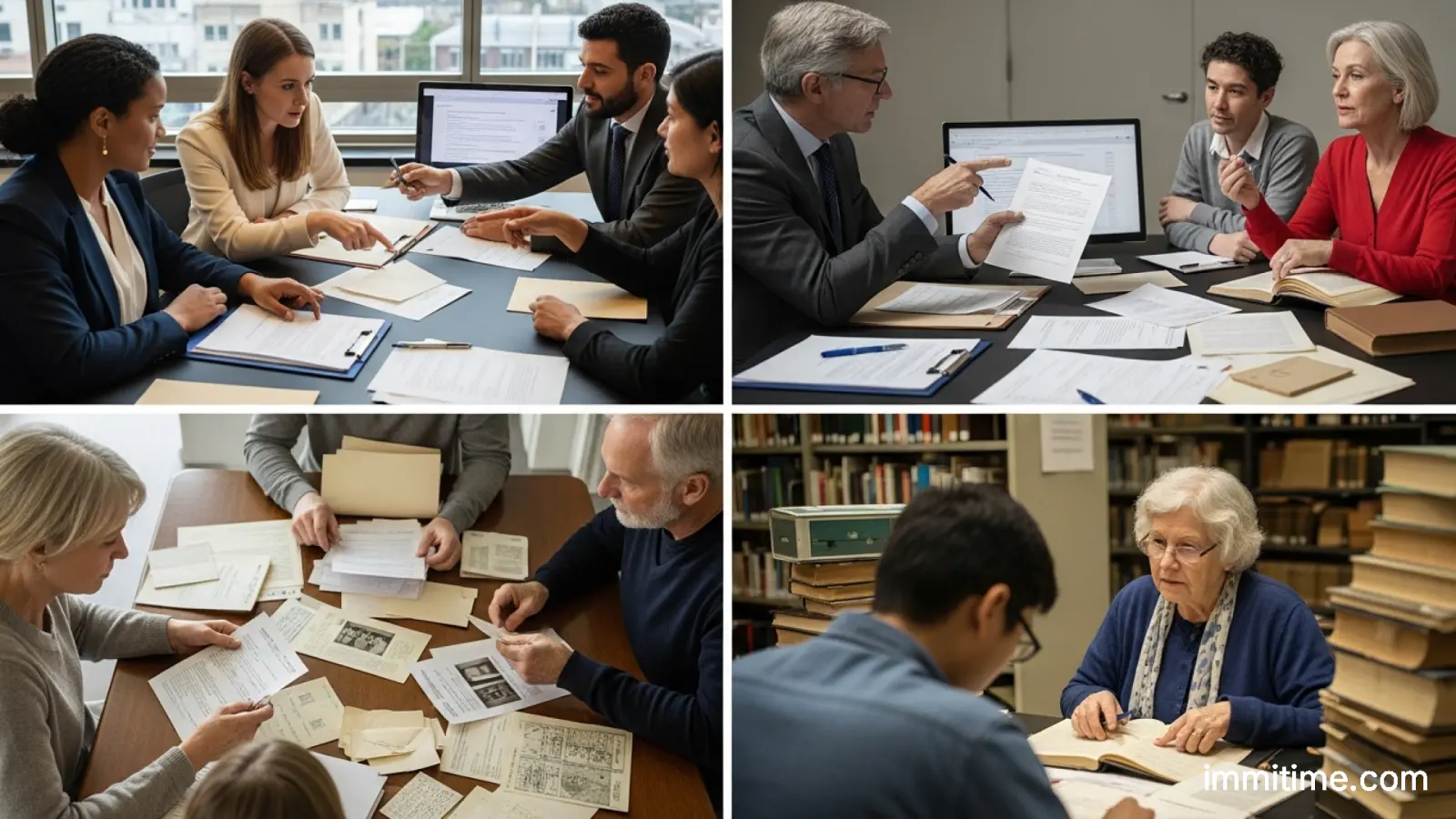
Understanding IRCC's Core Requirements for Proof of Citizenship
When applying for proof of Canadian citizenship, IRCC's requirements generally revolve around three critical themes, each designed to establish an undeniable link to Canadian heritage. These themes form the backbone of any successful application for citizenship by descent:
- Proof of who you are: This establishes your identity as the applicant.
- Proof of how you descend from your Canadian ancestor: This demonstrates the familial chain linking you to the Canadian ancestor.
- Proof that the ancestor was, in fact, Canadian: This verifies the Canadian citizenship status of the person through whom you are claiming descent.
A common misconception is that a complete, unbroken chain of official citizenship certificates or Registration of Birth Abroad documents is indispensable. Historically, a Registration of Birth Abroad was the document that recorded a Canadian child born in another country. However, IRCC explicitly states that there is no rule requiring anyone in your family line to already hold a citizenship certificate or a Registration of Birth Abroad. A missing certificate somewhere up the family line, while presenting an evidence problem, is not a closed door. This flexibility is a cornerstone of the revised approach, allowing for the use of different types of evidence to fill documentary gaps.
Navigating Documentary Gaps: Accepted Alternatives and Historical Context
The ability to provide alternative documentation is perhaps the most significant aspect of IRCC's accommodating policy. For situations where a specific citizenship certificate was never issued or cannot be located, IRCC's own checklist explicitly lists several alternatives that can stand in as proof that an ancestor was Canadian. This demonstrates a clear understanding of the historical fluidity of citizenship records and the challenges of archival retrieval.
Key alternatives include:
- Provincial or territorial birth certificates: These are crucial for establishing birth within Canada, which historically conferred citizenship.
- Citizenship or naturalization certificates: While a primary form of proof, IRCC acknowledges that not all ancestors would have had one, or it might be lost.
- A Registration of Birth Abroad: As mentioned, this document specifically recorded Canadians born outside the country.
- A Retention certificate: These documents were issued under specific circumstances to confirm Canadian citizenship.
Delving into historical intricacies, IRCC even includes a slot for a British naturalization certificate issued in Canada or in Newfoundland and Labrador. This detail provides essential historical context, reflecting how citizenship operated before 1947, when Canadian citizenship was formally established distinct from British subject status. Newfoundland and Labrador’s unique history, joining Confederation in 1949, also plays a role here.
Beyond direct documentation, the Canadian link may also be supported by proxy. For instance, a parent’s birth certificate that explicitly names a Canadian grandparent can serve as further proof of the grandparent’s Canadian status. This indirect evidence is vital for rebuilding chains where direct links are missing. Furthermore, the checklist leaves crucial room for “any other evidence” in older or unusual situations, emphasizing that the chain of descent can be rebuilt from diverse materials, not solely dependent on the survival of one specific document.
However, this flexibility comes with a critical caveat: it is paramount to meet IRCC’s requirements to the best of your ability when submitting alternate documentation. Failure to do so can lead to severe consequences, including the suspension or revocation of your citizenship certificate, even after it has been granted. This underscores the need for thoroughness, accuracy, and professional guidance in preparing such applications.
Strategies for Locating Elusive Records
One of the primary hurdles for applicants is knowing where to begin searching for records, especially when family archives are incomplete or non-existent. It’s important to understand the decentralized nature of vital records in Canada.
Most Canadian birth, marriage, and death records are not held federally. Instead, they reside with the province or territory where the event occurred. This means:
- For records in Quebec, you would typically contact Quebec’s Directeur de l’état civil.
- For Ontario, the registrar’s office is the primary authority.
- For British Columbia, the vital statistics office holds these records.
- Similar counterparts exist in every other province and territory.
For older records, particularly those pertaining to naturalization, Library and Archives Canada can be a valuable resource. It holds some older naturalization records and a small set of historic vital records. This institution is a useful place to search for an ancestor who may have naturalized long ago, especially before the modern framework of Canadian citizenship was fully established.
When records seem to be missing, archivists and genealogists offer sagacious advice: older records can be thin, misfiled, or even lost entirely due to various historical circumstances. To maximize your chances of success, it is advisable to search using name variants, as spelling often shifted over time. Similarly, expanding your search to a range of years around the presumed event date can yield results, given that record-keeping was less precise in the past. It’s also crucial to remember that borders moved, and some individuals were simply never formally recorded, making the search inherently challenging.
The Strategic Value of a “No Record” Letter
When a diligent search for a specific document comes up empty, the outcome is not necessarily a dead end for your application. Many provincial and territorial offices, upon completing a search that yields no results, can issue a letter confirming their efforts. This “no record” letter is a critical piece of supporting evidence for your application.
For example, Ontario offers a birth search letter, while British Columbia’s law provides for a written search report. IRCC itself can also search its citizenship records and inform you whether a record exists. It’s worth noting that if you request an IRCC records search at the same time as your certificate application, the search fee is waived, offering a practical incentive for applicants.
It is essential to understand both what these letters do and do not prove. A search letter documents the result of one search in one specific record set. Its primary value lies in demonstrating that you, the applicant, have undertaken due diligence in attempting to locate a specific document and that the document genuinely isn’t available through standard channels. However, it is not, in itself, proof of citizenship. Rather, it is proof of the absence of a record, which can then be combined with other forms of evidence to build a compelling case.
Transparency in Application: Embracing the “Unknown”
Perhaps one of the most reassuring aspects of IRCC’s updated guidance is its explicit instruction regarding incomplete information: when you don’t know, say so. IRCC would rather receive an honest “unknown” than an invented or speculative answer. The application form is designed with this flexibility in mind, instructing applicants to enter “unknown” for details they don’t possess and “NA” for details that do not apply to their situation.
Crucially, the forms also provide space to explain anything that has changed, been replaced, or is uncertain. If the provided space is insufficient, applicants are encouraged to use a separate sheet, clearly noting the question they are addressing. This emphasis on clear and transparent explanation means that a gap in your documentation, when properly accounted for, is viewed not as a weakness in your application but as a part of a complete and honest submission. This pragmatic approach acknowledges the realities of historical record-keeping and encourages applicants to present their lineage as accurately as possible, even with missing pieces.
Future Considerations: The 1,095-Day Physical Presence Rule
While the new rules expand eligibility significantly, it is vital for applicants to be aware of specific future-facing considerations. For children born outside Canada on or after December 15, 2025, whose Canadian parent was also born abroad, IRCC may introduce an additional requirement. In such cases, proof may be required that the Canadian parent spent at least 1,095 days of cumulative physical presence in Canada before the child’s birth. This measure aims to ensure a substantive link to Canada for subsequent generations born abroad, preventing an indefinite chain of citizenship by descent without direct ties to the country.
This particular rule introduces a new layer of complexity for those anticipating citizenship for children born after the specified date. While the source material mentions ways to legally bypass this requirement, applicants should seek specific guidance on how this applies to their unique circumstances, as the nuances can be significant.
Conclusion: Bridging the Gaps in Your Canadian Lineage
The message from IRCC is clear and encouraging: incomplete family records are not uncommon, especially among those who stand to benefit from the new citizenship by descent laws. The pathway has been thoughtfully designed to accommodate these variations in supporting evidence, allowing lineages to be rebuilt from the pieces that remain. This means that for many, a second citizenship is often closer than the missing documents might initially suggest.
The journey to proving your Canadian citizenship by descent can be intricate, requiring a meticulous approach to historical research and an understanding of IRCC’s nuanced requirements. Given the complexities involved in identifying which records are truly necessary, which gaps can be easily bridged with alternative evidence, and which scenarios demand extra careful navigation, seeking professional assistance is highly recommended. A lawyer or an expert who specializes in these applications can provide invaluable guidance, helping you to construct a robust application that maximizes your chances of success and avoids potential pitfalls leading to suspension or revocation. Think you may be Canadian? Request a free consultation to find out which documents you actually need and how to effectively present your case to IRCC.
Frequently Asked Questions
What is the key change in Canadian citizenship by descent laws?
Effective December 15, 2025, the first-generation limit on Canadian citizenship by descent has been removed. This change allows more individuals born outside Canada to claim citizenship through a Canadian ancestor, even if their Canadian parent was also born abroad.
What if I don't have all the required documents for my citizenship by descent application?
IRCC has built flexibility into its application forms, allowing applicants to write 'unknown' for missing details and to explain any uncertainties or gaps. They accept various alternative documents like provincial birth certificates or British naturalization certificates issued before 1947, provided you document your attempts to find supporting documents.
Where should I look for old Canadian birth, marriage, or death records?
Most such records are held at the provincial or territorial level, not federally. You should contact the vital statistics office of the province or territory where the event occurred, such as Quebec's Directeur de l’état civil or Ontario’s registrar. Library and Archives Canada holds some older naturalization and historic vital records.
Can a 'no record' letter help my application?
Yes, a 'no record' letter from a provincial office (e.g., Ontario's birth search letter) or IRCC itself confirms you diligently searched for a document that couldn't be found. While not proof of citizenship, it demonstrates due diligence and helps explain documentary gaps in your application.
Last Updated: