Permanent Closure of Four Falls POE: Navigating Evolving Canadian Border Policies for Immigrants and Travellers
The Canada Border Services Agency (CBSA) has permanently closed the Four Falls, New Brunswick, port of entry (POE) after a six-year suspension. This expert analysis delves into the reasons behind the closure, its implications for Canadian immigration and travel, practical advice for navigating alternate POEs, and critical considerations for individuals with criminal records.

Free Immigration Assessment
Complete our smart assessment form to check your eligibility for over 80+ Canadian immigration programs.
Understanding the Permanent Closure of Four Falls Port of Entry
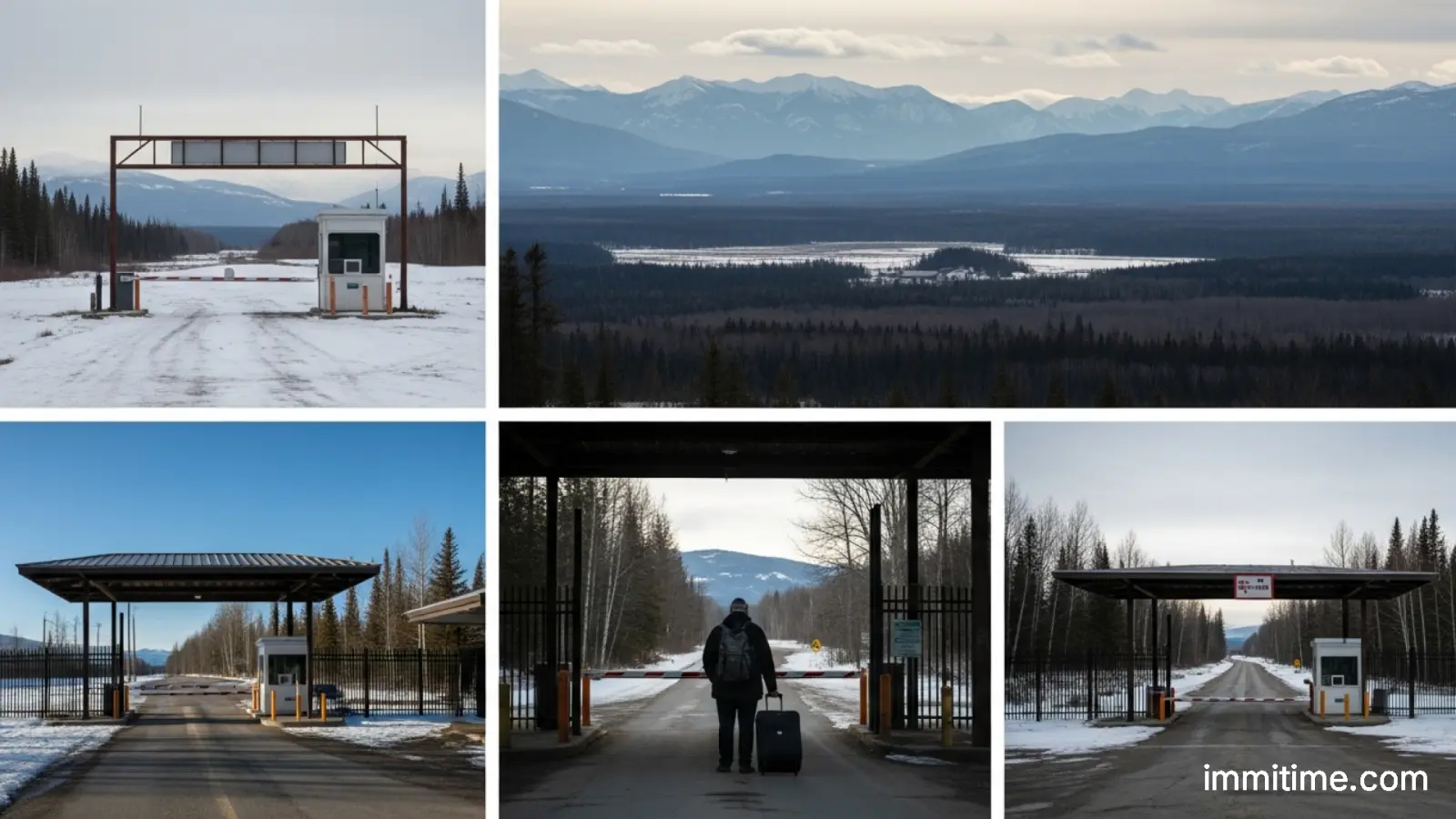
The landscape of Canadian border crossings continues to evolve, and a recent announcement from the Canada Border Services Agency (CBSA) underscores this dynamic reality. On May 11, the CBSA formalized the permanent closure of the Four Falls, New Brunswick, port of entry (POE). This decision marks the definitive end for a crossing that had been out of service since May 2020, initially as a temporary measure in response to the global pandemic. For prospective immigrants, temporary residents, and frequent travellers to Canada, this development is more than just a localized change; it signals broader trends in border management and resource allocation.
As an expert immigration journalist and policy analyst, my aim is to dissect this news, providing not just the facts, but also a comprehensive analysis of its implications. We will explore the CBSA's rationale, examine the practical consequences for those crossing the Canada-U.S. border in northwestern New Brunswick, and offer actionable advice for ensuring compliance with Canadian immigration and customs regulations.
A Six-Year Suspension Culminates in Permanent Closure
The journey to the permanent closure of the Four Falls POE began on May 17, 2020, when it was initially shuttered due to pandemic travel restrictions. What started as a temporary measure became a prolonged suspension, with the CBSA extending the closure several times over the past six years. This extended period allowed the agency to conduct a thorough review of its operational needs, particularly in Atlantic Canada, leading to the ultimate decision to make the closure permanent.
This formalization, announced on May 11, transforms a provisional halt into a definitive policy, removing any ambiguity about the future of the Four Falls crossing. It highlights a strategic shift, where temporary adjustments made during unprecedented times can evolve into long-term policy decisions based on operational efficiency and resource optimization. For individuals accustomed to using this seasonal crossing, the change necessitates a re-evaluation of their travel plans and an understanding of the designated alternatives.

CBSA's Strategic Rationale: Four Key Factors
The CBSA's decision to permanently close the Four Falls POE was not arbitrary but the result of a detailed review of operational needs. The agency cited four primary factors that drove this call, each offering insight into modern border management strategies:
- Seasonal Operations: The Four Falls crossing historically operated only for a portion of the year, specifically from mid-April to mid-October. This seasonal nature inherently limited its utility and necessitated periodic activation and deactivation of resources.
- Low Traffic Volume: The POE handled a relatively modest volume of approximately 8,000 travellers per season. Such low traffic figures often make the year-round maintenance and staffing of a facility less cost-effective compared to higher-volume crossings.
- Proximity of Alternate POEs: A significant factor in the decision was the availability of two other designated ports of entry within a short distance. Both Andover and Gillespie Portage POEs are located within 15 km of the now-closed Four Falls site, providing convenient alternatives for travellers.
- Absence of a U.S. Counterpart: Crucially, there is no adjacent POE on the American side of the border directly opposite Four Falls. The CBSA noted that the closure aligns Canadian operations with U.S. operations on this particular stretch of the border, suggesting a move towards more synchronized and efficient cross-border infrastructure.
These factors collectively paint a picture of a border agency prioritizing efficiency, resource allocation, and international alignment. The consolidation of services into more robust, often year-round, facilities allows the CBSA to deploy its personnel and technology more effectively, enhancing security and streamlining processing at busier, more strategically important locations.
Navigating the Alternatives in Northwestern New Brunswick
For travellers who previously relied on the Four Falls POE, understanding and utilizing the designated alternatives is paramount. The CBSA has clearly identified two nearby ports of entry that can facilitate crossings into Canada:
- Andover: Located at 6 Route 190, Carlingford, NB, this POE offers round-the-clock service, operating 24 hours a day, 7 days a week. Its continuous availability makes it a reliable option for all travellers, regardless of their time of crossing.
- Gillespie Portage: Situated at 600 Route 375, California Settlement, NB, this crossing operates daily from 7 a.m. to 7 p.m. While not 24/7, its extended daytime hours accommodate a wide range of travel schedules.
The CBSA strongly advises travellers to consult the Directory of CBSA Offices and Services for the most up-to-date hours and contact details for these and other land crossings. Furthermore, regularly updated wait times for each POE are available on the CBSA’s official webpage, a critical resource for planning travel and minimizing delays.
Critical Implications for All Travellers and Immigration Applicants
The closure of a port of entry, even a seasonal and low-traffic one, serves as a vital reminder of the strict regulations governing entry into Canada. The CBSA unequivocally states that travellers entering Canada must report to the CBSA at a designated POE. This is not merely a suggestion but a legal requirement, and non-compliance carries severe repercussions.
Consequences of Non-Compliance
Failing to report to a designated POE can lead to a range of penalties, impacting an individual's immediate travel plans and future eligibility for entry into Canada. These consequences include:
- Fines: Significant monetary penalties can be imposed for violating border crossing procedures.
- Seizures: Goods, and even vehicles, may be seized by border authorities.
- Loss of Trusted Traveller Program Status: Individuals enrolled in programs like NEXUS, which facilitate expedited crossings, risk losing their privileges if they bypass official POEs.
- Prosecution under Canadian Law: Non-compliance can lead to prosecution under the Immigration and Refugee Protection Act or the Customs Act, which carry serious legal ramifications, including potential inadmissibility to Canada.
For immigration applicants, particularly those awaiting permanent residency or those holding temporary permits, any violation of border regulations can have devastating effects on their status and future prospects in Canada. Adherence to these rules is non-negotiable.
Addressing Criminal Records at the Border
Another crucial point highlighted by the CBSA is the need for individuals with criminal records to take extra steps to avoid being turned away at a Canadian POE. This applies even to lesser offences, such as Driving Under the Influence (DUIs), which are considered serious criminal offences in Canada. Many individuals are unaware that a past conviction, even one that seems minor in their home country, can render them inadmissible to Canada.
Before attempting to cross the border, individuals with any criminal history should proactively determine their admissibility. This may involve applying for a Temporary Resident Permit (TRP) or demonstrating criminal rehabilitation, depending on the nature and age of the offence. Seeking legal counsel from an immigration lawyer is highly recommended for those in this situation, as it can prevent significant distress and costly delays at the border.
Broader Policy Context: Modernizing Border Operations
The permanent closure of the Four Falls POE aligns with a broader trend in Canadian border management: the strategic consolidation and modernization of operations. With approximately 8,000 travellers per season, the Four Falls crossing represented a low-volume, seasonal operation. Maintaining such a facility, even for half the year, involves significant operational costs, including staffing, infrastructure, and technology.
By closing this POE and directing traffic to nearby, more robust facilities like Andover (which operates 24/7), the CBSA can optimize its resources. This approach allows for the concentration of personnel, technology, and enforcement capabilities at fewer, but more strategically important, locations. The stated goal of aligning Canadian operations with U.S. operations on this stretch of the border further emphasizes a move towards integrated and efficient cross-border governance, minimizing redundant or underutilized infrastructure.
This policy shift is not unique to New Brunswick. Across Canada, the CBSA continually assesses its network of ports of entry to ensure they meet contemporary operational needs, security requirements, and traveller volumes. The post-pandemic environment has accelerated many of these reviews, prompting agencies worldwide to re-evaluate how they manage international travel and trade.
Actionable Advice for Cross-Border Travellers and Immigration Candidates
In light of this permanent closure and the ongoing evolution of border policies, here is practical, actionable advice for anyone planning to cross into Canada, especially those with immigration objectives:
- Always Verify POE Status and Hours: Before embarking on your journey, always check the CBSA’s official webpage or the Directory of CBSA Offices and Services for the latest information on POE hours of operation and status. This is particularly crucial for smaller or seasonal crossings, though Four Falls is now permanently closed.
- Plan Your Route Meticulously: If you were accustomed to using the Four Falls POE, adjust your travel plans to utilize Andover or Gillespie Portage. Factor in the operating hours of Gillespie Portage (7 a.m. to 7 p.m. daily) if you plan to use it.
- Monitor Wait Times: Leverage the CBSA’s official webpage for real-time wait times at your chosen POE. This can help you avoid unnecessary delays and manage your schedule effectively.
- Understand Reporting Obligations: Remember that reporting to a designated POE is a legal mandate. Do not attempt to bypass official crossings, as the consequences are severe and can jeopardize your future entry into Canada.
- Address Criminal Inadmissibility Proactively: If you have any criminal record, even seemingly minor offences like DUIs, consult an immigration lawyer well in advance of your travel date. They can assess your admissibility and guide you through the process of applying for a Temporary Resident Permit or criminal rehabilitation, if necessary. Ignoring this could result in being denied entry at the border.
- Stay Informed on Policy Changes: Border policies are subject to change. Regularly consult official CBSA and IRCC (Immigration, Refugees and Citizenship Canada) channels for updates that may affect your travel or immigration status.
Conclusion: Adapting to Evolving Border Realities
The permanent closure of the Four Falls, New Brunswick, port of entry is a localized event with broader implications for how Canada manages its borders. It signifies a strategic move towards greater operational efficiency, resource consolidation, and alignment with international border management practices. For immigrants, temporary residents, and all cross-border travellers, this development underscores the critical importance of preparedness, adherence to regulations, and proactive planning.
While the immediate impact is on travel patterns in northwestern New Brunswick, the underlying message is universal: Canadian border entry requirements are stringent, and understanding them is essential for a smooth and successful crossing. By staying informed, utilizing official resources, and seeking expert advice when needed, individuals can navigate these evolving border realities with confidence and ensure their compliance with Canadian law.
Frequently Asked Questions
Why was the Four Falls Port of Entry permanently closed?
The Canada Border Services Agency (CBSA) closed the Four Falls POE permanently after a review of operational needs. Key factors included its seasonal operations (mid-April to mid-October), low traffic (approximately 8,000 travellers per season), the presence of two alternate POEs within 15 km, and the absence of a U.S. counterpart.
When did the Four Falls POE initially close, and when was the permanent decision announced?
The Four Falls POE first closed on May 17, 2020, as a temporary COVID-19 measure. The CBSA extended this suspension several times over six years, with the permanent closure formally announced on May 11.
What are the alternate ports of entry for travellers previously using Four Falls?
Travellers in northwestern New Brunswick can use two alternate POEs: Andover, located at 6 Route 190, Carlingford, NB, which is open 24 hours a day, 7 days a week; and Gillespie Portage, at 600 Route 375, California Settlement, NB, which operates daily from 7 a.m. to 7 p.m.
What are the consequences of not reporting to a designated Port of Entry?
Failing to report to a designated POE can result in fines, seizures, loss of trusted traveler program status, and prosecution under the Immigration and Refugee Protection Act or the Customs Act. It is a serious violation of Canadian law.
Do individuals with criminal records need to take special precautions when crossing the Canadian border?
Yes, individuals with criminal records, including lesser offences such as DUIs, may need to take extra steps to avoid being turned away at a Canadian POE. It is advisable to seek legal consultation to understand admissibility requirements and potential remedies before attempting to cross.
Free Immigration Assessment
Complete our smart assessment form to check your eligibility for over 80+ Canadian immigration programs.
Last Updated: