Planning for the 2026 Montreal Grand Prix? How a Past U.S. Misdemeanor Could Bar Your Entry to Canada
Planning to attend the 2026 Montreal Grand Prix? A past U.S. misdemeanor could get you denied entry. Learn about Canada's rules and deemed rehabilitation.

Free Immigration Assessment
Complete our smart assessment form to check your eligibility for over 80+ Canadian immigration programs.
The Roar of Engines, The Silence at the Border: A Hidden Hurdle for F1 Fans
As excitement builds for the 2026 Formula 1 Canadian Grand Prix, scheduled to electrify Montreal, Quebec, from May 22–24, thousands of American fans are making plans to witness the spectacle. However, a significant and often overlooked aspect of Canadian law could bring those travel plans to a screeching halt: criminal inadmissibility. Many U.S. citizens are unaware that even a minor, decades-old misdemeanor on their record can be grounds for refusal of entry by a Canadian border officer.
This isn't a matter of bureaucratic overreach; it's a fundamental principle of Canadian immigration law. Canada assesses all foreign criminal offenses through the lens of its own legal system. This means an offense that is considered a minor misdemeanor in the United States, such as certain Driving Under the Influence (DUI) charges, can be equated to a more serious indictable offense in Canada. The consequence is stark: you could be turned away at the border, your trip over before it even begins, regardless of whether you have tickets to the Grand Prix or pre-paid accommodations.
This article provides a comprehensive analysis of Canada's criminal inadmissibility rules, focusing on the most viable solution for many affected travelers: deemed rehabilitation. We will break down the requirements, the process, and why other seemingly obvious solutions are likely not feasible for short-term travel.
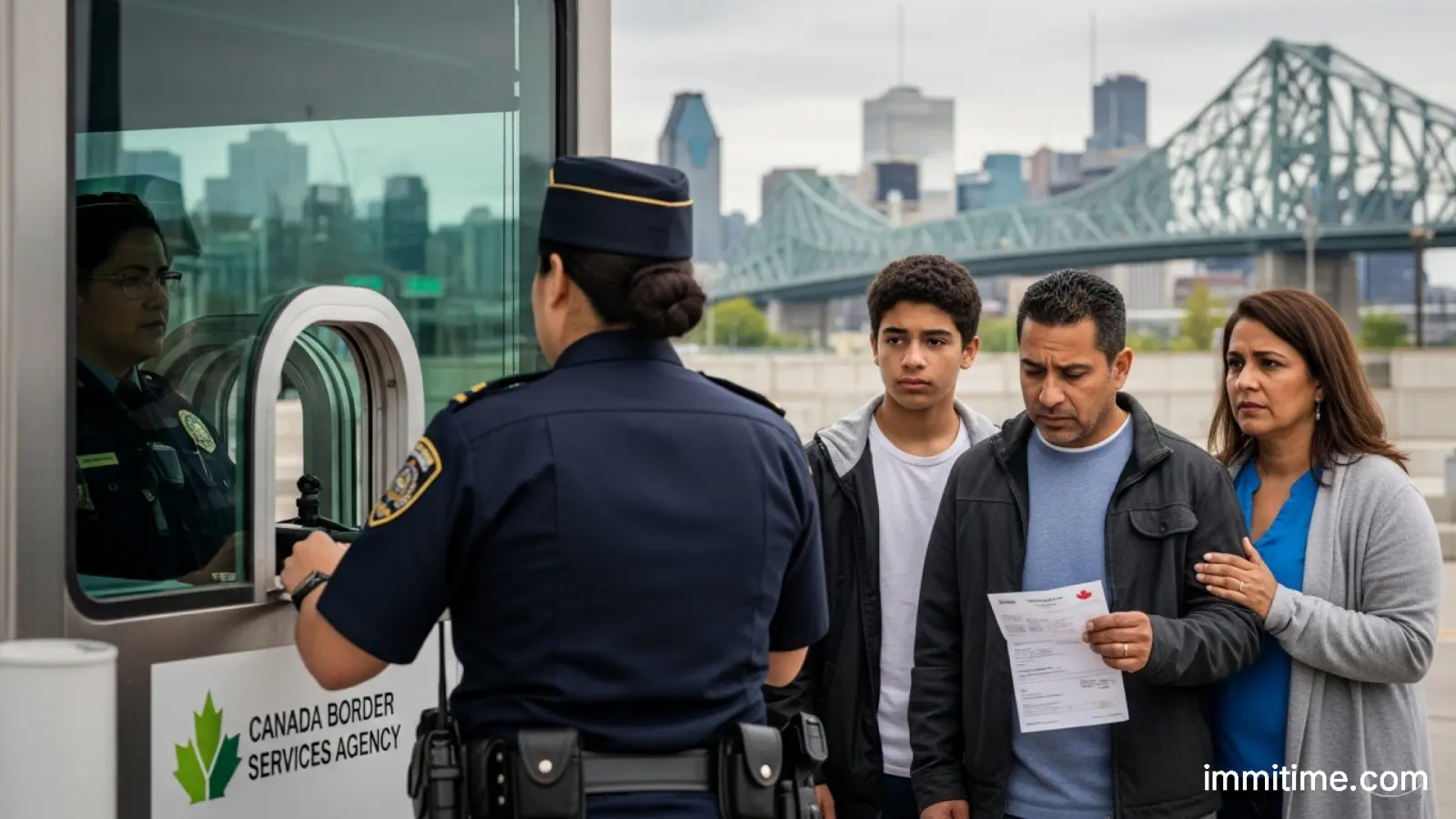
Understanding Canadian Law: Summary vs. Indictable Offences
To navigate this issue, it's crucial to understand the distinction Canada makes in its criminal code. Canadian law classifies offenses primarily into two categories:
- Summary Offences: These are considered less severe and are broadly comparable to misdemeanors in the United States.
- Indictable Offences: These are more serious crimes, generally comparable to felonies in the U.S. Critically, some offenses that are misdemeanors in the U.S. are treated as indictable offenses in Canada.
The classification of your past offense under Canadian law is the single most important factor in determining your admissibility. An officer at the Port of Entry (POE) will perform this equivalency assessment. If your U.S. conviction is deemed equivalent to an indictable offense in Canada, you will be found inadmissible unless you can prove you have been rehabilitated.
Deemed Rehabilitation: The Most Practical Path to Overcoming Inadmissibility
For individuals with past offenses who are planning to attend the 2026 Grand Prix, the most effective path forward is often deemed rehabilitation. The source material notes that with an event approaching, this provides the best route to entry. It is not an application you submit; rather, it is an automatic status you may acquire if enough time has passed and certain conditions are met. An immigration officer assesses your eligibility for this status at the time of entry.
How to Qualify for Deemed Rehabilitation
To be considered "deemed rehabilitated," you must first have fully completed your sentence. This is a critical point. A sentence is only considered complete when every single component has been fulfilled, including any prison or jail time, probation periods, community service, and the full payment of all associated fines.
Once the sentence is fully complete, you may qualify for deemed rehabilitation if one of the following scenarios applies to you:
- A minimum of five years has passed since you completed your sentence for two or more summary offences.
- A minimum of ten years has passed since you completed your sentence for a single indictable (non-summary) offence, provided it is punishable by a prison term of less than 10 years in Canada.
Beyond these timelines, you must also have demonstrated lawful conduct since the completion of your sentence. The Canadian immigration authorities must be satisfied that you are unlikely to reoffend and do not present a risk to Canadian society. It is essential to confirm your eligibility before you travel, as an incorrect assumption will lead to being denied entry.

The Assessment Process: What to Expect
The process for being assessed for deemed rehabilitation differs slightly based on your residency.
For U.S. Residents:
As a U.S. resident, you will typically be assessed for deemed rehabilitation directly at a Canadian Port of Entry (POE), such as a land border crossing or an airport. You are expected to be proactive and prepared. It is vital to bring all documentation related to your criminal record and the completion of your sentence. This includes court records, proof of fine payments, and letters confirming the end of probation. Be aware that a fee is required at the POE to process this assessment.
For Non-U.S. Residents:
If you are not a U.S. resident, you can have your eligibility checked in advance, free of charge. You can do this by filling out an Application for Criminal Rehabilitation (form IM 444) and clearly checking the box labeled “for information only.” This application should be submitted to the Canadian embassy, high commission, or consulate responsible for your region. This allows you to get a clear answer before making travel plans.
Bolstering Your Case with a Legal Opinion Letter
While not a mandatory requirement, obtaining a legal opinion letter from a qualified Canadian immigration representative can significantly strengthen your case for entry. This letter is a professional legal analysis prepared for the benefit of the border services officer.
A well-drafted letter serves several purposes:
- It provides a comprehensive review of your U.S. criminal record and explains its implications under Canadian law.
- It can highlight mitigating factors, such as the amount of time that has passed since the offense.
- It presents evidence of positive conduct, rehabilitation, community involvement, and other meaningful contributions you have made since the offense.
- It constructs a clear and compelling legal argument for why you should be considered admissible to Canada and no longer pose a risk.
Ultimately, this document helps the officer understand the full context of your situation. Even with this letter, the final decision on whether to grant you entry rests solely with the immigration officer. However, it provides them with a structured, professional assessment that can lead to a more favorable outcome.

Why Alternative Solutions Are Unlikely to Work for Event Travel
Travelers often ask about other remedies for criminal inadmissibility, namely a formal Criminal Rehabilitation application or a Temporary Resident Permit (TRP). For an event like the 2026 Grand Prix, these are generally not viable options.
- Criminal Rehabilitation Application: This is a formal, in-depth application process that is separate from deemed rehabilitation. Its main drawback is the processing time. It can take well over a year to receive a decision. For the May 2026 Grand Prix, an individual would have needed to apply by May 2025 at the absolute latest, making it an unsuitable option for anyone planning now.
- Temporary Resident Permit (TRP): A TRP is a special permit issued in exceptional circumstances. To get one, you must have a compelling reason to enter Canada that an officer believes outweighs the potential risks you may pose. Unfortunately, attending a sporting event, even one as significant as the Formula 1 Grand Prix, is highly unlikely to be considered a compelling enough reason to justify a TRP. These permits are typically reserved for situations like attending a family funeral or conducting essential business critical to Canada.
Your Final Lap: Preparation is Key
The allure of the Montreal Grand Prix is powerful, but it should not overshadow the importance of responsible travel planning. If you have any form of criminal record, your first step should be to assess your situation against Canada's inadmissibility rules. Do not assume a minor offense from long ago will be ignored.
Remember that being deemed rehabilitated only overcomes your criminal inadmissibility. You must still meet all other standard entry requirements. While U.S. citizens and green card holders are exempt from needing a visitor visa or an Electronic Travel Authorization (eTA), all other foreign nationals must secure the proper travel documents. A ticket to the F1 race is not a travel document. By understanding the rules, preparing your documentation, and seeking professional advice if needed, you can ensure your only focus is the thrill of the race, not an unexpected barrier at the Canadian border.
Frequently Asked Questions
How does Canada view a DUI from the United States?
Canadian immigration authorities interpret foreign offenses through Canadian law. Many U.S. DUIs are considered equivalent to a serious, indictable offense in Canada, which can make an individual inadmissible even if it was a misdemeanor in the U.S.
What is deemed rehabilitation?
Deemed rehabilitation is not an application but an automatic status you may have if enough time has passed since completing your sentence. It requires 5 years for two or more summary offenses or 10 years for a single indictable offense, and you must have demonstrated lawful conduct since.
Is attending the F1 Grand Prix a valid reason to get a Temporary Resident Permit (TRP)?
It is highly unlikely. TRPs are for individuals with a compelling reason for entry that outweighs any potential risk. Attending a sporting event is generally not considered a compelling enough reason by immigration officers.
Can I still be denied entry even if I am deemed rehabilitated?
Yes. Being deemed rehabilitated only resolves the issue of criminal inadmissibility. You must still meet all other standard entry requirements, and the final decision to grant entry always rests with the border services officer.
Free Immigration Assessment
Complete our smart assessment form to check your eligibility for over 80+ Canadian immigration programs.
Last Updated: