Canada's New 'Free Flow' Transit Process: What Connecting International Travellers Need to Know
Canada's new Free Flow transit process lets eligible connecting passengers skip border control at three major airports. Here's how it works and who qualifies.

Free Immigration Assessment
Complete our smart assessment form to check your eligibility for over 80+ Canadian immigration programs.
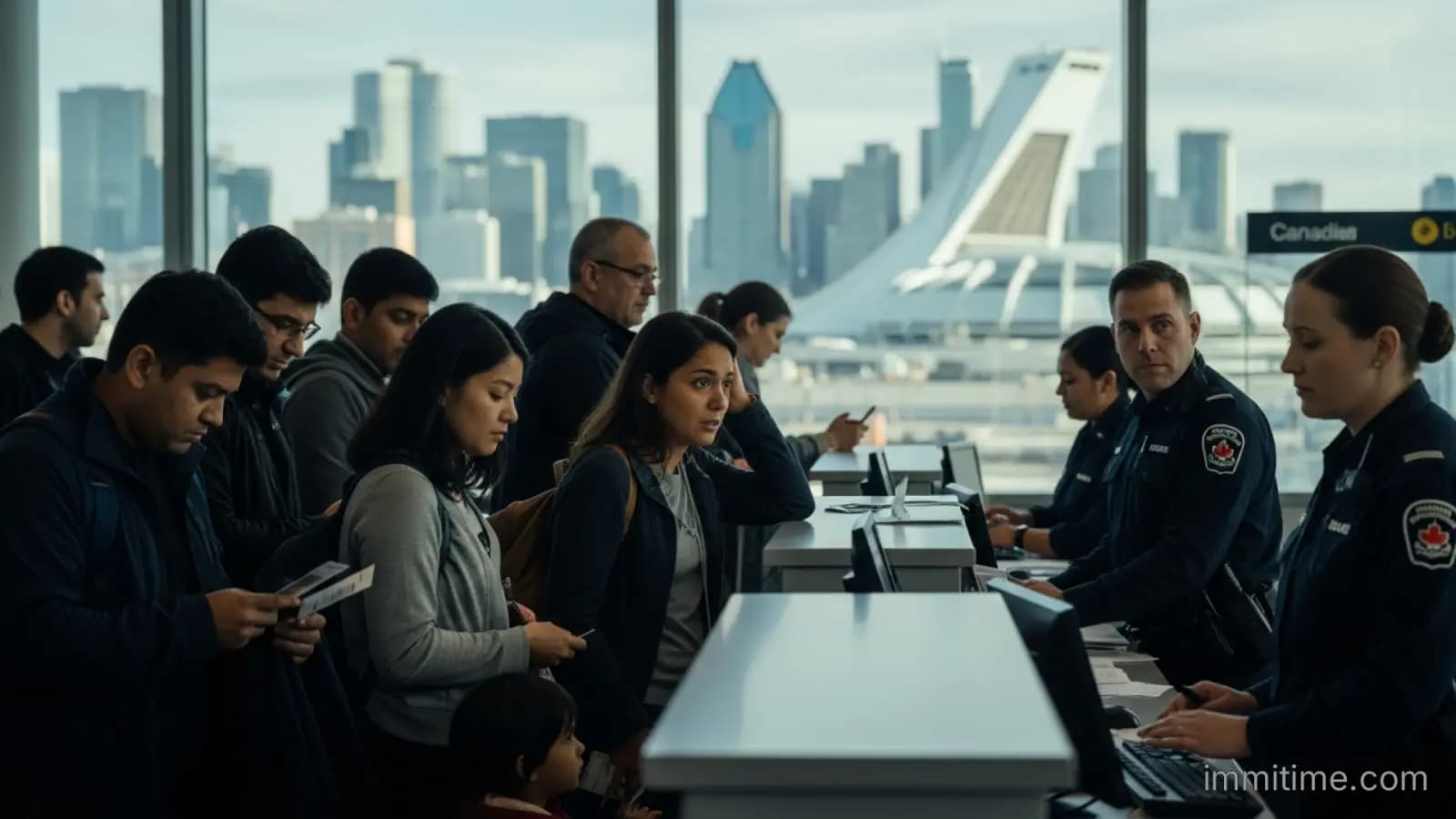
Canada has taken a significant step toward modernizing its airport transit experience. In a move that could reshape how international travellers pass through some of the country's busiest hubs, the Canada Border Services Agency (CBSA) has launched a new Free Flow International-to-International Transit process that allows eligible passengers to bypass border control entirely when catching a connecting international flight.
Announced in a CBSA news release on June 26, 2026, the new process eliminates the long-standing requirement for transiting passengers to meet with a border officer or check in at a kiosk before proceeding to their next international departure. Instead, qualifying travellers can move directly from arrival to the international departures zone with no CBSA interaction whatsoever.
For frequent flyers, this is more than a minor administrative tweak. It represents a philosophical shift in how Canada manages the flow of people who are merely passing through its borders rather than entering the country. Below, we break down exactly how the new process works, who benefits, and what travellers should keep in mind before relying on it.
How the Free Flow Transit Process Works
At launch, the new process applies to passengers transiting through one of three Canadian airports:
- Toronto Pearson International Airport (Terminal 1)
- Vancouver International Airport
- Montréal Pierre Elliott-Trudeau International Airport
These are the same three airports that originally participated in the pilot program that preceded this regulatory change. To qualify for Free Flow, a traveller must hold a confirmed airline ticket for an international flight departing from Canada within 24 hours of their arrival at the Canadian airport.
The mechanics behind the scenes are what make this possible. Rather than asking each passenger to identify themselves to an officer or scan a passport at a kiosk, the process relies on airlines collecting and sharing passenger flight information directly with the CBSA. This includes details such as the traveller's final destination and scheduled departure time. In effect, the data exchange replaces the in-person checkpoint.
There are, however, important conditions. Travellers making an international connection must remain within the airport's designated international departure zone until they board their next flight. Stepping outside this zone forfeits eligibility for Free Flow.

Documentation Requirements Still Apply
It is critical to understand that Free Flow does not exempt travellers from carrying proper documentation. All passengers must still carry the applicable visas and travel documents required for their final destination. Where applicable, this includes a Transit Visa or an electronic travel authorization (eTA).
This is a point that deserves emphasis. The removal of the border officer interaction does not mean the removal of legal entry requirements. Travellers remain fully responsible for ensuring they meet the documentation rules of their onward destination and of Canada's transit regime. Failing to do so could create complications downstream, even if Canada's transit step itself has become frictionless.
Baggage Handling Determines Eligibility
One of the most practical factors governing whether a traveller qualifies for Free Flow is baggage handling. According to the CBSA, same-day connecting travellers whose baggage is transferred automatically qualify for the process and will be directed to the international departure area.
However, Free Flow does not apply in two specific scenarios:
- When baggage is not transferred automatically
- When the onward flight is not scheduled for the same day
In either of these cases, travellers must collect their baggage and complete standard CBSA processing before proceeding to international departures. In other words, the traditional border check-in still exists for those who fall outside the eligibility criteria.
Travellers Connecting to the United States
The process treats travellers heading to the United States differently. Individuals transiting through Canada on their way to the U.S. can proceed directly to the Canadian airport's U.S. connection area. There, both the travellers and their baggage will be "re-screened for security" and processed by U.S. Customs and Border Protection.
This reflects the unique pre-clearance arrangement Canada maintains with the United States, where U.S. border officials operate within Canadian airports. For these passengers, the Canadian transit step is streamlined, but the U.S. processing remains in place as a separate and mandatory stage.

What Happens When Plans Go Wrong
Travel rarely goes exactly as planned, and the CBSA has built in clear rules for disruptions. A traveller loses eligibility for the Free Flow process under the following circumstances:
- Their flight is cancelled or delayed and their layover exceeds 24 hours
- They leave the airport's designated international departure area
In these situations, the traveller must report to the CBSA for standard processing. This is a sensible safeguard. The entire Free Flow model is built around the assumption that the traveller is genuinely transiting and will leave Canada within a short window. Once that assumption breaks down—for instance, if a passenger ends up stranded for more than a day—the normal border control framework reasserts itself.
Practical advice: Travellers relying on Free Flow should monitor their connecting flights closely and avoid leaving the international departure zone, even if a delay tempts them to step out for food, rest, or a change of scenery. Doing so could trigger a requirement to report to border officials and undergo full processing.
From Pilot Project to Permanent Process: The Background
The Free Flow process did not emerge from nowhere. It builds directly on the International to International (ITI) pilot project that the CBSA launched in 2018. Under that pilot, transiting international passengers were able to bypass an in-person officer examination by scanning their passport at a dedicated kiosk.
The latest regulations take that concept one step further by eliminating the remaining kiosk step entirely. Passengers connecting between international flights at participating airports can now proceed directly to their gate with no CBSA interaction whatsoever—the airlines transmit the required passenger information to the agency on their behalf.
The regulatory changes followed a structured public process. They were first proposed in the Canada Gazette in late November 2025, which opened a 30-day public consultation period to gather feedback from various stakeholders. Those consultations closed on December 29, 2025. The regulations are now finalized and in force at the three originally participating airports.
As CBSA describes it, the new approach "fits in the CBSA's mandate of making legitimate travel easier while focusing efforts on higher-risk travellers and activities." Rob Chambers, Vice President of the Travellers Branch at the CBSA, summarized the agency's goal directly: "We are working with our airport partners to provide a simpler and more efficient process for travellers to get to their international destinations without delay."
Analysis: What This Means for Travellers and the Future of Canadian Transit
For the millions of passengers who use Canadian airports as a connecting point between two international destinations, the practical benefit is clear: less time spent in queues and fewer touchpoints with officials. The most immediate winners are travellers on tight connections through Toronto, Vancouver, and Montréal who previously had to factor in time for kiosk processing or officer interactions.
From a policy standpoint, the move signals where the CBSA's strategy is heading. By shifting to a data-driven model where airlines transmit passenger information directly, the agency can reduce friction for low-risk transit travellers while concentrating its resources on screening and enforcement where the risk is genuinely higher. This is a logical evolution of risk-based border management.
A Potential Expansion Beyond Three Airports
Perhaps the most forward-looking element of the announcement is that additional airports now have the option to apply to the CBSA to adopt this new process. This means international travellers making a connection at airports beyond the initial three may soon be able to benefit from Free Flow.
For travellers, this is worth watching closely. As more Canadian airports potentially come online, the predictability of transiting through Canada could improve significantly—an important consideration for airlines deciding where to route connecting traffic, and for passengers comparing the convenience of different hub options.
How This Compares to the Previous Approach
It helps to view the change as the third stage in a clear progression:
- Before 2018: Transiting international passengers met with a border officer for an in-person examination.
- 2018 ITI pilot: Passengers could skip the in-person officer and instead scan their passport at a dedicated kiosk.
- 2026 Free Flow: Eligible passengers skip both the officer and the kiosk, proceeding directly to their gate while airlines transmit data to the CBSA.
Each stage has removed a layer of friction while preserving the underlying ability of authorities to monitor who is transiting through the country. The 2026 change completes a logical arc that has been building for nearly a decade.
What Affected Travellers Should Do Next
If you anticipate connecting through Toronto Pearson (Terminal 1), Vancouver, or Montréal on an international-to-international itinerary, here are practical steps to keep in mind:
- Confirm your connection timing. Ensure your onward international flight departs within 24 hours of your arrival in Canada. Same-day connections with automatically transferred baggage are the clearest fit for Free Flow.
- Check your documentation early. Make sure you carry all visas and travel documents required for your final destination, including a Transit Visa or an electronic travel authorization where applicable.
- Verify your baggage routing. Confirm with your airline that your bags are checked through automatically. If they are not, you will need to collect them and complete CBSA processing.
- Stay in the international departure zone. Leaving this area disqualifies you from Free Flow and requires you to report to the CBSA.
- Have a backup plan for delays. If a cancellation or delay pushes your layover beyond 24 hours, be prepared to report to the CBSA for standard processing.
- Note the U.S. exception. If your onward flight is to the United States, expect to be re-screened for security and processed by U.S. Customs and Border Protection in the dedicated U.S. connection area.
Ultimately, the Free Flow International-to-International Transit process is a welcome modernization that should make Canada a more attractive and efficient point of connection for global travel. As long as travellers understand the eligibility rules—particularly around timing, baggage, and staying within the designated zone—the new system promises a smoother journey through some of the country's busiest gateways.
Frequently Asked Questions
Which Canadian airports currently offer the Free Flow transit process?
The Free Flow International-to-International Transit process currently applies at Toronto Pearson International Airport (Terminal 1), Vancouver International Airport, and Montréal Pierre Elliott-Trudeau International Airport. These are the same three airports that originally participated in the 2018 ITI pilot. Additional airports may apply to the CBSA to adopt the process in the future.
Do I still need a visa or eTA if I qualify for Free Flow?
Yes. All passengers are required to carry the applicable visas and travel documentation for their final destination, including a Transit Visa or an electronic travel authorization (eTA) when applicable. The removal of the border officer interaction does not eliminate documentation requirements.
What happens if my connecting flight is delayed or cancelled?
You no longer qualify for the Free Flow process if your flight is cancelled or delayed and your layover exceeds 24 hours, or if you leave the airport's designated international departure area. In these cases, you must report to the CBSA for standard processing.
How does Free Flow work for passengers connecting to the United States?
Travellers transiting through Canada on their way to the U.S. can go directly to the Canadian airport's U.S. connection area. There, both they and their baggage will be re-screened for security and processed by U.S. Customs and Border Protection.
Does the Free Flow process apply if my baggage is not checked through automatically?
No. Free Flow does not apply when baggage is not transferred automatically or when the onward flight is not scheduled for the same day. In those situations, travellers must collect their baggage and complete CBSA processing before proceeding to international departures.
Free Immigration Assessment
Complete our smart assessment form to check your eligibility for over 80+ Canadian immigration programs.
Last Updated: