New Multi-Million Dollar Transit Investment in Mississauga Signals Major
Explore the transformative multi-billion dollar investment in Mississauga's transit network. Learn about the Hazel McCallion LRT, new BRT corridors, and the profound economic and social impacts expected in 2026.
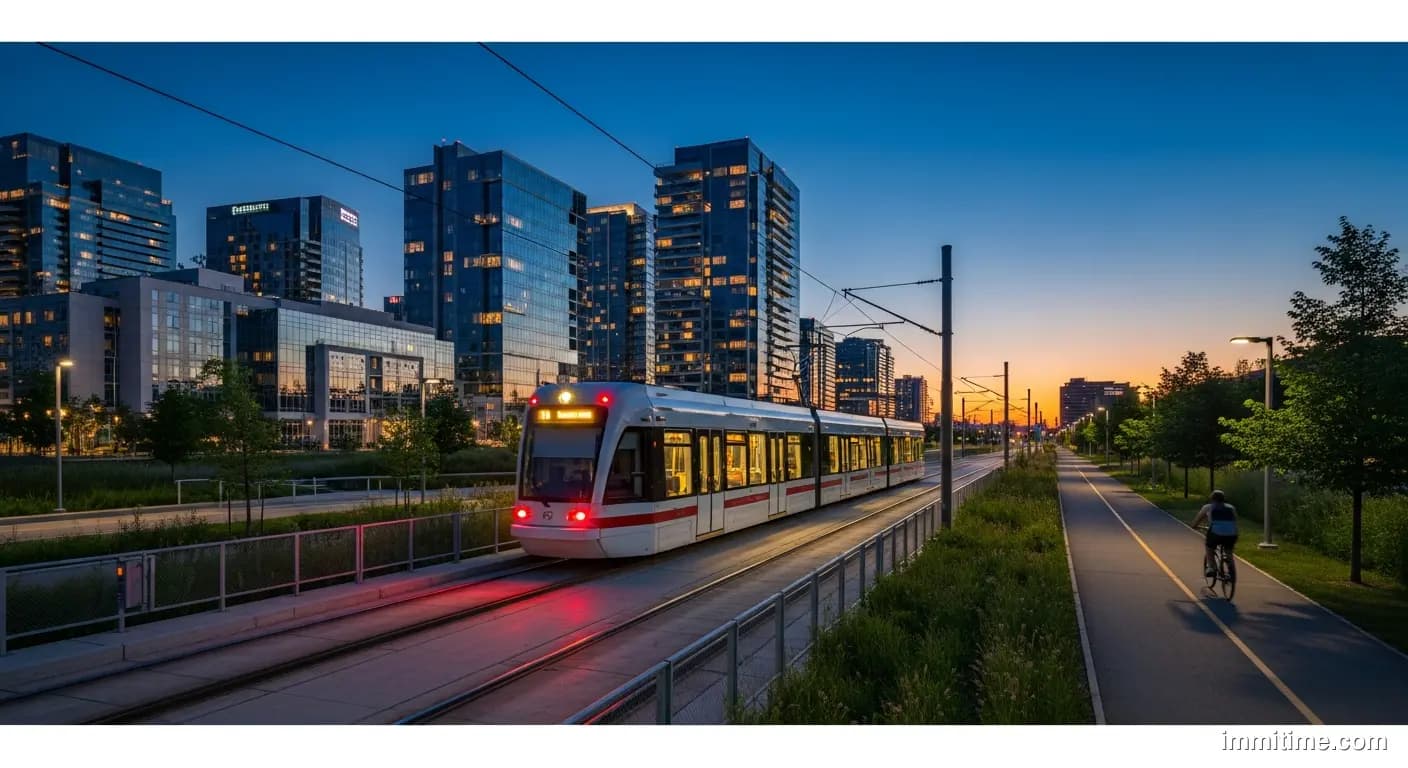
As Canada's sixth-largest city continues its rapid expansion, a monumental investment in public transit is set to redefine its urban landscape. A multi-billion dollar commitment from all three levels of government is fueling a transit revolution in Mississauga, signaling a major shift towards a more connected, sustainable, and economically vibrant future. With several key projects reaching significant milestones in 2026, the city is on the cusp of becoming a leading transit-oriented hub in the Greater Toronto Area.
Executive Summary: Mississauga's 2026 Transit Revolution
A landmark multi-billion dollar investment is currently underway to dramatically enhance Mississauga's public transit network. This comprehensive strategy is headlined by three core projects: the Hazel McCallion Light Rail Transit (LRT), the Dundas Bus Rapid Transit (BRT), and the Lakeshore Bus Rapid Transit (BRT). These initiatives are strategically designed to address the needs of a booming population, foster significant economic growth, and improve regional connectivity across the Greater Toronto and Hamilton Area (GTHA).
With key milestones anticipated for 2026, including the start of early construction on the BRT corridors, these projects are central to Mississauga's long-term vision. The new transit lines will not only provide faster and more reliable travel options for residents but also act as catalysts for transit-oriented development, creating integrated communities where people can live, work, and play with ease. This investment solidifies Mississauga's position as a forward-thinking city preparing for a sustainable future.
The Hazel McCallion LRT: A North-South Game Changer
The flagship of this transit expansion is the Hazel McCallion LRT. This transformative project will establish a crucial north-south spine through the heart of the city. The 18-kilometre line will feature 19 thoughtfully placed stops, creating a seamless connection from the Port Credit GO station on the Lake Ontario shoreline to the Brampton Gateway Terminal at Steeles Avenue.
Valued at a total of $4.6 billion, the project is being delivered through a Design-Build-Finance-Operate-Maintain (DBFOM) model, ensuring long-term quality and service reliability. A critical feature of the Hazel McCallion LRT is its planned integration with the region's broader transit network. It will connect directly with GO Transit rail lines, the Mississauga Transitway, and Brampton Transit services, creating a powerful, multi-modal system that simplifies travel across municipal boundaries and supports the daily commutes of thousands of residents.
The Dundas and Lakeshore Bus Rapid Transit (BRT) Corridors
Complementing the LRT's north-south axis, two new Bus Rapid Transit corridors will significantly improve east-west travel. The Dundas BRT is an ambitious 48-kilometre express bus line planned to stretch from Toronto to Hamilton. A major 17-kilometre segment will run through Mississauga, providing a fast and efficient alternative to one of the region's busiest thoroughfares.
The Lakeshore BRT, meanwhile, will serve the dense, rapidly growing communities along the city's waterfront. This corridor is being strategically designed with the future in mind, allowing for a potential conversion to a higher-order streetcar or light-rail system as residential density continues to increase. According to updated reports from April 2026, early construction for both the Dundas BRT Mississauga East and the Lakeshore BRT is now scheduled to start in late 2026.
Funding the Future: A Tri-Governmental Commitment
This ambitious transit overhaul is made possible by a robust, collaborative funding partnership between the Government of Canada, the Government of Ontario, and the City of Mississauga. This joint commitment ensures the financial stability required to see these complex, multi-year projects through to completion.
In a significant boost announced in January 2025, the federal government invested over $123 million for various public transit initiatives in Mississauga, including the acquisition of zero-emission buses. Furthermore, beginning in 2026, the City of Mississauga is slated to receive a total of $112,416,290 over ten years from the Canada Public Transit Fund. This predictable, long-term funding stream is vital for planning and executing ongoing system upgrades and expansions. The Government of Canada's official news release provides further details on these investments, which are critical for building modern and accessible infrastructure.
Impact on Newcomers and Immigration Settlement
For the thousands of newcomers who choose Mississauga as their home each year, a reliable and accessible public transit system is a lifeline. The expansion of the city's transit network will profoundly enhance their settlement journey. Improved connectivity will provide easier access to essential settlement services, language classes, healthcare facilities, and educational institutions.
Furthermore, the development of transit-oriented communities is expected to increase the availability of diverse and more affordable housing options near transit hubs, a crucial factor for new immigrant families. To make transit more affordable, the regional 'One Fare' program allows commuters to save money by eliminating double fares when transferring between MiWay, GO Transit, and other participating agencies. The reloadable PRESTO card system simplifies payment across this integrated network, making it easier for newcomers to navigate the region.
Real Estate and Housing: The Transit Effect
The introduction of major transit infrastructure is historically linked to significant impacts on local real estate markets. Proximity to the new LRT and BRT lines is widely expected to increase property values and rental rates in adjacent Mississauga neighborhoods. Areas designated as 'transit-oriented communities,' particularly around new stations, are poised for substantial growth and private investment.
For potential homebuyers and real estate investors, properties located within walking distance of a transit hub represent a strong long-term value proposition. These locations offer residents a desirable lifestyle with reduced reliance on personal vehicles and easier access to amenities. As the projects progress, neighborhoods along the Hurontario Street, Dundas Street, and Lakeshore Road corridors will be key areas to watch for new development and market activity.
Financial Implications for Residents: Costs and Savings
While the city's share of funding for these projects is supported by municipal revenue sources, including property taxes, the long-term financial benefits for residents are expected to be substantial. The most direct saving comes from reduced transportation costs. Households that can downsize from two vehicles to one, or even go car-free, stand to save thousands of dollars annually on fuel, maintenance, parking, and insurance.
For individuals who switch from driving to taking public transit for their daily commute, a corresponding reduction in car insurance premiums may be possible, as usage and risk factors decrease. These cost savings, combined with time saved from avoiding traffic congestion, contribute to an improved quality of life and increased disposable income for Mississauga families.
Economic Development and Job Creation
Massive infrastructure projects are powerful economic engines. The construction and eventual operation of the Hazel McCallion LRT and the new BRT corridors are set to create thousands of well-paying jobs in fields ranging from construction and engineering to operations and maintenance.
Beyond the immediate job creation, the enhanced transit network will make Mississauga a more attractive location for new businesses and corporate investment. Companies are increasingly prioritizing locations with excellent transit access to attract and retain top talent. The strengthening of east-west connections, in particular, will facilitate smoother goods movement and employee commutes, bolstering regional economic integration and competitiveness. This focus on modern infrastructure is detailed in official announcements from the Government of Canada.
Sustainability and Environmental Benefits
At the core of Mississauga's transit strategy is a firm commitment to sustainability. A key component of the investment involves the progressive transition of the MiWay bus fleet to zero-emission, battery-electric buses. This electrification is supported by significant federal and provincial funding aimed at greening public transit fleets across the country.
As more residents choose to leave their cars at home and opt for the LRT or BRT, a significant reduction in greenhouse gas emissions and traffic congestion is projected. This modal shift is essential for meeting climate targets and improving air quality. The projects also incorporate the development of active transportation infrastructure, including new and improved bicycle paths and pedestrian-friendly walkways, creating a multi-layered, sustainable transportation system for a healthier and more connected city. Further details on these green initiatives can be found on the Infrastructure Canada backgrounder.
Frequently Asked Questions (FAQ)
1. Is there a special immigration pilot for workers on Mississauga's transit projects? There is no 'Ontario Transit Infrastructure Pilot' listed under the Ontario Immigrant Nominee Program (OINP). The OINP does have a Regional Immigration Pilot, but it targets specific smaller communities and does not have a dedicated stream for transit infrastructure projects in Mississauga. Applicants should consult the official OINP website for general stream requirements.
2. How many extra CRS points are given for a job offer as a Heavy-Duty Equipment Mechanic on the Mississauga transit project? As of March 25, 2025, IRCC removed the specific 50 and 200 CRS points previously awarded for a valid job offer. While a job offer can still make a candidate eligible for certain programs (like the Federal Skilled Trades Program) or for category-based draws, the job offer itself no longer adds direct points to a candidate's CRS score.
3. What is the minimum net worth for the proposed 'Transit Corridor Entrepreneur Stream'? Details regarding a proposed 'Transit Corridor Entrepreneur Stream,' including any specific minimum net worth requirements or investment-based reductions, are currently unverified. Entrepreneurs should refer to existing business immigration streams for official eligibility criteria.
4. Is there a specific LMIA exemption for Urban Planners hired by the City of Mississauga for this project? Information concerning a specific Labour Market Impact Assessment (LMIA) exemption or an exemption from proving settlement funds for Urban and Land Use Planners hired for this project is not available in official publications. General LMIA exemption categories and proof of funds requirements apply.
5. How can a temporary foreign worker's spouse become eligible for an open work permit? As of January 21, 2025, eligibility for a spousal open work permit is no longer primarily based on the principal applicant's income. Instead, it is restricted based on the principal applicant's occupation. Spouses are generally only eligible if the principal foreign worker is employed in a high-skilled occupation (TEER 0 or 1) or select TEER 2 or 3 occupations in sectors with identified labour shortages. There is no specified minimum income threshold that grants automatic eligibility. Additionally, a mandatory condition for these applications is that the principal foreign worker must have at least 16 months remaining on their work permit at the time the spouse applies for the Open Work Permit.
Official References
- https://www.canada.ca/en/office-infrastructure/news/2020/08/canada-and-ontario-invest-in-modern-accessible-public-transit-infrastructure-for-mississauga-residents.html
- https://www.canada.ca/en/office-infrastructure/news/2020/08/backgrounder-canada-and-ontario-invest-in-modern-accessible-public-transit-infrastructure-for-mississauga-residents.html
- https://www.canada.ca/en/office-infrastructure/news/2021/08/the-government-of-canada-is-investing-in-a-new-bus-rapid-transit-line-and-other-green-transit-projects-in-mississauga.html
Last Updated: