
Could You Be Canadian? How a New Law Opens the Door for Millions of Americans
A landmark change in Canadian law has removed the first-generation limit for citizenship by descent, opening a pathway for millions of Americans to claim a Canadian passport.

Free Immigration Assessment
Complete our smart assessment form to check your eligibility for over 80+ Canadian immigration programs.
A Landmark Shift in Canadian Citizenship Law
In a move that redefines the very fabric of Canadian identity for millions, Immigration, Refugees and Citizenship Canada (IRCC) has enacted a monumental change to its citizenship laws. With the implementation of Bill C-3 on December 15, 2025, the long-standing “first-generation limit” on citizenship by descent has been retroactively eliminated for individuals born before this date. This policy shift has profound implications, most notably for millions of Americans who may now be eligible for Canadian citizenship through ancestral lineage, regardless of how many generations have passed since their family lived in Canada.
Previously, Canadian citizenship could generally only be passed down one generation to children born abroad. A Canadian citizen parent could pass on their citizenship to their child born outside Canada, but that child, now a citizen by descent, could not automatically pass on citizenship to their own children if they were also born outside Canada. Bill C-3 dismantles this barrier, creating a direct link to Canadian heritage that stretches back through time. The law, as the source material notes, is blind to cultural heritage and focuses solely on documented ancestry.
The change is whimsically illustrated by the cast of the TV show “Friends.” Actor Matt LeBlanc, known for his role as Joey Tribbiani, is now recognized as a U.S.-Canadian dual citizen. He joins his late co-star Matthew Perry, who already held dual citizenship through his childhood in Ontario. LeBlanc's eligibility stems from his father, Paul LeBlanc, who has French-Canadian heritage, and more specifically, his paternal grandmother, Genevieve Melanson, who was born in the Canadian province of New Brunswick. This connection highlights the deep, often unrealized, historical ties between the United States and Canada.

Unpacking Your Ancestry: Who Is Now Eligible?
The new legislation effectively means that any American old enough to be reading this article can potentially claim Canadian citizenship, provided they can prove a direct line of descent from at least one Canadian ancestor. It does not matter how many generations ago that ancestor lived in Canada.
Historical Migration and Your Chances
While eligibility is theoretically open to anyone with a Canadian ancestor, certain demographic groups in the United States have a statistically higher likelihood of qualifying. The source points to two key indicators:
- French Surnames: Surnames like LeBlanc (French for “the white”) can be a strong clue. Centuries of migration from Quebec and Acadia have spread French-Canadian descendants throughout the U.S.
- Ancestral Ties to New England: The proximity and fluid border between New England and the Canadian provinces of Quebec and New Brunswick led to extensive cross-border migration for generations. Matt LeBlanc's family is a perfect example, with Acadian roots in New Brunswick—the same cultural group whose ancestors migrated to Louisiana and became known as “Cajuns.”
These historical patterns mean that millions of Americans, whose families may have lived exclusively in the U.S. for four or more generations, now have a legitimate and legally recognized claim to Canadian citizenship.
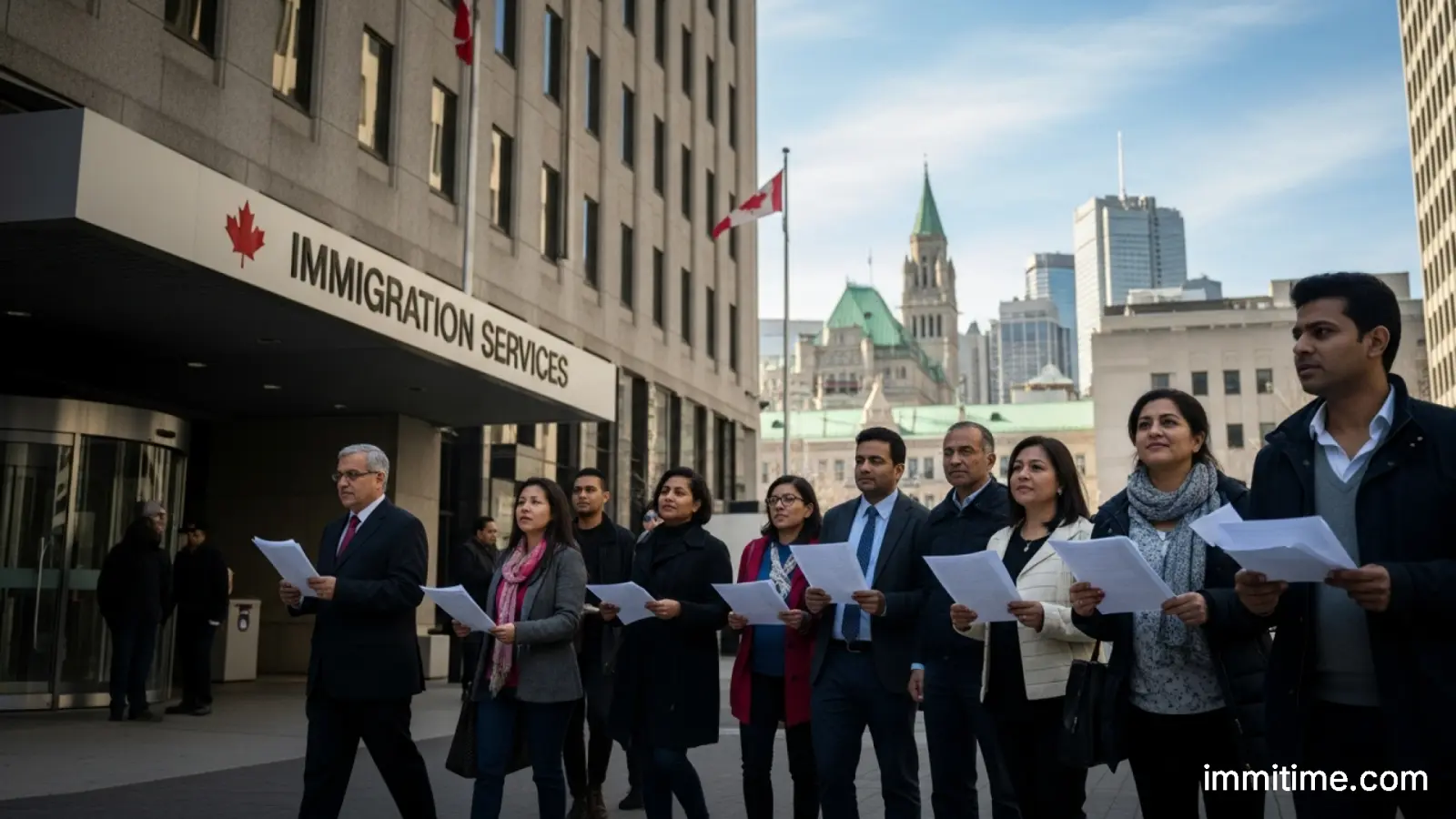
The Path to Proof: A Practical Guide to Claiming Your Citizenship
Discovering you may be eligible is the first exciting step. The next phase involves a meticulous process of documentation and application. Here is a breakdown of the journey to obtaining your proof of Canadian citizenship certificate.
Step 1: Genealogical Research
The foundation of your application is a well-documented family tree. This requires starting with what you know and working backwards. Conversations with older family members are invaluable. This initial research must lead you to a specific Canadian ancestor, which will be the anchor for your entire claim.
Step 2: Securing Vital Records
Once an ancestor is identified, you must collect official documents that prove each generational link between that ancestor and yourself. Accepted documents typically include:
- Birth certificates
- Baptismal records
- Marriage records
For applicants with lineage from the province of Quebec, this step can present unique challenges. You may need to request official records from two separate bodies:
- Le Directeur de l'état civil (DEC): Quebec's registry for vital records. The DEC requires a “satisfactory justification of interest” before it will process requests for documents.
- Bibliothèque et Archives nationales du Québec (BAnQ): Quebec's national archives, which house records older than 100 years. Since the new law came into force, the BAnQ has experienced a significant surge in demand for certified copies.
Step 3: The Role of Professional Representation
Navigating the complexities of genealogical proof and provincial archives can be daunting. The source notes that some applicants are hiring authorized professional representatives, such as immigration lawyers. These experts can help reduce the risk of critical errors in an application and may be able to accelerate requests for supporting documents. For instance, archives like the BAnQ are noted to prioritize requests from local residents, a hurdle a Canadian-based representative can overcome.
Step 4: Application to IRCC and Beyond
With all your documentation in order, the final step is to submit an application to IRCC for a proof of Canadian citizenship certificate. It is crucial to be aware of processing times; the source indicates that the wait time has recently doubled to 10 months. This certificate is the official government document recognizing your status. Once you receive it, you are then eligible to apply for a Canadian passport.

The Unparalleled Benefits of Dual U.S.-Canadian Citizenship
For Americans with Canadian ancestry, this new pathway offers a wealth of benefits with virtually no drawbacks. Since both Canada and the United States recognize dual citizenship, you can enjoy the full rights and privileges of both countries.
The advantages are substantial:
- Mobility and Opportunity: Canadian citizens have the unconditional right to live and work anywhere in Canada.
- Social Benefits: Upon taking up residence in Canada, dual citizens gain the same access to publicly funded healthcare as native-born Canadians.
- Travel Freedom: The Canadian passport is a powerful travel document, which, as of the time of writing, outranks the U.S. passport on the Henley Passport Index.
- No Additional Tax Burden: This is a critical point of relief for many Americans. Unlike the United States, which taxes its citizens on worldwide income regardless of where they live, Canada's tax system is residency-based. An American who becomes a Canadian citizen by descent but continues to reside in the U.S. will not incur any Canadian tax obligations on their income.
As the source cheekily suggests in a nod to Matthew Perry's character, Chandler Bing, “Could this BE any more Canadian?” For the millions of Americans now discovering a new part of their identity, the answer is a resounding yes. This legal change is more than a policy update; it's an invitation to connect with a heritage that has been waiting to be reclaimed, offering what the source describes as “all upsides, and no downsides.”
Frequently Asked Questions
Who is now eligible for Canadian citizenship by descent under the new law?
Any person born before December 15, 2025, is now eligible, provided they can trace their lineage back to at least one Canadian ancestor. The new law removes the previous limit that restricted citizenship to only the first generation born abroad.
If I get Canadian citizenship but continue to live in the U.S., will I have to pay Canadian taxes?
No. Canada's tax system is based on residency, not citizenship. Unlike the U.S. system, Canada does not impose a worldwide tax on its non-resident citizens, so obtaining citizenship by descent while living in the U.S. does not create new tax obligations to Canada.
What is the process for proving my eligibility?
The first step is to conduct genealogical research to identify a Canadian ancestor. You must then collect official documents like birth, baptismal, and marriage certificates to prove the lineage, and finally apply to IRCC for a proof of Canadian citizenship certificate.
How long does it take to get proof of Canadian citizenship?
After you have gathered all your necessary documents and submitted your application to IRCC, the processing time for a proof of Canadian citizenship certificate has recently doubled to 10 months. Only after receiving this certificate can you apply for a passport.
Free Immigration Assessment
Complete our smart assessment form to check your eligibility for over 80+ Canadian immigration programs.
Last Updated: