Missing a Canadian Ancestor's Birth Certificate? Here's What IRCC Will Accept Instead
IRCC accepts baptismal records, census data, and other alternatives when a Canadian ancestor's birth certificate can't be found — here's how to build a strong citizenship-by-descent case.
Free Immigration Assessment
Complete our smart assessment form to check your eligibility for over 80+ Canadian immigration programs.
Key Takeaways
- Applicants tracing Canadian citizenship by descent from an ancestor born in the 1800s or early 1900s often hit a wall when no birth certificate survives — but Immigration, Refugees and Citizenship Canada (IRCC) accepts several alternatives, from baptismal records to boat manifests.
- Provinces such as Prince Edward Island (no civil registry before 1906) and Nova Scotia (no birth records from 1877 to October 1908) have documented historical gaps, and IRCC has recently updated its documentation standard for citizenship by descent applications.
- When no record can be located at all, applicants must show IRCC, in writing, that they tried to obtain it — supported by correspondence, a "no-record letter," or supplementary documents such as marriage or death certificates.
A common obstacle for citizenship-by-descent applicants
Tracking down proof of a Canadian ancestor's birth is rarely straightforward, and it becomes considerably harder the further back the family tree goes. For people applying for proof of Canadian citizenship based on a great-grandparent or earlier relative, the paperwork they need may simply no longer exist.
Fires, floods, and inconsistent record-keeping practices from a century or more ago have wiped out countless original documents. Compounding the problem, several Canadian provinces did not maintain formal civil birth registries during certain periods. Prince Edward Island had none before 1906, while Nova Scotia has no birth records dating from 1877 through October 1908.
IRCC has recently revised its documentation standard for citizenship-by-descent cases, making it more important than ever for applicants to understand their options when the ideal piece of paper simply isn't available.
What IRCC wants to see
To approve a citizenship-by-descent application, IRCC needs an unbroken documentary chain linking the applicant to their Canadian ancestor — and to every generation in between. Each document in that chain must come from the original issuing authority, whether that's a provincial vital statistics office, a civil registry, or an archive.
Acceptable primary documents include:
- a provincial or territorial birth certificate;
- a Canadian citizenship or naturalization certificate;
- a foreign birth certificate that shows the parent-child relationship;
- a Certificate of Registration of Birth Abroad or a Certificate of Retention of Canadian Citizenship;
- a British naturalization certificate issued in Canada or Newfoundland and Labrador; or
- proof of British subject status or landed immigrant status in Canada before January 1, 1947 (or April 1, 1949, for Newfoundland and Labrador).
When the birth certificate can't be found
Missing birth certificates are common enough that IRCC has built in flexibility. As long as a substitute document comes from the original authority that created it, the department will consider:
- a hospital record documenting the birth;
- a record kept by the attending physician or midwife;
- a baptismal certificate or record;
- census records; or
- a boat manifest listing an arriving passenger.
Why baptismal records carry particular weight
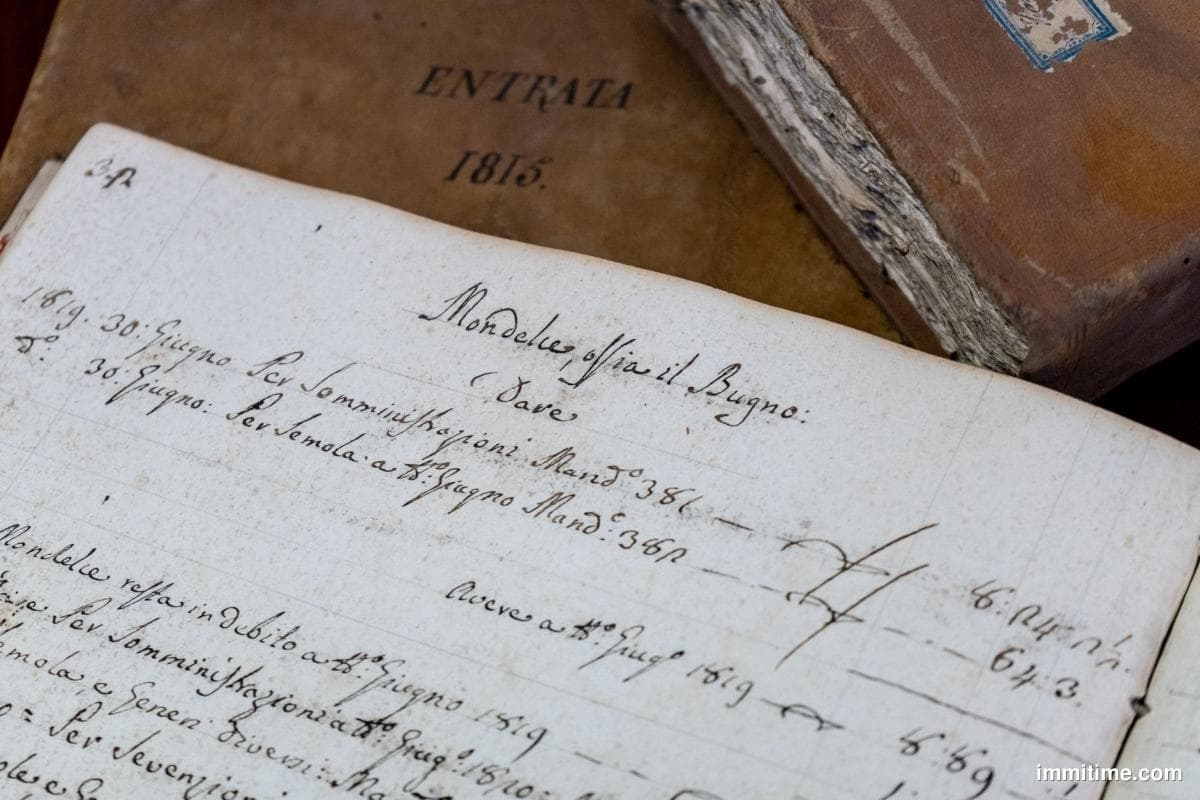
For ancestors born before civil registration became standard practice, a baptismal record often becomes the strongest available substitute. IRCC will accept one provided the baptism occurred within a reasonable window after the birth and the record originates from the institution that holds it — typically a church or an archive.
This scenario is especially common among applicants with Quebec-born ancestors, since parish baptismal registers in the province predate civil registration by generations. Quebec applicants can request these records through the Bibliothèque et Archives nationales du Québec (BAnQ). Notably, original handwritten parish records in French do not require translation, since French holds official language status in Canada.
Because older parish records can be difficult to decipher — due to handwriting style or the physical condition of the document — applicants are often advised to pair a baptismal record with another government-issued document, such as a death certificate or a descendant's birth certificate, to reinforce the Canadian birthplace claim.
If no documentation exists at all
Applicants who come up empty-handed still have a path forward, but it starts with contacting the relevant provincial or territorial office — even if that office ultimately confirms it has nothing on file. IRCC requires a written explanation of why a document cannot be produced, along with evidence that the applicant genuinely attempted to obtain it.
Acceptable evidence of that effort includes correspondence with the issuing authority, a formal "no-record letter" confirming the record doesn't exist, or a published policy from an archive confirming that birth certificates simply weren't issued during a given period. Applicants should direct these inquiries to authorities in the specific province where their Canadian ancestor was born, since each province operates its own vital statistics office and archival system.
Filling gaps with supplementary records
When a direct birth or baptismal record simply cannot be located, some applicants have successfully supplemented their file using records tied to the ancestor's siblings or descendants. Examples include a delayed birth certificate filed decades later by a next-of-kin, naming the ancestor and their birthplace, or a marriage certificate belonging to one of the ancestor's children that lists parental names and birthplace.
It's worth stressing that this kind of supplementary evidence strengthens a case but cannot substitute for the primary chain of documents. The strategy that tends to work is combining multiple government-issued records — death certificates, marriage certificates, and similar documents — with a clear written explanation and proof of the applicant's efforts to obtain official records. IRCC reviews everything submitted and may request further evidence before reaching a decision.
More complicated scenarios
Certain cases carry extra layers of complexity, including situations involving renunciations, Indigenous ancestry, adoptions, or British subjects who later naturalized. Applicants facing these circumstances are often better served by consulting an authorized immigration representative for case-specific guidance.
What This Means for Applicants: A missing birth certificate does not automatically disqualify a citizenship-by-descent claim. IRCC's framework recognizes that historical record-keeping was inconsistent, and it offers a defined set of alternatives — from baptismal records to supplementary family documents — provided applicants can show genuine, documented effort to obtain the primary record first. Understanding this hierarchy of evidence before starting the application can save considerable time and reduce the risk of delays or requests for additional information.
Free Immigration Assessment
Complete our smart assessment form to check your eligibility for over 80+ Canadian immigration programs.
Last Updated: