
Unlocking Canadian Citizenship: How Bill C-3 Reshapes Descendant Claims and Impacts Communities Like Woonsocket
Bill C-3, effective December 15, 2025, has removed the first-generation limit for Canadian citizenship by descent, impacting communities like Woonsocket, Rhode Island. Thousands of residents with French-Canadian ancestry may already be Canadian citizens without knowing it, needing only to apply for confirmation. This article delves into the policy's implications, historical context, and practical steps for eligible individuals.
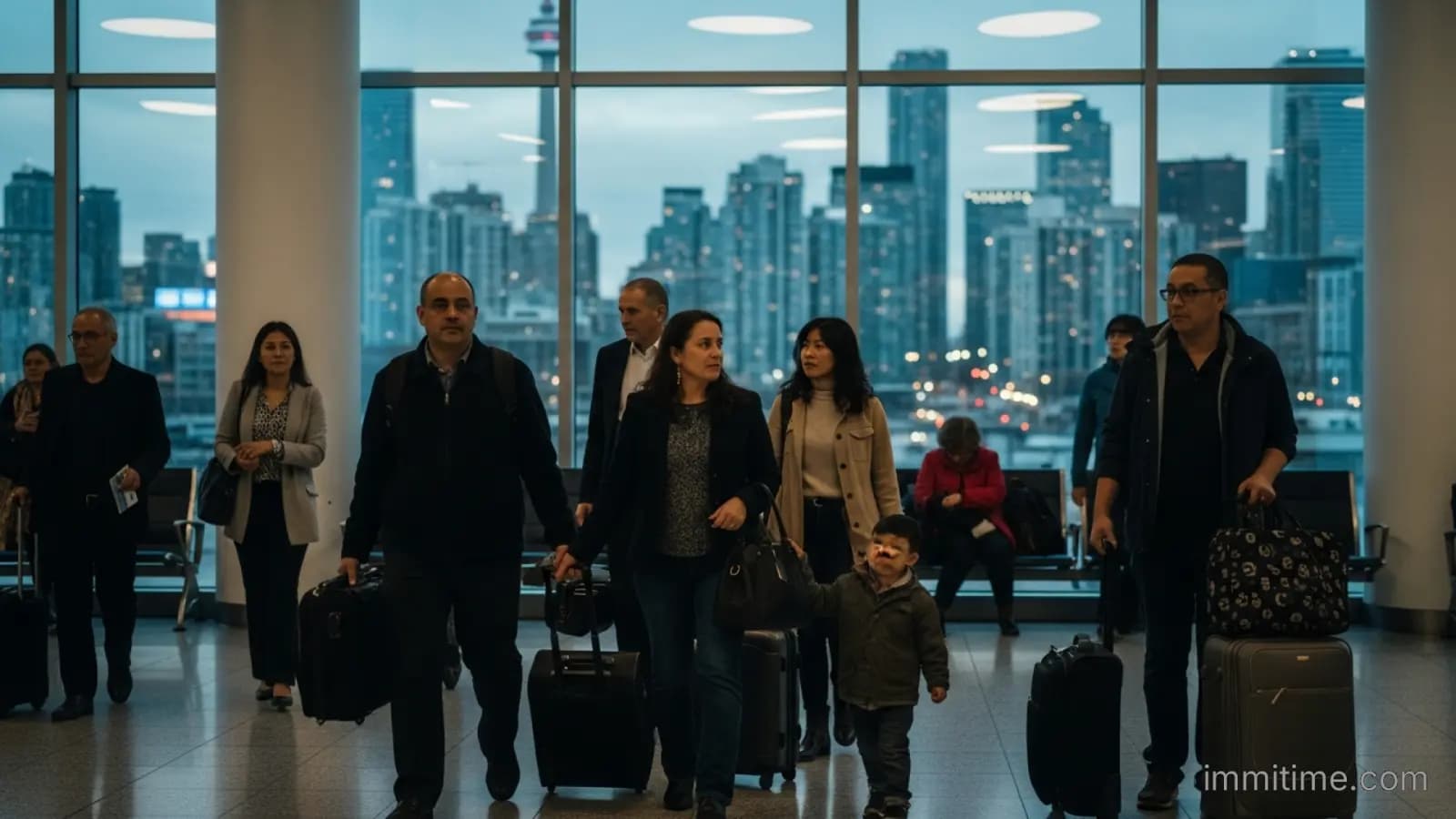
A New Era for Canadian Citizenship by Descent: Understanding Bill C-3
Canada’s immigration landscape is continually evolving, with policy shifts often carrying profound implications for individuals and communities across borders. A recent, yet highly significant, legislative change — Bill C-3 — has particularly reshaped the criteria for Canadian citizenship by descent, creating a pathway for countless individuals worldwide to affirm a status they may already possess. Effective December 15, 2025, this landmark legislation eliminates the long-standing 'first-generation limit,' thereby extending Canadian citizenship to individuals born outside Canada who can demonstrate an unbroken lineage to a Canadian ancestor, regardless of how many generations separate them.
This policy adjustment marks a pivotal moment, moving away from previous limitations that often disenfranchised descendants of Canadians who had lived abroad for extended periods. Under the former framework, citizenship by descent was generally limited to the first generation born outside Canada. If a Canadian citizen gave birth abroad, their child would be Canadian. However, if that child then had children outside Canada, those grandchildren would not automatically be Canadian citizens. Bill C-3 rectifies this, ensuring that in most cases, anyone born outside Canada before December 15, 2025, who can trace an unbroken line to a Canadian ancestor is already a citizen. Their primary task now is to apply for a certificate to officially confirm this status.
The impact of this change is far-reaching, particularly for historical diaspora communities. One compelling illustration of this phenomenon is found in Woonsocket, Rhode Island, a city famously known as 'la ville la plus française aux États-Unis' — the most French city in the United States. This nickname, deeply rooted in its heritage, now takes on a concrete legal dimension thanks to Bill C-3.

Woonsocket: A Microcosm of a Broader Phenomenon
The story of Woonsocket is a powerful testament to the historical migration patterns that have shaped North America. Its French narrative commenced in the 1840s, when local mill owners actively recruited the first French-Canadian families from Quebec to operate the looms. This initial influx was merely the beginning. For decades, specifically between roughly 1865 and 1910, Quebecois migrants continuously poured into the Blackstone Valley. They were drawn by the promise of steady factory wages, which were often unavailable on Quebec farms at the time.
Upon their arrival, these communities meticulously recreated their cultural and social fabric. They established French-language newspapers, founded Catholic schools, and organized parishes, such as Precious Blood, which was established in 1872. This profound cultural concentration led to extraordinary demographic shifts. By 1900, French Canadians constituted approximately 60% of Woonsocket's total population, according to data from the Woonsocket Historical Society. This figure continued to climb, reaching roughly 70% by 1930, accounting for about 35,000 of the city's 50,000 residents. A study conducted in 1913 notably ranked Woonsocket as the leading American city by the proportion of its residents who spoke French. This exceptional density of French-Canadian settlement, sustained over such a long period, is what makes Woonsocket a unique and particularly relevant case study for the implications of Bill C-3.
The Undercount: Why 7,000 is Likely Just the Beginning
A conservative estimate, derived from American Ancestors’ summary of U.S. Census Bureau ancestry data, suggests that nearly one in six Woonsocket residents — approximately 7,000 individuals — descend from French-Canadian families. This figure is based on Woonsocket's French-Canadian ancestry share of 16.1%, applied to Census Reporter's 2024 American Community Survey five-year population estimate of 43,521. However, this number is almost certainly an undercount.
The primary reason for this likely underestimation lies in the nature of self-reported ancestry data. Over generations, many French-Canadian families who settled in New England anglicized their surnames. For instance, 'Leblanc' became 'White,' 'Charpentier' transformed into 'Carpenter,' and 'La Rivière' was simplified to 'Rivers.' A family that has used an anglicized name like 'White' for a century might not check a 'French-Canadian' box on a survey, even if they have a Quebec-born ancestor just a few branches back in their family tree. Additionally, the practice of 'dit names' — where a family might be known by two names, with only one half preserved over time — further complicates ancestral tracking.
Beyond name changes, many individuals have simply lost the thread of their family history, unaware of their Canadian roots. Therefore, the true number of Woonsocket residents with Canadian ancestry is likely significantly higher than the self-reported ancestry data indicates. The only definitive way for individuals to ascertain their eligibility is to meticulously trace their family line back to its origins.
Navigating the Path to Confirmation: What Eligible Residents Must Do
For a Woonsocket resident, or indeed any individual, who descends from a Canadian ancestor and is now eligible under Bill C-3, the immediate objective is to obtain a proof of Canadian citizenship certificate. This official document, issued by Canada's citizenship department, is not merely a formality; it is essential for acquiring a Canadian passport and formally exercising the rights of a citizen. It is crucial to understand that while Bill C-3 states eligible individuals *are* already citizens, this certificate is the legal proof required to act on that status.
The Application Process: Documentation and Challenges
The application for a proof of Canadian citizenship certificate necessitates demonstrating a continuous chain of descent from the Canadian ancestor. This means providing documentary evidence for every generation in between. The core records typically include birth certificates, baptismal records, marriage certificates, and death certificates. Given that most Woonsocket applicants will trace their lineage back to Quebec, a significant portion will require records from Quebec's vital records registry.
The sheer volume of potential applicants has already exerted considerable pressure on provincial archives. Quebec's national archives, for example, have reported a staggering approximately 3,000% increase in requests since the law changed. This surge in demand has contributed to extended processing times. Currently, the processing time for proof of citizenship certificates has continued to swell since Canada opened its doors, now standing at approximately 15 months.
Applicants have two primary avenues for navigating this process: they can file the application independently, meticulously gathering and organizing all required documentation themselves, or they can engage the services of a representative authorized by the Canadian government, such as a Canadian immigration lawyer. An authorized representative can assist in assembling the application, ensuring all necessary documents are included, and managing the overall process, which can be particularly beneficial given the complexity of historical record retrieval.
The Benefits of Dual Citizenship and Broader Implications
The acquisition of Canadian citizenship for eligible individuals offers a wealth of benefits. U.S.-Canadian dual citizens enjoy the full rights of both countries. This includes the fundamental right to live and work in Canada permanently, as well as the right to vote in Canadian elections, subject to residency rules. Importantly, claiming Canadian citizenship adds no U.S. tax obligations, alleviating a common concern for potential applicants.
While the prospect of dual citizenship opens doors to living and working in Canada, it's noteworthy that for many applicants, the immediate intention isn't to relocate. The article highlights that most applicants are not 'packing their bags.' Instead, many are well-established professionals who seek the option of a 'backup' — a security or flexibility that their family can retain for future generations or unforeseen circumstances. This reflects a strategic approach to global mobility and personal security, where Canadian citizenship is viewed as a valuable asset rather than an immediate relocation trigger.
Local Resources: A Head Start for Woonsocket Residents
Woonsocket residents possess a distinct advantage in this journey: access to one of the country's premier French-Canadian genealogy resources located right in their city. The American-French Genealogical Society, situated at 78 Earle Street, houses an invaluable collection of over 20,000 volumes. This extensive archive includes vital records, comprehensive family genealogies, and a wealth of historical material specifically focused on French-Canadian descent. For anyone attempting to trace a family line back to Quebec, this local institution provides a rare and significant head start.
The further back an individual can follow their family tree, the greater their odds of successfully identifying the Canadian ancestor whose lineage makes all the difference in their citizenship claim. This emphasizes the critical role of genealogical research in leveraging the opportunities presented by Bill C-3.
Expert Analysis: Policy Intent and Future Outlook
Bill C-3 represents a significant policy shift by IRCC, aimed at addressing historical inequities and reconnecting individuals with their Canadian heritage. The removal of the first-generation limit aligns Canada with a more inclusive approach to citizenship by descent, acknowledging the enduring ties of family across generations and international borders. This change acknowledges the historical reality of emigration and the often-unintentional loss of citizenship status for subsequent generations born abroad.
From an immigration policy perspective, this legislative amendment is not primarily designed to boost immigration numbers through new arrivals, but rather to regularize the status of individuals who are already considered citizens under Canadian law. The surge in requests for proof of citizenship certificates, particularly in Quebec, underscores the widespread impact and the latent demand for this recognition. While processing times are currently extended, this is a predictable consequence of a major policy change and the immediate influx of applications. IRCC will likely need to continue to adapt its resources to manage this increased workload efficiently.
For immigration practitioners and policy analysts, Bill C-3 highlights the importance of precise genealogical documentation and the potential for authorized representatives to assist applicants through a complex process. It also serves as a reminder that citizenship laws can have profound, long-tail effects, impacting communities decades or even centuries after initial migrations. The Woonsocket case is a powerful illustration of how historical demographics, combined with modern legislative changes, can unlock new possibilities for thousands of individuals, reinforcing Canada's commitment to its global diaspora.
Methodology Note on Estimates
It is important to reiterate the methodology behind the estimate of approximately 7,000 residents in Woonsocket. This figure is based on American Ancestors’ summary of U.S. Census Bureau ancestry data, which indicates Woonsocket's French-Canadian ancestry share at 16.1%. This percentage was then applied to Census Reporter's 2024 American Community Survey five-year population estimate of 43,521. This ancestry data is self-reported and does not equate to citizenship or a confirmed chain of descent. As discussed, due to factors such as name anglicization and a loss of family identity, this figure likely understates the actual number of residents with Canadian ancestry. It serves as a heritage estimate, not a count of confirmed citizens or eligible applicants.
Frequently Asked Questions
What is Bill C-3 and when does it take effect?
Bill C-3 is a change to Canadian law that takes effect on December 15, 2025. It removes the first-generation limit on Canadian citizenship by descent, meaning more people born outside Canada to a Canadian ancestor may now be citizens.
How do I know if I am eligible for Canadian citizenship under Bill C-3?
In most cases, if you were born outside Canada before December 15, 2025, and can trace an unbroken line to a Canadian ancestor, you are already a citizen. You would then need to apply for a certificate to confirm your status.
What documents are required to prove Canadian citizenship by descent?
To prove your continuous chain of descent, you will need core records such as birth certificates, baptismal records, marriage certificates, and death certificates for every generation linking you to your Canadian ancestor.
What are the benefits of obtaining Canadian citizenship through descent?
As a U.S.-Canadian dual citizen, you gain full rights in both countries, including the right to live and work permanently in Canada and to vote in Canadian elections, subject to residency rules. Claiming this citizenship adds no U.S. tax obligations.
What is the current processing time for a proof of Canadian citizenship certificate?
The current processing time for proof of Canadian citizenship certificates has been extended and is now approximately 15 months due to increased demand following the policy changes.
Last Updated: