Canada's Landmark Citizenship Act Overhaul: Unlocking Ancestral Rights for Millions Worldwide
Canada's Citizenship Act has undergone a landmark change with Bill C-3, removing generational limits on citizenship by descent. Millions worldwide born before December 15, 2025, with a Canadian ancestor are now eligible, offering a new pathway to Canadian citizenship and its extensive benefits.

A New Era for Canadian Citizenship: Ancestry Trumps Affinity for Millions
The recent declaration by global music icon Elton John, who proudly stated, “Canada is part of my life and is embedded in my soul,” and “I have a family here,” resonated deeply with his Toronto fans. Despite holding only British citizenship, John’s three-decade partnership with Canadian filmmaker David Furnish and their two Canadian-citizen children firmly establish his profound personal connection to the nation. While many would readily accept John’s self-proclaimed Canadian identity by choice, this sentiment now stands in stark contrast to a pivotal shift in Canada’s legal framework for citizenship – one that prioritizes ancestral ties, regardless of personal connection or geographical proximity.
This evolving landscape of Canadian citizenship policy, particularly under the recent amendments to the Citizenship Act, has opened an unprecedented pathway for millions around the globe. These changes, which came into effect with Bill C-3, have fundamentally reshaped who can claim Canadian citizenship, creating a scenario where individuals with even a distant Canadian ancestor now possess a greater legal right to Canadian nationality than someone like Elton John, whose bond is built on love, family, and decades of personal history. As expert immigration journalists and policy analysts, we delve into the intricacies of this landmark policy shift, exploring its implications for potential applicants and the broader understanding of Canadian identity.
Understanding the Generational Shift in Canadian Citizenship Law
The core of this significant policy update lies in the removal of the generational limit to inheriting Canadian citizenship. Historically, certain limitations existed regarding how far back one could trace their Canadian lineage to claim citizenship by descent. However, in a move that signals a profound re-evaluation of Canada's citizenship principles, the government announced last December that these restrictions would be lifted for a specific cohort. Specifically, on December 15, 2025, Canada’s Bill C-3 officially took effect, eliminating the generational limit on citizenship by descent. This legislative change has effectively opened the doors to Canadian citizenship for millions of people worldwide.
Prior to this amendment, the pathway to citizenship for individuals born outside Canada to a Canadian parent often had generational cut-offs. The previous regime meant that if a Canadian citizen parent had a child abroad, that child would be Canadian. However, if that child then had a child abroad, the grandchild might not automatically inherit Canadian citizenship, depending on the specific circumstances and the date of their birth. The recent enactment of Bill C-3 addresses this by ensuring that anyone born before December 15, 2025, who can trace an unbroken line of ancestry to a Canadian-born relative, is now eligible for Canadian citizenship. This eligibility holds true regardless of how many generations removed that ancestor lived and irrespective of their current country of residence. This represents a significant expansion of who Canada considers its own, moving towards a more expansive jus sanguinis (right of blood) principle.

Who is Now Eligible? Tracing Your Canadian Roots
The immediate impact of Bill C-3 is on individuals around the world who may not even be aware of their profound connection to Canada. The criterion is straightforward yet powerful: an unbroken line of ancestry to a Canadian-born relative. This means that if you can identify at least one ancestor who was born in Canada, and you can prove your direct lineage to them through official documentation, you may already hold, or be eligible to claim, Canadian citizenship status. The policy makes no distinction based on the number of generations that separate you from your Canadian-born forebear, nor does it consider your current country of residence or your personal connection to Canada, which could be far less than Elton John's deep affinity.
The scale of this change is immense. Consider the United States, where an estimated 3 million Americans possess French-Canadian ancestry. This significant demographic can trace its roots back to the mass migration of nearly 900,000 Quebecers to New England between 1840 and 1930. Many of these individuals, and their descendants, have lived entirely in the United States for four or more generations. Furthermore, the Cajuns in Louisiana offer another compelling example; their family heritage can be directly traced to the Acadian expulsion from Nova Scotia centuries ago. These historical migrations have created vast diasporic communities whose members are now retroactively eligible for Canadian citizenship.
However, the scope of this law is not confined to the United States. Individuals across the globe, from any country, who can demonstrate a Canadian ancestor, may now be eligible. This global reach means that millions of people, many of whom may have never set foot in Canada, now have a legal right to claim Canadian nationality. This policy fundamentally redefines the concept of belonging, extending the nation's embrace far beyond its physical borders to encompass a sprawling ancestral network.
The Practicalities: Proving Your Canadian Connection
For those who suspect they might have an ancestral link to Canada, the next logical step is to explore the process of claiming this newfound eligibility. The journey begins with establishing proof of your connection. The core documents required are birth certificates, marriage certificates, and baptismal records. These documents are crucial for demonstrating an unbroken line of descent, generation by generation, from yourself back to your Canadian-born ancestor. This genealogical detective work is paramount, as IRCC requires clear and verifiable evidence of each link in the ancestral chain.
Once you have gathered the necessary documentation, the application process involves two primary stages. First, you must apply for a proof of citizenship certificate from Immigration, Refugees and Citizenship Canada (IRCC). This certificate officially recognizes your status as a Canadian citizen. Currently, the processing time for a citizenship certificate is approximately 12 months. Upon receiving your certificate, you can then apply for a Canadian passport, which typically processes within 10 to 20 business days. It is important to note that while the process might seem lengthy, the outcome offers significant and lasting benefits.
Identifying potential Canadian ancestry might be easier than you think. Several hints could be hiding in plain sight: a French or anglicized surname, a family history rooted in New England, or connections to Louisiana. These geographical and linguistic clues can often point to a Canadian heritage that has been obscured by time and distance. Resources such as CanadaVisa’s citizenship by descent calculator can also provide an initial assessment of your potential eligibility. The further back you delve into your family tree, the higher your chances of uncovering a Canadian ancestor who can unlock this significant opportunity.
Why Canadian Citizenship Matters: Rights, Benefits, and Global Mobility
The acquisition of Canadian citizenship by descent carries with it a powerful suite of rights and benefits that extend far beyond a mere piece of paper. Foremost among these is the unconditional right to enter, live, and work in Canada at any time. This means no visa requirements, no need for work permits, and no time limits on your stay, offering unparalleled freedom and flexibility for those wishing to relocate to or spend time in Canada. This right is a cornerstone of national citizenship, providing a secure foundation for life in the country.
Beyond domestic rights, a Canadian passport is a highly valued travel document on the global stage. It currently ranks seventh in the world on the prestigious Henley Passport Index, granting visa-free or visa-on-arrival access to an impressive 182 destinations. This level of global mobility is a significant advantage for business, leisure, and personal travel, opening up a world of opportunities for Canadian citizens.
Furthermore, Canada has a progressive stance on dual citizenship. For citizens of countries like the United States and the United Kingdom, dual citizenship is fully recognized and embraced, meaning that obtaining Canadian citizenship will have no effect on their existing nationality. Crucially, Canada does not impose worldwide tax obligations on its citizens, a significant distinction from some other nations, including the United States. This means that acquiring Canadian citizenship does not create additional tax burdens for individuals living abroad. However, for citizens of other countries, it is always advisable to confirm that their country of citizenship permits dual nationality before applying, as not all nations have the same permissive policies as Canada, the U.S., or the U.K.
Elton John's "Canadian by Choice" vs. "Canadian by Blood": A Policy Paradox
The narrative of Elton John, a man who has woven Canada into the very fabric of his life through marriage, family, and professional recognition, serves as a poignant contrast to the millions now eligible for citizenship by ancestral ties. John’s connection is built on a lived experience, a chosen affinity, and the deep personal bonds he shares with his Canadian husband and children. He received one of the world's most prestigious cultural honours, the Glenn Gould Prize — often referred to as the “Nobel Prize of the Arts” — on May 9, becoming its 15th laureate. His acceptance speech, proclaiming his Canadian identity, underscores a profound emotional and familial link.
Yet, under the current Citizenship Act, his profound, deeply felt connection grants him no inherent right to Canadian citizenship by descent, unlike someone whose single Canadian ancestor may have lived generations ago. This highlights a fascinating policy paradox: the law now awards Canadian citizenship based on blood, an inherited right, potentially to individuals with minimal or no current ties to the country, while a celebrated figure with an undeniable, active connection remains a British citizen. This distinction underscores a fundamental philosophical debate in citizenship law: the balance between jus sanguinis (right of blood) and jus soli (right of soil, or in John's case, a 'right of soul' through deep personal connection). Canada's recent changes lean heavily into the former, affirming that ancestral lineage now holds a paramount position in defining who is legally Canadian.
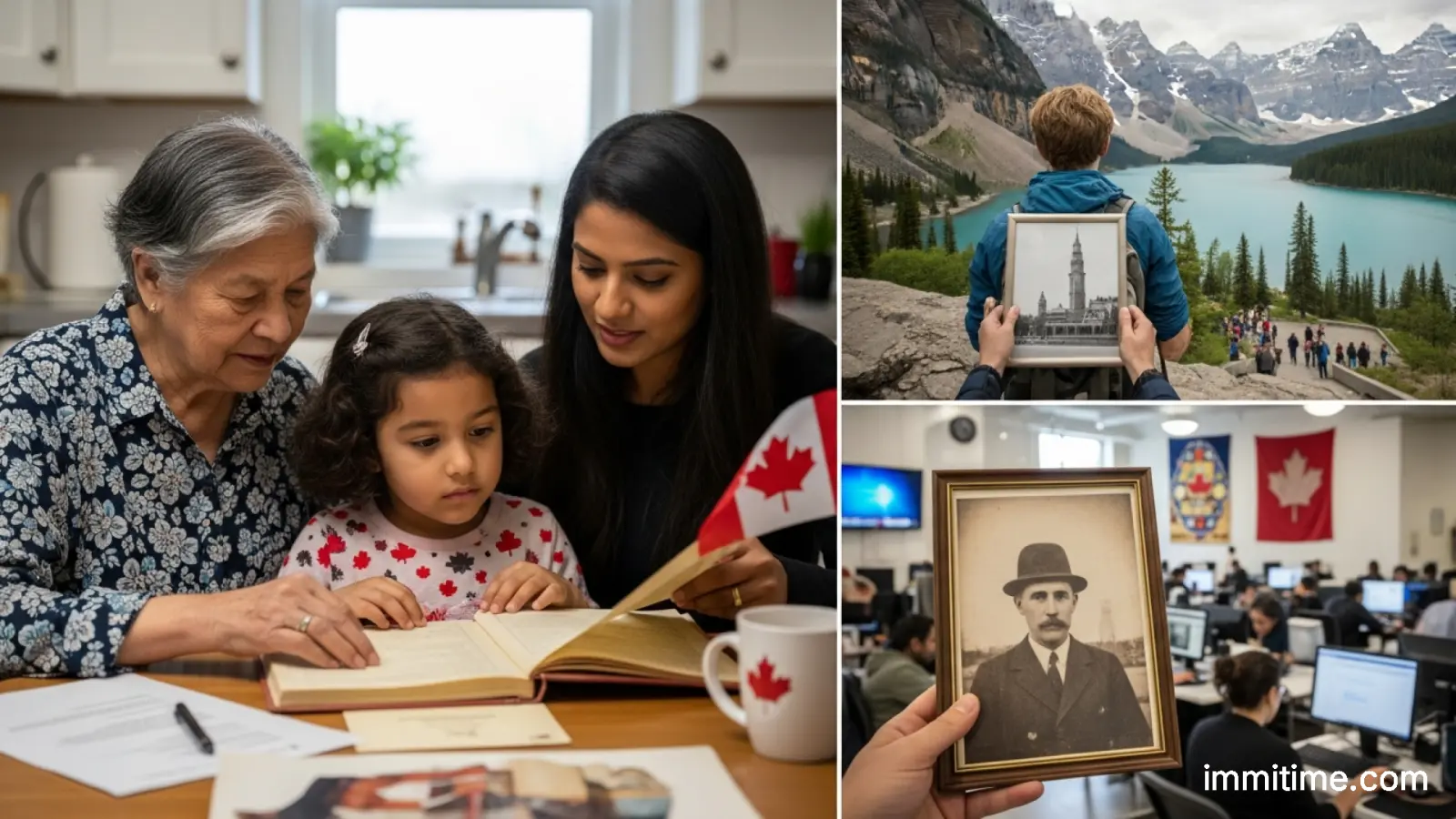
Actionable Advice for Prospective Citizens
For those who believe they may be eligible for Canadian citizenship through this expanded pathway, taking proactive steps is crucial. The first and most vital piece of advice is to begin the meticulous process of genealogical research. Trace your family tree backward, focusing on identifying any Canadian-born ancestors. Utilize online genealogical databases, family records, and historical archives to gather preliminary evidence.
- Consult with Experts: Given the complexities of gathering historical documents and navigating immigration law, seeking a free consultation from an immigration professional is highly recommended. They can help assess your eligibility, guide you through the required documentation, and assist with the application process for proof of Canadian citizenship.
- Gather Core Documents: As outlined, prepare to collect official birth certificates, marriage certificates, and potentially baptismal records for each generation connecting you to your Canadian-born ancestor. These documents must be official and verifiable.
- Utilize Eligibility Tools: Tools like CanadaVisa’s citizenship by descent calculator can provide an initial indication of your potential eligibility based on the information you provide.
- Understand the Timeline: Be prepared for the processing times: approximately 12 months for the citizenship certificate and 10 to 20 business days for the passport. Patience and thorough preparation are key.
The changes introduced by Bill C-3 represent a monumental shift in Canadian immigration policy. They offer a tangible connection — a passport — to millions whose ties to Canada are ancestral, whether through a grandparent from Quebec, a great-grandmother from Nova Scotia, or a distant relative who crossed the border generations ago. This new chapter in Canadian citizenship law promises to reconnect a global diaspora with their heritage, offering the rights and opportunities that come with being a Canadian citizen.
Frequently Asked Questions
What is the significant change in Canadian citizenship law?
Canada's Bill C-3, which took effect on December 15, 2025, has removed the generational limit to inheriting Canadian citizenship by descent. This means many more individuals worldwide can now claim Canadian citizenship through their ancestry.
Who is eligible under this new policy for Canadian citizenship by descent?
Anyone born before December 15, 2025, who can trace an unbroken line of ancestry to a Canadian-born relative is now eligible. This applies regardless of how many generations back the ancestor lived or where the individual currently resides.
What are the key benefits of obtaining Canadian citizenship by descent?
Canadian citizens hold the unconditional right to enter, live, and work in Canada without visas or work permits. A Canadian passport ranks seventh globally, offering visa-free access to 182 destinations, and Canada recognizes dual citizenship without imposing worldwide tax obligations.
How do I apply for proof of Canadian citizenship through ancestry?
To apply, you must gather core documents like birth, marriage, and baptismal certificates proving your unbroken descent from a Canadian-born ancestor. You then apply for a proof of citizenship certificate from IRCC, which currently takes about 12 months to process, followed by a passport application.
Does acquiring Canadian citizenship affect my existing nationality or tax responsibilities?
For citizens of the United States and the United Kingdom, dual citizenship is fully recognized and obtaining Canadian citizenship has no effect on their current nationality. Canada does not apply worldwide tax on its citizens, but individuals from other countries should confirm their own nation's stance on dual nationality.
Last Updated: