Navigating the New Reality: Understanding the 15-Month Wait for Canadian Proof of Citizenship by Descent
Canadian citizenship by descent applicants face a 15-month wait for proof of citizenship certificates due to a surge in applications, now totaling 82,000. This increase stems from Bill C-3's expanded eligibility in December 2025, highlighting the need for prompt and complete applications.

A Critical Juncture for Canadian Citizenship by Descent Applicants
The landscape of Canadian immigration policy is constantly evolving, and recent developments from Immigration, Refugees and Citizenship Canada (IRCC) have brought significant changes for those seeking proof of Canadian citizenship by descent. As of June 2026, applicants are now facing an estimated 15-month wait time for their proof of Canadian citizenship certificates. This substantial increase in processing duration is a direct consequence of a dramatic surge in applications, presenting both challenges and critical considerations for prospective citizens.
The queue for these essential documents has ballooned to approximately 82,000 applications. This figure represents a rapid escalation from just May 12 of the same year, when the backlog stood at 70,400. In less than a month, an additional 11,600 individuals joined the waiting list, underscoring the unprecedented demand. For individuals and families tracing their Canadian lineage, understanding the implications of these delays and how to navigate the current system is paramount.
The Unfolding Backlog: A Deep Dive into IRCC Processing Times
The current 15-month processing estimate is not merely a static figure; it is a dynamic indicator influenced by several factors. IRCC bases its processing time estimates on the volume of applications already in the queue, the department's operational capacity, and the anticipated influx of new applications. This forward-looking methodology suggests that, without significant intervention or a slowdown in new submissions, wait times are likely to continue their upward trajectory.
Historically, processing times for citizenship certificates were considerably shorter, often around 9 months. However, since the expansion of Canada's citizenship laws in December 2025 – specifically with the passage of Bill C-3 – these times have surged to the current 15 months, and the application queue has more than doubled in size. This stark comparison highlights the profound impact of legislative changes on administrative capacity.
The Dilemma of Delay: To Apply Now or Wait?
For many potential applicants, a crucial question arises: is it strategically advantageous to wait before submitting an application? IRCC's current projection indicates that an application received in June 2026 would likely see a decision around September 2027. This calculation is based on the prevailing 15-month estimate. However, the trend observed since the passage of Bill C-3 has been a consistent month-over-month increase in wait times.
From an expert analytical perspective, the data suggests that delaying an application will likely lead to a longer wait, not a shorter one. An individual filing today enters a queue already comprising 82,000 other applicants. Given the current rate of increase in new applications, this queue is only expected to grow further, pushing processing times even higher. Therefore, for those who meet the eligibility criteria, prompt application is generally advisable to secure a place in the queue as early as possible.
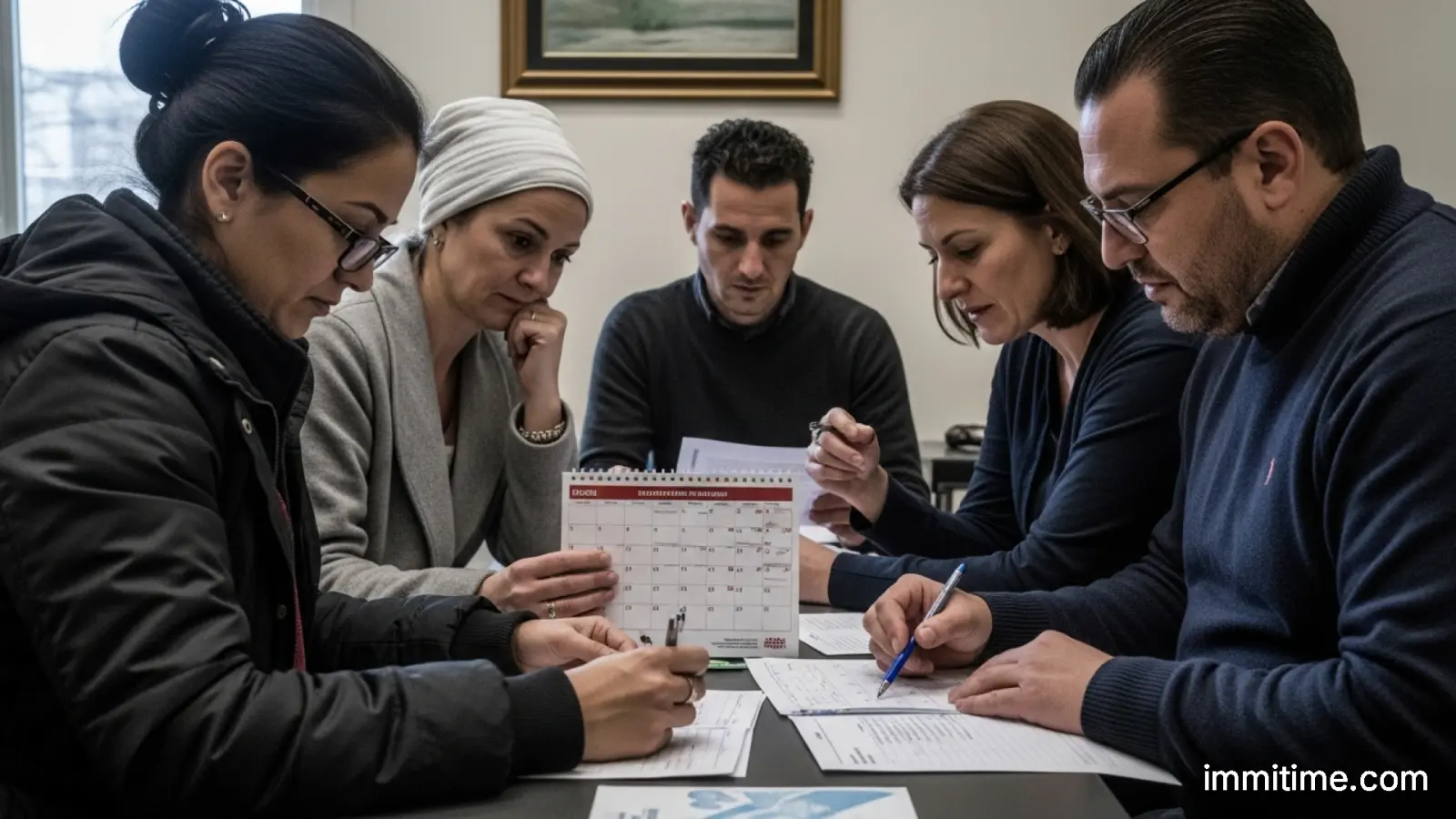
The Catalyst: Understanding Bill C-3 and Expanded Citizenship by Descent
The dramatic increase in applications and subsequent processing delays are directly attributable to a significant amendment to Canada's Citizenship Act. On December 15, 2025, the Canadian government enacted changes that removed the 'first-generation limit' to citizenship by descent for individuals born before that date. This legislative shift fundamentally altered who qualifies as a Canadian citizen.
Crucially, individuals who qualify under this new law are not applying to become Canadian citizens; rather, they are applying for the official document that proves their existing citizenship. This distinction is vital, as it confirms their inherent status as citizens, enabling them to apply for a Canadian passport and exercise the full spectrum of rights associated with Canadian nationality.
Who Qualifies Under the New Law?
The expanded eligibility under Bill C-3 means that anyone born before December 15, 2025, who can demonstrate a continuous line of descent from a Canadian ancestor, now qualifies. This criterion holds true irrespective of where the individual was born, or whether their parents or grandparents ever resided in Canada or held Canadian passports. The implications are far-reaching, extending even to individuals whose families have lived outside Canada for multiple generations.
For instance, many U.S. citizens, whose families may have been entirely resident in the United States for four or more generations, have discovered their eligibility. This newfound pathway to Canadian citizenship has garnered considerable attention, particularly among those seeking the advantages of dual nationality without necessarily planning an immediate relocation to Canada.
The Strategic Value of Canadian Citizenship in Uncertain Times
The allure of Canadian citizenship, particularly for those who can acquire it by descent, is multifaceted and easily understood. Beyond the emotional connection to ancestral heritage, there are tangible and strategic benefits that resonate deeply in today's global climate.
- Global Mobility: Upon receiving their certificate, a U.S.-Canadian dual citizen can apply for a Canadian passport. The Canadian passport currently ranks seventh globally, offering visa-free or visa-on-arrival access to an impressive 183 countries. This enhanced global mobility is a significant draw, often described as a valuable 'second passport kept in their back pocket during uncertain times.'
- Rights and Opportunities in Canada: Canadian citizens possess the right to live and work anywhere within Canada without requiring a work permit or visa. They can also acquire residential real estate and, upon taking up residence, access Canada's publicly funded healthcare system. These rights provide a robust safety net and a wide array of opportunities.
- Favorable Tax Regime: Unlike the United States, Canada does not tax its citizens on worldwide income if they are not considered residents for tax purposes. This means that for individuals who obtain proof of Canadian citizenship but continue to reside outside of Canada, there are generally no new income tax obligations to the Canadian government. This stands in stark contrast to the U.S. system, which taxes its citizens on global income regardless of residency.
These combined advantages make Canadian citizenship a highly desirable asset, contributing significantly to the current surge in applications.
Demystifying IRCC's Processing Time Calculations and Avoiding Delays
Understanding how IRCC calculates its processing times is crucial for managing expectations. As previously mentioned, the department employs a forward-looking methodology. This estimate considers the total number of applications awaiting processing, the available human resources to process them, and the projected volume of new applications. The estimate is refreshed monthly, reflecting changes in these variables. It's important to note that while the estimates can fluctuate, they do not account for sudden, sharp spikes in new application submissions, which often lead to immediate increases in actual wait times.
The processing clock for an application begins the day IRCC receives a complete application. For online submissions, this is when the application is successfully submitted electronically. For mailed applications, the clock starts when the package reaches IRCC's mailroom. Therefore, ensuring completeness and choosing the most efficient submission method are early steps to minimize delays.
Factors That Can Extend Your Wait
While the 15-month estimate applies to routine applications, certain factors can cause your case to be deemed 'complex' or 'non-routine,' thereby extending your processing time significantly. These can include:
- Requests for Additional Documents: If IRCC requires further documentation, such as residence documents or clarifications, the processing pauses until these are provided.
- Missed Appointments: Failure to attend a scheduled test, interview, or hearing can lead to substantial delays and potential application refusal.
- Admissibility Issues: Any criminal history, security concerns, or other admissibility issues will trigger a more thorough review, prolonging the process.
The most effective strategy to prevent such delays is to submit a complete, meticulously prepared application from the outset. This means double-checking all forms, providing all requested supporting documents, and ensuring all information is accurate and consistent.
Proving Your Canadian Lineage: Essential Steps and Documentation
For those uncertain about their eligibility under Bill C-3, the first step is to thoroughly examine your family tree. Engaging with relatives and gathering family records can provide invaluable clues and evidence. The core requirement is to establish a continuous line of descent from a Canadian ancestor who was a citizen at the time of your birth or the birth of your parent through whom you claim citizenship.
To apply for proof of Canadian citizenship, you will need to provide robust documentation to establish this lineage. Common examples of acceptable documents include:
- Birth certificates
- Baptismal records
- Marriage certificates
- Death certificates
- Historical census records
- Immigration records
It is crucial that these documents clearly link each generation, demonstrating the unbroken chain of descent. Any discrepancies or missing links will likely result in requests for additional information, leading to delays.
Expert Outlook: Navigating the Future of Citizenship by Descent
The current situation with 15-month wait times and an 82,000-strong queue for proof of Canadian citizenship certificates is a clear indicator of the profound impact of Bill C-3. As expert immigration journalists and policy analysts, we anticipate that these processing times will remain elevated, and potentially increase further, as long as the rate of new applications continues to outpace IRCC's processing capacity.
For individuals who have recently discovered their eligibility, the message is clear: proactive engagement with the application process is key. Waiting will likely only place you further down a growing queue. Thorough preparation, meticulous documentation, and a clear understanding of IRCC's requirements are the best defenses against additional delays. While the wait may be long, the enduring value and numerous benefits of Canadian citizenship continue to make the journey worthwhile for thousands worldwide.
Frequently Asked Questions
Why is there a 15-month wait for proof of Canadian citizenship certificates?
The 15-month wait is due to a significant increase in applications following the December 15, 2025, changes to Canada's Citizenship Act (Bill C-3), which expanded eligibility for citizenship by descent. The application queue has more than doubled, now standing at approximately 82,000 applications.
Who qualifies for Canadian citizenship by descent under the new Bill C-3?
Anyone born before December 15, 2025, who can trace a continuous line of descent from a Canadian ancestor, regardless of their place of birth or whether their parents/grandparents lived in Canada, now qualifies. This removes the previous first-generation limit.
What are the benefits of obtaining proof of Canadian citizenship?
Proof of Canadian citizenship allows individuals to apply for a Canadian passport, which offers visa-free or visa-on-arrival access to 183 countries. It also grants rights to live, work, and own property in Canada, and access publicly funded healthcare if resident, without new worldwide income tax obligations for non-residents.
What factors can cause delays in processing a proof of Canadian citizenship application?
Delays can occur if IRCC requires extra documents, if an applicant misses a test, interview, or hearing, or if there are criminal, security, or other admissibility issues. Submitting a complete and well-prepared application is crucial to avoid these complications.
Should I wait to apply for proof of Canadian citizenship given the current wait times?
Based on current trends, waiting to apply will likely result in a longer wait, not a shorter one. The queue has consistently grown month over month, and a prompt application places you earlier in the current 82,000-strong line.
Last Updated: